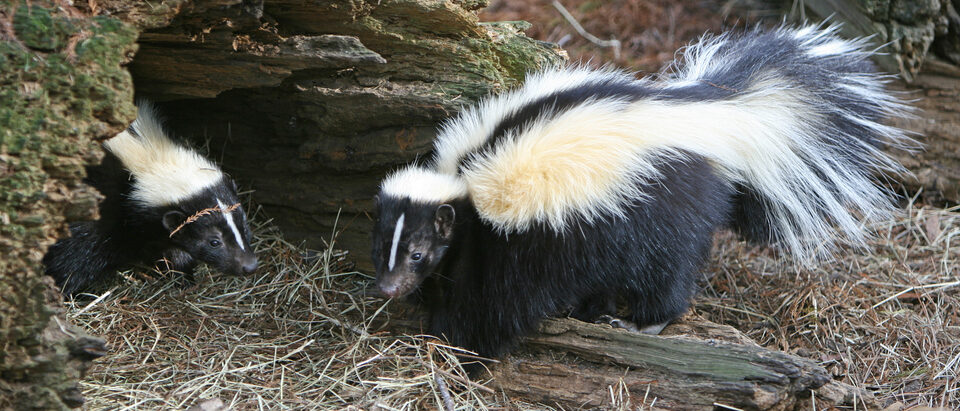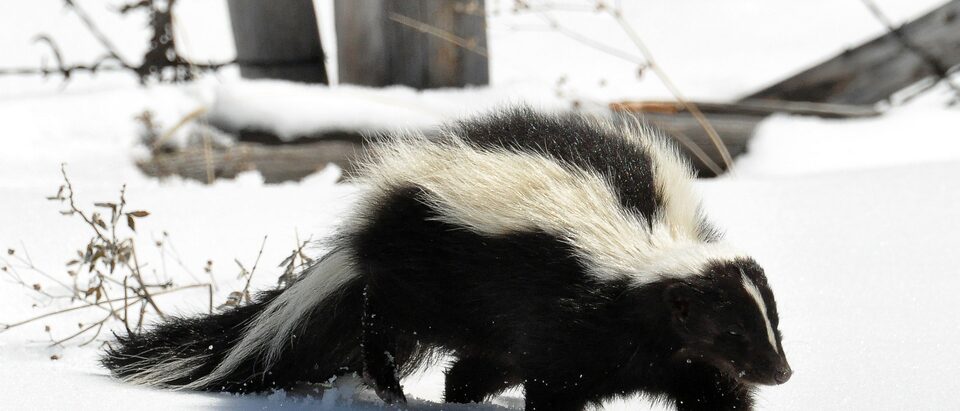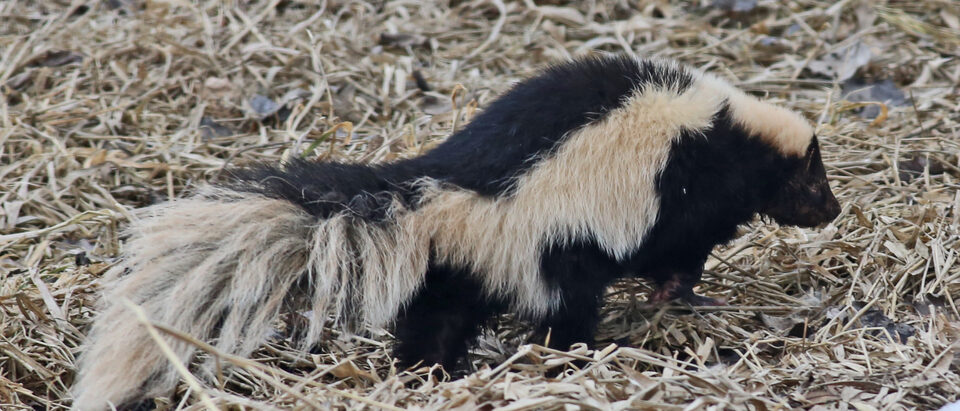

The goal with a skunk indoors is to remove it without triggering the spray. Skunks are shy and give clear warnings before spraying, so the right approach is slow, quiet, and non-threatening.
- Stay calm and quiet. Skunks spray when startled, not on a whim.
- Give the skunk a clear exit path and let it leave on its own when possible.
- Never corner or trap a skunk inside. A trapped skunk sprays.
- Seal entry points after the skunk is out, and neutralize any odor fast.
First, Do Not Startle It
A skunk in the house is usually there by accident, having wandered in through an open door, a pet door, or a gap under a deck or foundation. Skunks are docile and would rather avoid conflict. They stomp their front feet, hiss, and raise their tail as warnings before spraying.
The worst thing you can do is shout, chase, or corner it. That is exactly what triggers a spray, and once skunk spray lands indoors, the odor is very hard to remove.
Give It a Path Out
If the skunk is in a room with a door to the outside, open the door and any windows, block off other rooms, and leave quietly. Give the skunk time and space, and it will usually find its own way out. Stay out of sight and keep pets and children away.
If the skunk has gone under a porch or into a crawl space, use the same principle: identify the entry point, and give it a one-way exit. A one-way door lets the skunk leave but not return.
When It Will Not Leave
If the skunk is in a basement, crawl space, or a room without an outside door, or if it seems stuck, call a wildlife professional. Trapping a skunk requires special equipment and experience, because a trapped skunk will spray, and relocating wildlife is regulated in most states.
Do not use poison. There is no approved poison for skunks, and a dead skunk under the house smells far worse than a live one.
Skunks dig and climb, so seal the entry point with buried hardware cloth, not just a board. A skunk that finds the way back in will be a repeat visitor, and the smell of its scent marking tells other skunks the spot is taken.
Clean Up the Odor Immediately
If the skunk sprays, act fast, because the longer the oils sit, the harder they are to remove. The proven home remedy is a mixture of one quart of 3 percent hydrogen peroxide, a quarter cup of baking soda, and a teaspoon of dish soap. Use it immediately and never store it in a closed container.
Ventilate the house, wash fabrics with baking soda and detergent, and replace HVAC filters. Skip the tomato juice; it masks the smell but does not neutralize it.
When to Call a Professional
Call a professional if the skunk is trapped inside, if there is a family under the house, or if you simply want to avoid the spray risk. A wildlife operator can remove the skunk humanely, handle the deodorization, and seal the entry point so it cannot return.
Frequently Asked Questions
Skunks wander in through open doors, pet doors, and gaps under decks, porches, and foundations. They usually follow food or shelter and are not aggressive about finding a way in.
Only if it feels cornered or threatened. Give it space and a clear exit, and it will almost always leave without spraying. Cornering, chasing, or trapping it is what triggers a spray.
Use the hydrogen peroxide, baking soda, and dish soap mixture on affected surfaces, ventilate the house, wash fabrics with baking soda and detergent, and replace HVAC filters. Act quickly, since the odor sets fast.
Skunks can carry rabies and will spray when threatened, but they are otherwise shy and avoid people. The main risks are the spray itself and the diseases wild animals can carry, so handle any removal carefully or leave it to a pro.
Professional skunk removal typically runs $200 to $500, with inspection and exclusion often billed separately. Trapping a skunk is a job for a professional, since relocation is regulated in most states.