Finding where skunks are entering your home or yard is the first step toward permanent exclusion. Skunks are surprisingly good at exploiting small gaps, loose soil, and deteriorated building materials. One entry point at ground level can lead to a den under your deck, porch, or crawl space that a whole family will occupy. This guide walks you through the inspection process from foundation to roofline, with a printable checklist to help you identify every potential entry point around your property.
Key Takeaways
- Start at ground level: Skunks are burrowers. Most entry points are near or below ground level along foundations, decks, and sheds.
- Look for digging signs: Loose soil, overturned sod, and cone-shaped holes around foundations indicate skunk activity.
- Check structural weak points: Deteriorated siding, rotting lattice, loose vents, and gaps around pipes are common access routes.
- Use tracking methods: Flour patches, remote cameras, and scent detection help confirm which gap the skunk is using.
- Inspect seasonally: Inspect your home perimeter twice a year, before spring and before winter, to catch new damage early.
Understanding Skunk Behavior and Movement Patterns
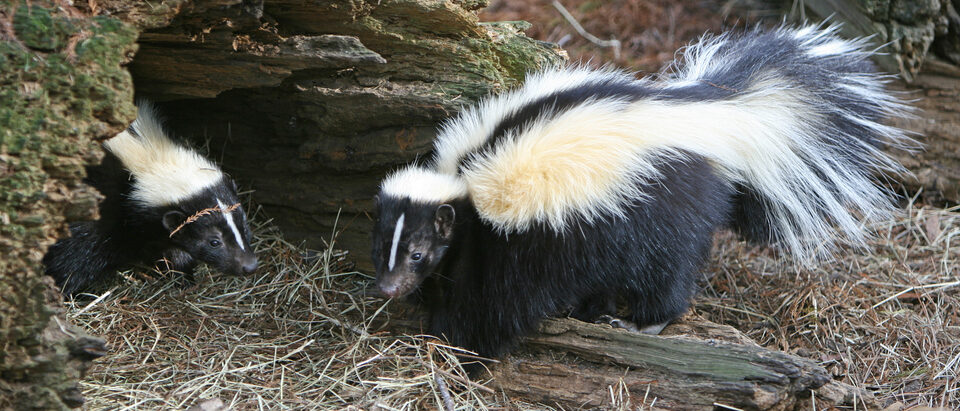
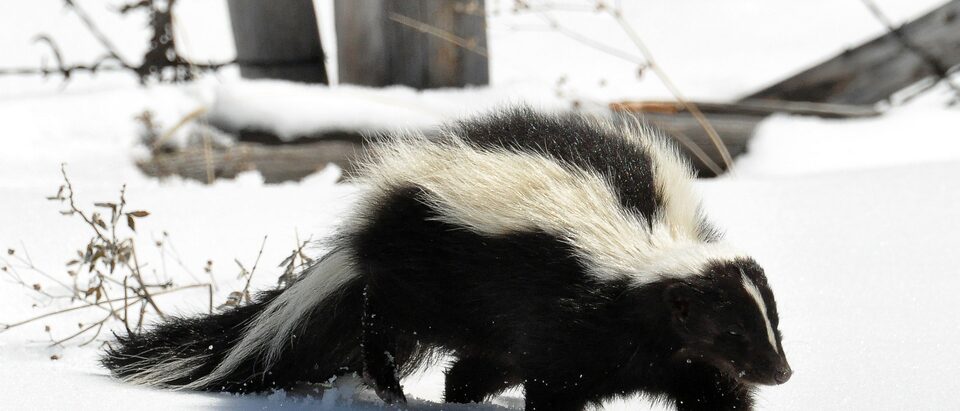
Striped skunks (Mephitis mephitis) are nocturnal animals with poor eyesight but an excellent sense of smell. They move along predictable routes called travel corridors, which typically follow fence lines, foundation edges, vegetation edges, and drainage ditches. Understanding these patterns helps you focus your inspection on the areas most likely to have entry points.
Skunks do not climb well, so their entry points are almost always at ground level or within a few inches of it. Unlike raccoons, which can scale walls and access attics, skunks stick to the ground layer. They can squeeze through gaps as small as 3 to 4 inches if the opening leads to a dark, sheltered space. They will also enlarge existing holes by digging with their strong front claws.
The activity period runs from dusk through the early morning hours. If you see a skunk crossing your yard at the same time each evening from the same direction, it is likely using a consistent entry and exit route. Mark that route on a rough property map for further investigation during daylight hours.
Where to Look for Skunk Entry Points
Foundation and Crawl Spaces
Walk the entire perimeter of your home at least twice to inspect the foundation. Skunks target gaps where the foundation meets the soil line, especially if the soil has settled or eroded over time. Look for cracks in concrete or masonry foundations, loose or missing mortar, and gaps around utility penetrations where pipes, wires, or conduits enter the home.
Crawl space vents are a common entry point. Vents that are rusted, broken, or missing screens create an easy access route. Check the vent frames for gaps between the frame and the foundation. Skunks can also enter through broken or rotted crawl space doors and bilco doors that do not close flush against the ground.
Decks, Porches, and Steps
The gap under ground-level decks and porches is the most common skunk den location. Skunks dig at the edges of the deck where the framing meets the soil. If the skirting or lattice around your deck is damaged, loose, or missing, a skunk can enter directly without digging. The same applies to wooden porch steps where the riser boards have rotted or pulled away from the frame.
Elevated decks (more than 18 inches off the ground) are less attractive to skunks because they prefer concealed, dark spaces that feel secure. However, if the area under an elevated deck is enclosed by lattice, skunks will dig under the lattice if the bottom edge is not buried in the ground.
Sheds, Garages, and Outbuildings
Inspect the perimeter of sheds and detached garages just as thoroughly as your home. Skunks will take shelter under garden sheds, tool sheds, and even playhouses. Look for gaps where the shed skirting meets the ground, broken or missing threshold seals on doors, and gaps in the corner joints of the structure. If the shed sits on concrete piers, check for gaps around the base of each pier.
Garage doors that do not seal tightly against the ground are a surprisingly common entry point. The rubber weather seal at the bottom of the door should be flexible and intact. If it is cracked, hardened, or missing sections, a skunk can push under it. Adjust the door or replace the seal as part of your exclusion plan.
Landscaping Features
Rock piles, wood piles, brush piles, and overgrown shrubbery provide skunks with temporary shelter and movement cover. Skunks will dig under the edges of retaining walls, stone patios, and large landscape boulders. Dense juniper bushes and ground cover growing against the foundation create dark, concealed paths that skunks use to approach the home.
Signs of Skunk Activity to Watch For
Knowing what signs to look for helps you distinguish skunk activity from other wildlife such as raccoons, opossums, or groundhogs. Each sign tells you something about how long the skunk has been there and whether the site is actively occupied.
Digging marks: Skunks dig small, cone-shaped holes about 2 to 3 inches deep when foraging for grubs. These holes appear in lawns, gardens, and flower beds. Concentrated digging along a foundation edge suggests the skunk is trying to enlarge an existing gap.
Tracks and trails: Skunk footprints show five toes on both front and hind feet with visible claw marks. The front foot has a longer, narrow heel pad compared to raccoon tracks. Trails through grass or mud tend to be straight and directed from the den to foraging areas.
Musky odor: The characteristic skunk odor is the most obvious sign, but it can also be misleading. The spray smells persistent near active dens. A faint lingering odor without recent sightings might mean the den is abandoned, but you should still seal the gap to prevent future use.
Droppings: Skunk scat is tubular with blunt ends, typically 1/2 to 3/4 inches in diameter. It often contains insect parts, seeds, berries, and bits of fur. Droppings are usually deposited near the den entrance or in latrine areas in the yard.
Skunk Entry Point Inspection Checklist
How to Use This Checklist
Print or copy this checklist and walk the entire perimeter of your property. Mark each item as clear (no issue found), needs repair (minor damage), or needs replacement (significant damage). Schedule follow-up work within two weeks of completing the inspection.
Foundation: Cracks, gaps, or holes at soil line | Sinking or settled soil along slab edge | Gaps at utility pipe penetrations | Missing or damaged weep holes
Crawl Space and Vents: Broken or missing vent screens | Gaps between vent frames and foundation | Damaged crawl space doors | Rotting sill plates
Decks and Porches: Gaps between deck framing and soil | Damaged or missing skirting | Broken lattice panels | Rotting riser boards on steps
Sheds and Outbuildings: Gaps between structure base and ground | Damaged or missing weather seals on doors | Gaps around corner joints | Dirt pushed out from under the floor
Landscaping: Overgrown shrubbery touching foundation | Rock piles or wood piles within 10 feet of home | Retaining wall gaps | Dense ground cover against walls
Garage: Gaps under garage door seals | Cracked or missing threshold seals | Gaps between garage wall and driveway
Tools for Confirming Entry Points
If you suspect a gap is being used but have not seen direct evidence, use tracking tools to confirm. The simplest method is a tracking patch. Smooth a thin layer of flour or talcum powder in front of the suspected entry point in the evening and check for paw prints the next morning. This works well for gaps under decks and sheds.
Trail cameras and motion-activated game cameras provide definitive proof. Set a camera on a low mount aimed at the suspected entry point. Set it to take three photos per trigger event with a 30-second delay between events. Review the SD card each morning for two to three days. Remote cameras also help you count how many skunks are using the entry and whether they have young with them.
For inaccessible areas like crawl spaces, use a smoke pencil or non-toxic fog to test whether there is an air current flowing through the gap. If the smoke is pulled into the gap or pushed outward, the opening connects to a larger space on the other side and needs to be sealed.
What to Do After You Find an Entry Point
Once you have identified all potential entry points, prioritize them by urgency. Active entry points showing fresh tracks, odor, or droppings should be addressed first with eviction techniques before sealing. Inactive entry points with no recent signs can be sealed immediately as a preventive measure.
Compile a list of materials you will need for each repair. Most jobs require 12-gauge galvanized hardware cloth with 1/2 inch mesh, heavy-duty staples or concrete screws, exterior-grade plywood, expanding foam for small gaps, and backfill soil. Tackle one section of the perimeter at a time and verify the seal before moving to the next.
Frequently Asked Questions
How small of a gap can a skunk fit through?
Skunks can squeeze through gaps as narrow as 3 to 4 inches if the space leads to a dark, sheltered area. They will also enlarge smaller openings by digging with their claws, so even cracks in a foundation should be sealed.
Do skunks dig under fences?
Yes. Skunks dig under the bottom edge of fences to enter yards. A fence does not need to have visible damage for a skunk to dig under it. Installing an L-shaped footer of hardware cloth buried 6 inches deep at the fence line is the best prevention.
Will skunks use the same entry point every night?
Generally, yes. Skunks are creatures of habit. Once they find a reliable route, they will use it consistently until they find a reason not to. This makes entry points relatively easy to identify and seal.
How often should I inspect for skunk entry points?
Inspect your home foundation and yard at least twice per year, once in early spring and once in early fall. Additional inspections are recommended after major storms, landscaping changes, or if you notice skunk activity in your neighborhood.
Can skunks damage my foundation by digging?
Skunks can accelerate erosion around foundations by loosening soil, but they cannot crack or break concrete. The greater concern is that their digging under a slab can create voids that lead to settling or structural shifting over time.
Why Trust Us
WildAnimalsCentral has been a trusted resource for wildlife control information since 2015. Our inspection guidelines are developed in collaboration with licensed wildlife control professionals who perform exclusion work daily. We reference construction standards from the International Residential Code (IRC) and exclusion protocols from the National Wildlife Control Operators Association (NWCOA) to ensure our advice is both practical and code-compliant.
Every article on this site is reviewed annually and updated to reflect changes in wildlife behavior research, building codes, and best practices. This guide was most recently updated in 2026.