
Skunks are one of the most challenging animals to trap because they spray when threatened. The right trap and technique make all the difference. A good skunk trap is an enclosed live cage that prevents the skunk from seeing you approach, which reduces the chance of spraying. This guide covers the best skunk traps on the market and how to use them safely.
- Enclosed traps: Enclosed cage traps with a solid back prevent skunks from seeing you. This reduces spraying significantly.
- Size matters: Skunks need a trap at least 32x10x12 inches. Smaller traps may not fit a skunk comfortably.
- Quiet door: A sensitive, quiet door mechanism is essential. Skunks are easily startled by loud noises.
- Trap cover: Cover the trap with a tarp or blanket before approaching. A skunk will not spray if it cannot see.
- Check frequently: Check traps every 4 to 6 hours. Do not leave a skunk in a trap overnight.
Quick Comparison
| Product | Type | Best For | Price | Buy |
|---|---|---|---|---|
| SZHLUX 32” Live Animal Trap | Folding cage | Best Overall | $49.99 | Check price |
| Havahart 1079SR Large 1-Door | 1-door cage | Proven Classic | $69.97 | Check price |
| JT Eaton Skunk Trap | Rear-entry | Skunk Specific | $83.89 | Check price |
| Smartxchoices 32 in Collapsible | 1-door cage | Best Value | $46.98 | Check price |
Best Overall: SZHLUX 32 Inch Live Animal Trap
 Best Overall
- Size
- 32 x 10 x 12 inches
- Doors
- Single door with rear loading
- Material
- Heavy-duty galvanized steel
The SZHLUX 32-inch folding live animal trap is the top-rated skunk trap on Amazon. It features an enclosed design with a solid back panel that prevents the skunk from seeing you approach, which significantly reduces the risk of spraying. The trap is made from heavy-duty galvanized steel with a rust-resistant coating, and the sensitive trigger mechanism fires reliably when the skunk steps on the treadle plate.
The trap folds flat for easy storage and transport. At 32 x 10 x 12 inches, it meets the minimum size requirements for adult skunks, and the rear door is equipped with a quiet spring mechanism that reduces noise when the door closes.
Best Proven Classic: Havahart 1079SR Large 1-Door Live Animal Trap
 Best Proven Classic
- Size
- 32 x 10 x 12 inches
- Doors
- 1-door, spring-loaded
- Material
- Galvanized wire mesh
The Havahart 1079SR is the gold standard for live animal trapping with over 18,000 reviews. This 1-door trap is constructed from rust-resistant galvanized wire mesh with a spring-loaded door mechanism, and it includes a sensitive trigger plate that releases the door when the animal steps on it.
At 32 x 10 x 12 inches, it is the same size as the SZHLUX but with a more proven track record. The Havahart name is recognized by wildlife control professionals across North America. The trap is not fully enclosed on the sides, so covering it with a tarp before approaching is essential for skunk use.
Best Skunk Specific: JT Eaton Skunk Trap
 Best Skunk Specific
- Size
- 26 x 7 x 7 inches
- Doors
- Rear-entry design
- Material
- Galvanized steel
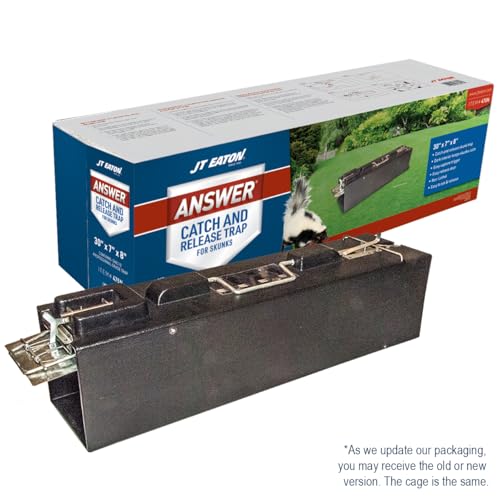
The JT Eaton Skunk Trap is specifically designed for skunk trapping with a unique rear-entry design. The trap has a solid metal back and sides that create a darkened tunnel, making the skunk feel secure when entering. The rear-entry design means the skunk enters from the back rather than the front, which reduces the chance of spraying when you approach.
The trap is smaller than the SZHLUX and Havahart models at 26 x 7 x 7 inches, which may be tight for larger skunks. It is best suited for smaller striped skunks or as a secondary trap. The trigger mechanism is sensitive and reliable, and the wire construction is galvanized for rust resistance.
Best Value: Smartxchoices 32 Inch Collapsible Trap
 Best Value
- Size
- 32 x 12.5 x 12 inches, folds to about 3 inches flat
- Doors
- One gravity action door
- Material
- Galvanized rust-resistant wire mesh, heavy-duty steel
- Assembly
- None, arrives preassembled
This is the cheapest way to get a full 32 inch trap suitable for a skunk, and it arrives assembled. You lift the tab on top, raise the door, hook the trigger rod into place and it is set. No tools, no fiddling with springs in the dark.
Interior size is 32 by 12.5 by 12 inches, which is the minimum I want for an adult striped skunk and the same working room as traps costing twenty dollars more. The one gravity action door means the animal enters, steps on the treadle and the door drops behind it, and the listing notes the mesh openings are smaller than comparable traps, which is what stops a skunk from pushing seed or bait out through the side and then ignoring the trap.
It collapses to about 3 inches flat, which is why this is the one I would keep in a shed between jobs. The listing also names rabbits, raccoons, stray cats, squirrels and moles, so it earns its space as a general live trap rather than a single-species purchase.
How to Choose a Skunk Trap
Skunk traps are different from raccoon or possum traps. The key features to look for include an enclosed design with solid back and sides, a sensitive trigger plate, and a quiet door mechanism. A trap that is too small or too open will cause the skunk to spray when you approach.
Size is the most important factor. A trap at least 32 inches long, 10 inches wide, and 12 inches high is the minimum for adult striped skunks. Larger traps work better because they give the skunk more space and reduce stress. The trap should be made from galvanized steel wire mesh that resists rust and corrosion, and the door mechanism should be sensitive enough to trigger when the skunk steps on the treadle plate but quiet enough not to startle the animal. Look for traps with rubber or plastic-coated door stops that reduce noise.
How to Trap a Skunk Safely
Trapping a skunk requires patience and care. Follow these steps to minimize the risk of being sprayed:
- Place the trap near the skunk den entrance or along a known travel route.
- Bait the trap with sardines, tuna, cat food, or peanut butter. Place bait at the back of the trap behind the treadle.
- Cover the trap with a lightweight tarp or blanket. This makes the skunk feel secure and prevents spraying.
- Check the trap every 4 to 6 hours. Do not leave a skunk in a trap overnight.
- Approach the trap slowly and quietly. If the skunk raises its tail, stop and wait.
- Cover the trap completely before moving it. The skunk will not spray if it cannot see.
Always cover the trap with a heavy blanket or tarp before approaching a trapped skunk. Move slowly and speak quietly. If the skunk raises its tail, stop and wait. A skunk can spray accurately up to 10 feet. The spray contains thiol compounds that cause intense eye irritation and a smell that can last for days. See my skunk smell removal guide for treatment.
Preventing Future Skunk Problems
Once you have removed the skunks from your property, take steps to prevent them from returning. Seal all potential entry points with 1/2 inch galvanized hardware cloth buried at least 12 inches deep to prevent digging. Remove food sources that attract skunks. Secure garbage bins with locking lids, feed pets indoors, clean up bird seed spills, and treat your lawn for grubs using milky spore or beneficial nematodes.
Install motion-activated sprinklers and solar lights around gardens and entry points. Skunks prefer dark, quiet areas and will avoid spaces with sudden water bursts or bright lights. Maintain regular yard maintenance to eliminate hiding spots. For more information, see my skunk proofing guide.
Frequently Asked Questions
Canned sardines, tuna, or cat food work best. Skunks are omnivores and love strong-smelling protein. Peanut butter also works well. See my best skunk baits guide for more options.
Skunks spray when they feel threatened. A covered trap and slow, quiet approach minimize the risk. Most skunks in traps do not spray if handled correctly.
Check traps every 4 to 6 hours. Do not leave a skunk in a trap overnight in extreme temperatures. Relocate promptly according to local regulations.
Yes. Approach the trap slowly while it is covered. Open the door from a distance using a string or stick. The skunk will leave on its own. Do not tip the trap.
It depends on your state and whether you plan to release or euthanize. Many states allow trapping problem skunks on your own property, but relocating wildlife across property lines is restricted or requires a permit in most places. Some states require a licensed wildlife control operator for any skunk trapping. Always check your state wildlife agency first.
At least 32 inches long, 10 inches wide, and 12 inches high for an adult striped skunk. Anything smaller is cramped, which raises stress and makes the skunk more likely to spray. If you also deal with raccoons or groundhogs, a 36 inch trap gives you more room to work with.