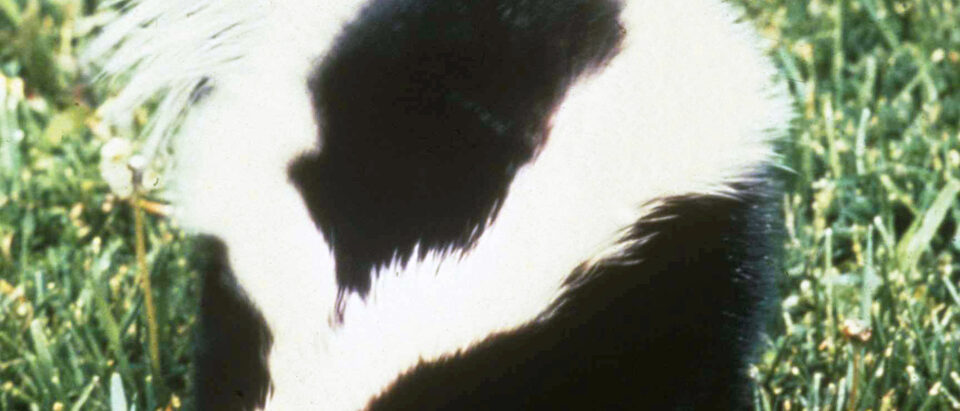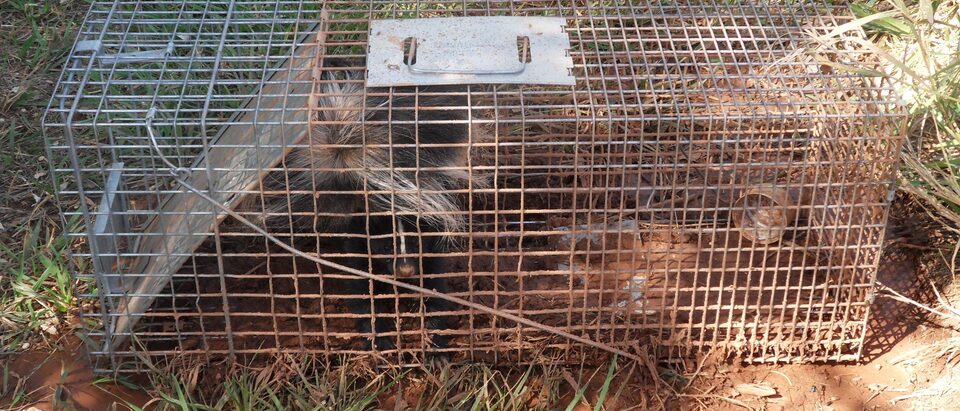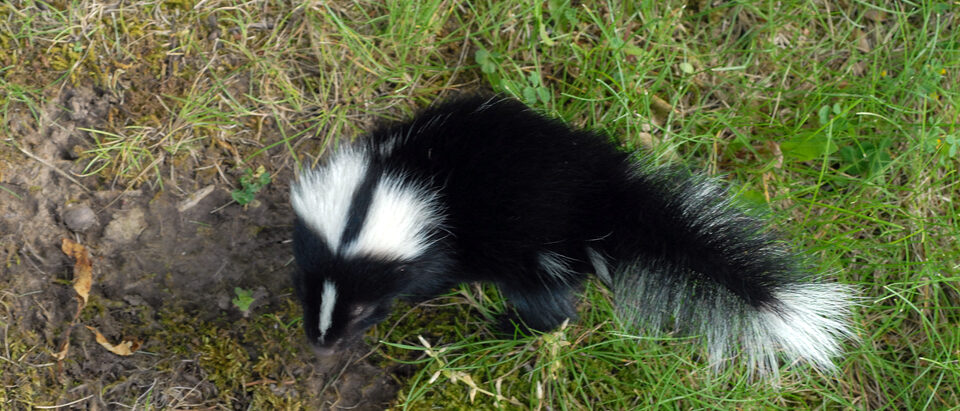

Skunks and cats look similar at first glance, especially at night, but they are very different animals. They have distinct physical features, behaviors, diets, and risks. Knowing how to tell them apart helps you choose the right control method and avoid getting sprayed. This guide covers the key differences between striped skunks and domestic cats.
- Size and shape: Skunks are stockier with thicker bodies. Cats are sleeker with more athletic builds.
- Tail: Skunks have thick, bushy tails often held upright. Cats have sleek, tapered tails.
- Coloring: Skunks are black with distinctive white stripes. Cats come in many colors and patterns.
- Behavior: Skunks are slow and deliberate with a warning display. Cats are quick and agile.
- Sounds: Skunks hiss and stomp their feet. Cats meow, purr, and hiss differently.
Physical Differences
Skunks have a stocky, heavy body with short legs. Their most distinctive feature is the bushy tail that is often held upright as a warning signal. Striped skunks are typically black with white stripes running from the head to the tail. The pattern of white stripes varies between individuals but always includes a prominent white stripe on the head. Cats have a sleeker, more athletic build. Their tails are slender and tapered. Cats come in a wide range of colors and patterns including solid colors, tabby stripes, and patches. Domestic cats are generally smaller than striped skunks, which weigh 4 to 10 pounds.
Behavioral Differences
The behavioral difference is the most reliable way to tell them apart at a distance. Skunks are slow-moving, deliberate animals. They do not run from threats. Instead, they warn potential predators by raising their tail, stomping their feet, and hissing. If the threat continues, they pivot and spray a sulfur-based musk from their anal scent glands. The spray contains thiol compounds that can be detected by the human nose at very low concentrations.
Cats are quick and agile. They run from threats, climb trees, and hide. Cats do not spray as a defense mechanism. Instead, they scratch or bite when cornered. A cat’s defensive posture involves arched back, flattened ears, and hissing, but they will flee given the opportunity.
Tracks and Signs
Skunk tracks show five toes on each foot with visible claw marks. The front foot is larger than the hind foot. Cat tracks show four toes on both front and back feet, with retractable claws that rarely leave marks. Cat tracks are more circular and compact. Skunk tracks show a distinct heel pad that is larger and more triangular than a cat’s.
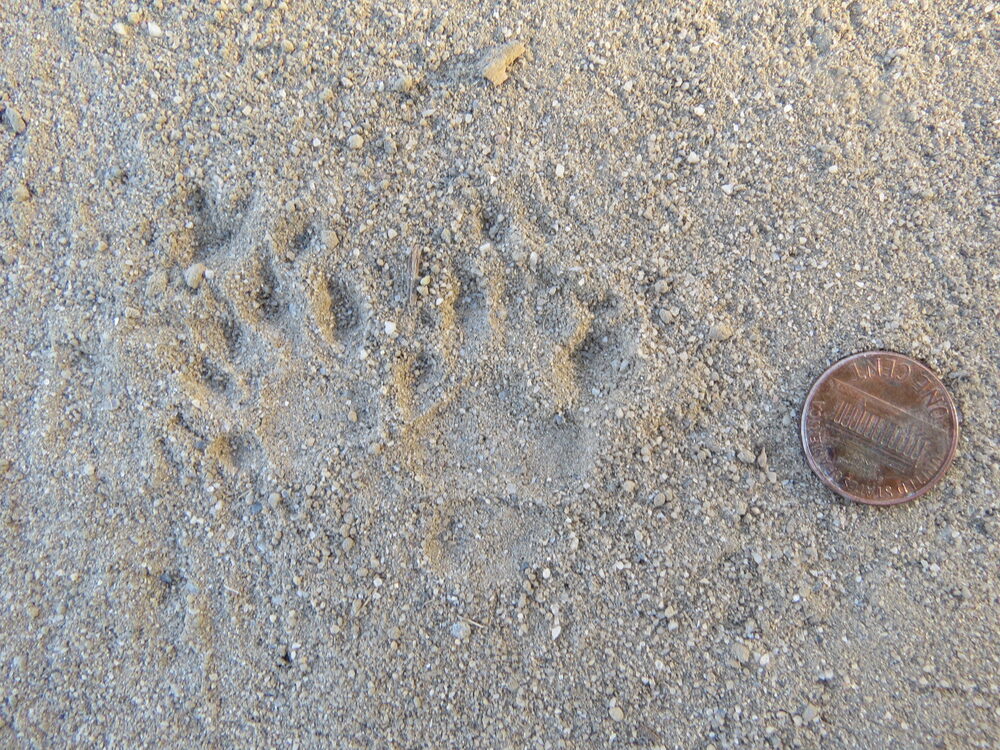
Striped skunk tracks. Photo: garth_harwood, CC BY 4.0
Droppings Comparison
Skunk droppings are similar in size to cat droppings but contain visible insect parts, seeds, and berry fragments. Skunks are omnivorous and their diet of grubs, insects, berries, and small rodents is reflected in their scat. Cat droppings are more uniform in appearance and are typically buried. Skunks do not bury their droppings, leaving them in visible locations near their travel routes.
If you are trying to identify an animal at night, watch the tail. A bushy tail held upright is a skunk. A sleek, horizontal tail is a cat. Also, cat eyes reflect green or yellow in light, while skunk eyes reflect red or orange.
Frequently Asked Questions
No. Skunks and cats are different species from different families. They cannot interbreed. Despite urban legends, there is no such thing as a skunk-cat hybrid.
Skunks avoid confrontation. If threatened, they spray rather than fight. A cat that gets sprayed will learn to avoid skunks in the future. The spray is not harmful beyond the temporary odor.
Use a mixture of hydrogen peroxide, baking soda, and dish soap. See my skunk smell removal guide for the complete recipe. Avoid getting the mixture in your cat’s eyes.
Watch the tail and the movement. A bushy tail held upright with slow, deliberate movement points to a skunk. A sleek, horizontal tail with quick, agile movement points to a cat. If the animal turns its rear toward you, stamps its feet, or hisses, treat it as a skunk and back away slowly.