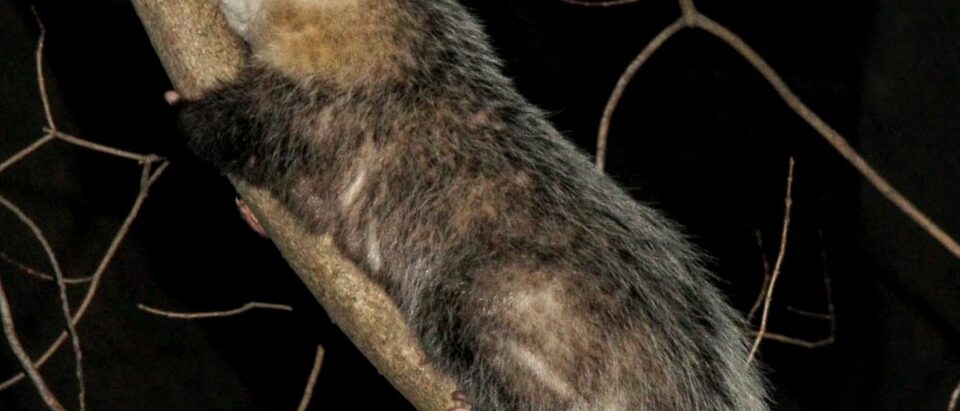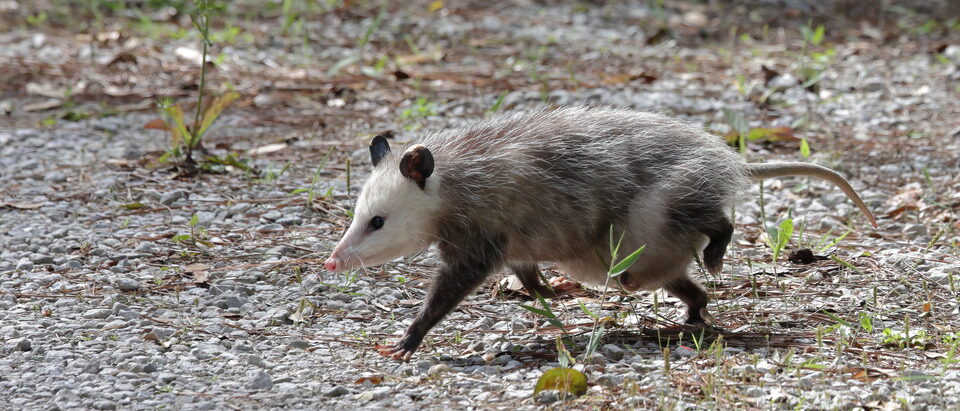

No, possums are not aggressive. I’ve had a handful wander through my yard over the years, and every one of them wanted nothing to do with me. They hiss, they show their teeth, and if you really push it, they flop over and play dead. What they almost never do is come after you.
When a possum feels cornered, its whole routine is one big bluff. It is trying to look scary so it does not have to fight. This guide covers what that behavior actually means and what to do if you run into one. For more, see my natural possum-deterrent plants for your garden guide.
What a Possum Does When It Feels Threatened
Possums are shy, nocturnal animals that would rather leave than fight. When they sense danger, they move through a pretty predictable sequence:
- Freeze. The possum holds still and hopes you don’t notice it.
- Hiss and show teeth. If you keep coming, it opens its mouth wide and hisses. This is the one that freaks people out, but it is all show. The possum is scared, not aggressive.
- Growl. A low growl might come with the hissing. Still just noise.
- Play dead. If nothing else works, the possum goes limp, drools, and can give off a rotten smell. This is not an act. It is an involuntary shutdown.
- Run. Give it half a chance and it will bolt.
Playing Dead Is Not an Act
The “playing possum” routine is not something the animal chooses to do. It is an involuntary stress response, a bit like fainting in people. The possum’s body goes limp, its eyes glaze over, and it can stay that way for a few minutes up to several hours.
A possum in this state is still conscious. It just looks dead, which is the whole point. Most predators want live prey, so a stiff, smelly animal is not worth the trouble.
Quick myth check: People say possums “play” dead like it’s a trick. It isn’t. The possum has no control over it and won’t snap out of it until the danger passes. Leave it alone and it will wander off on its own.
Are Possums Actually Good to Have Around?
Yes, and this is the part most people don’t hear. A possum in your yard is doing you a favor.
They eat ticks, insects, slugs, and carrion, and they clean up fallen fruit. They are not looking for a fight with your dog or your kids. A possum that hisses at you is more afraid of you than you are of it.
What to Do If You See a Possum
The right move is almost always to do nothing.
- Back away slowly. A hissing possum is scared, not attacking.
- Give it a way out. Bring pets and kids inside and let it leave on its own.
- Don’t corner it or try to pick it up. A cornered possum will bite to defend itself, same as any animal.
- Lock down food. Bring in pet food and secure your trash lids so it has no reason to stick around.
For more, read my possum disease guide and possum backyard guide.
Frequently Asked Questions
Almost never. If a dog goes after a possum, the possum will hiss, show its teeth, or play dead. It only bites if the dog keeps attacking and it has no way out. Keep an eye on your dog outside and don’t let it corner a possum.
Fifty, which is more than any other North American land mammal. It is a strange flex for an animal that rarely uses them for defense, but the teeth are there for an omnivorous diet, not for fighting.
Attacks are extremely rare. A possum is far more likely to flee, hiss, or play dead than to bite. Most bites happen when someone corners or handles one. Leave it alone and it will leave you alone.
Back away slowly. The hissing is a bluff, not a threat. The possum wants you gone, and if you give it room, it will retreat on its own. Skip the sudden movements and loud noises.
The Bottom Line
Possums are not aggressive animals. The hissing, the teeth, the playing dead, it’s all defense. Give one a little space and an escape route and it will disappear on its own, and along the way it will eat some of the pests you don’t want around anyway.