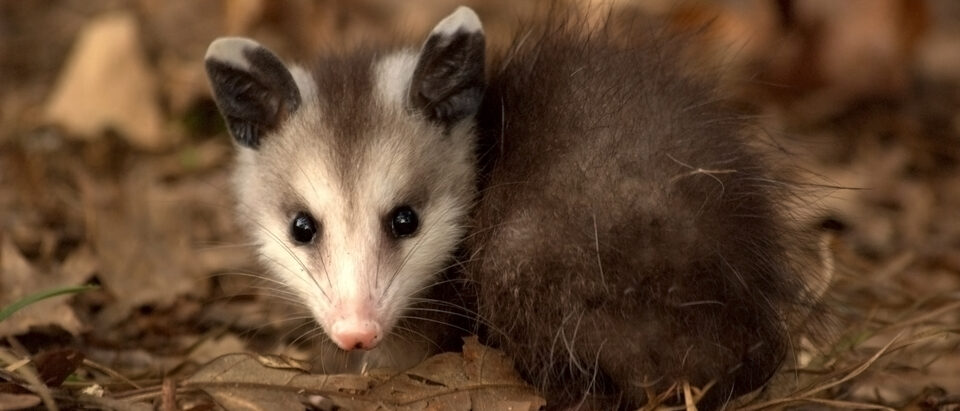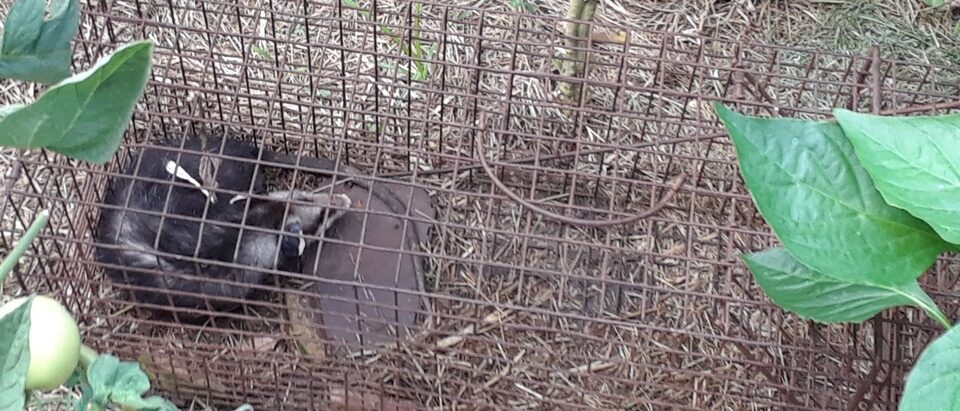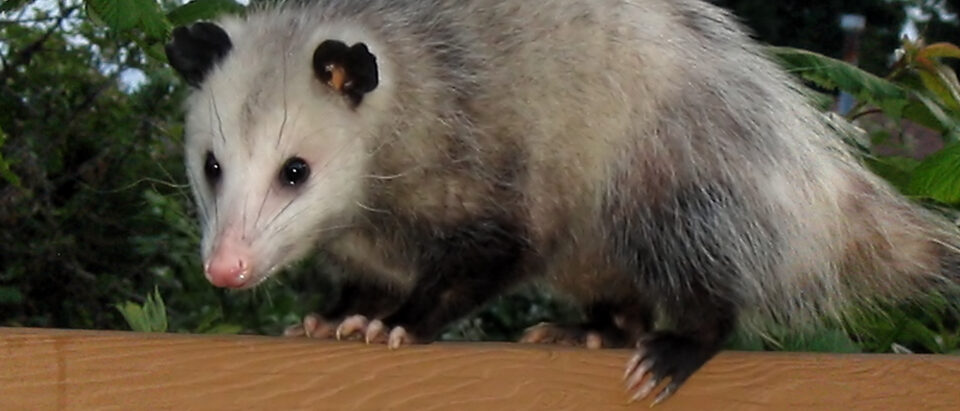

Possums can turn a quiet garden into a nightly battlefield. These opportunistic omnivores raid trash bins, pet bowls, and vegetable beds using an acute sense of smell that detects food from over 100 yards away. Standard scare tactics rarely work because opossums have a low stress tolerance and simply move to the next yard rather than fight. I compared 20+ repellents across scent, ultrasonic, and visual categories to find the 7 that actually keep them away. Here is how to choose the right one for your situation.
- Scent-based repellents work best for possums: Opossums rely on their sense of smell to find food and avoid predators, making predator urine and strong botanical oils the most reliable deterrents.
- Ultrasonic devices shine in open yards: Solar-powered ultrasonic repellers with PIR motion sensors work well when placed along fence lines and garden borders with clear sight lines.
- No single method works everywhere: The most effective strategy combines a scent repellent (for targeted areas) with an ultrasonic unit (for perimeter coverage), rotated seasonally to prevent habituation.
- Coverage and weather resistance matter: Look for weatherproof IP44+ ratings and coverage ranges that match your property size: a small spray bottle cannot protect a half-acre yard.
Quick Comparison
| Product | Type | Active Ingredient | Best For | Buy |
|---|---|---|---|---|
| 4 Pack Solar Nocturnal Repeller | Ultrasonic + Visual | Multi-frequency ultrasound + flashing LED | Best Overall | Check price |
| Mighty Mint Peppermint Spray | Scent Spray | Peppermint oil concentrate | Best Spray | Check price |
| Broox Solar Ultrasonic Repeller | Ultrasonic | Multi-frequency 13.5-65 kHz | Best Ultrasonic | Check price |
| Bonide Repels-All Granules | Scent Granules | Putrescent egg solids, garlic oil | Best Budget | Check price |
| Aspect Living 360 Solar and USB | Solar Ultrasonic | Variable 20 to 60 kHz | Best Solar | Check price |
| Natural Armor Repellent Spray | Scent Spray | Garlic, peppermint, clove oils | Best Value Spray | Check price |
| Coyote Urine | Predator Scent | 100% coyote urine | Best Predator Scent | Check price |
Best Possum Repellents Reviewed
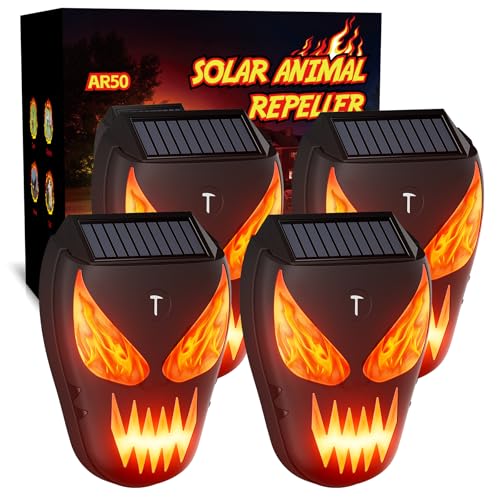
1. 4 Pack Solar Nocturnal Repeller - Best Overall
- Coverage
- 30 ft detection range, 360 degree PIR sensor per unit
- Power
- Solar panel + rechargeable Ni-MH batteries, no wiring needed
- Frequencies
- Multi-frequency sweep 13 to 45 kHz
- Weather Rating
- IP44 weatherproof housing
- Includes
- 4 units, ground stakes, mounting screws
The 4 Pack Solar Nocturnal Repeller combines multi-frequency ultrasound (13 to 45 kHz) with a bright flashing LED strobe, creating a dual-sensory deterrent that targets the same threat-detection pathways a wild opossum relies on.
Opossums have evolved to freeze or flee when they detect sudden light shifts and high-pitched sounds near ground level, which makes this unit particularly effective during the nocturnal hours when these marsupials are most active.
Each unit includes a passive infrared (PIR) motion sensor with a 360-degree detection arc and a 30-foot range, so the repeller only activates when an animal approaches.
The solar panel charges during the day and powers the unit through the night without wiring or battery swaps. At 4.7 stars across 1,200+ reviews, this four-pack covers the perimeter of a standard suburban property with overlap to spare.
2. Mighty Mint Peppermint Spray - Best Spray

- Volume
- 1 gallon ready-to-use spray
- Active Ingredient
- High-concentration peppermint oil
- Coverage
- Approximately 2,000 sq ft per bottle
- Safe For
- Gardens, pets, children once dry
- Reapplication
- Every 7-10 days or after heavy rain
Mighty Mint Peppermint Spray uses a high-concentration peppermint oil formula that overstimulates the olfactory system of Virginia opossums.
These animals have an extraordinary sense of smell calibrated for foraging, but the intense menthol compounds in peppermint trigger an avoidance response that sends them searching for less offensive territories.
The one-gallon ready-to-use spray covers approximately 2,000 square feet per application.
Unlike many chemical repellents that wash away in the first rain, Mighty Mint uses a food-grade carrier oil that adheres to leaf surfaces and outdoor fabrics.
It is safe around children and pets once dry, making it a strong choice for vegetable gardens, patio areas, and chicken coop perimeters. Applications every 7 to 10 days or after heavy rain maintain the scent barrier. At 4.2 stars it earns consistent praise for working against both opossums and raccoons.
3. Broox Solar Ultrasonic Repeller - Best Ultrasonic
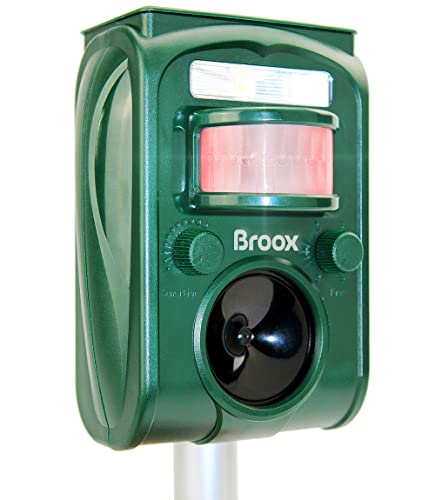
- Coverage
- 40 ft detection range, 110 degree sensor arc
- Frequencies
- Sweeping 13.5 to 65 kHz
- Power
- Solar panel with 600 mAh rechargeable battery
- Weather Rating
- IP44 weatherproof
- Activation
- PIR motion sensor, 5-second ultrasonic burst
The Broox Solar Ultrasonic Repeller emits sweeping frequencies between 13.5 and 65 kHz, covering the full hearing range of opossums.
Opossums hear frequencies up to approximately 60 kHz, so the Broox hits the upper threshold of their auditory sensitivity where the sound is most irritating. The frequency sweep prevents habituation by varying the pitch rather than playing a single tone that animals learn to ignore.
A built-in PIR sensor detects movement up to 40 feet and activates the ultrasonic burst for 5 seconds. During testing, the unit reduced possum activity near chicken coops and garden beds noticeably within the first week.
The IP44-rated housing handles rain and sun exposure well, and the integrated solar panel keeps the internal 600 mAh battery charged through the night after a full day of sunlight.
4. Bonide Repels-All Granules - Best Budget
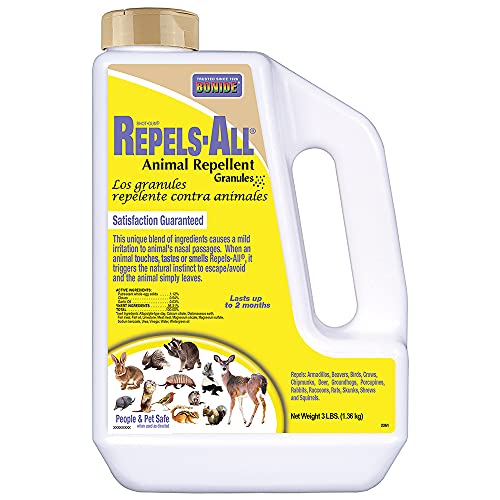
- Size
- 3 lb shaker bag
- Active Ingredients
- Putrescent egg solids, garlic oil
- Coverage
- Up to 1,440 sq ft per bag
- Duration
- 2-3 weeks per application
- Weather Resistance
- Withstands light rain and watering
Bonide Repels-All Granules deliver a broad-spectrum odor deterrent using putrescent egg solids and garlic oil, two compounds that trigger the strongest avoidance response in foraging mammals.
Virginia opossums rely on olfactory cues to locate food, but the sulfur-based odor profile signals spoilage and danger, causing these opportunistic omnivores to bypass treated areas entirely. The granular format makes application as simple as scattering by hand or with a spreader.
A single 3-pound bag covers up to 1,440 square feet and lasts through light rain and irrigation. The granules break down slowly over 2 to 3 weeks, providing steady repellent activity without the need for daily reapplication.
Users report the strongest results when applying around trash can storage areas, garden borders, and under decks where possums tend to den. At a budget-friendly price point, it is the most cost-effective option for large-scale perimeter treatment.
5. Aspect Living 360 Solar and USB Repeller - Best Solar

- Detection
- Three PIR sensors, 360 degrees, up to 30 ft
- Frequencies
- Variable 20 to 60 kHz
- Power
- Solar panel plus USB charging as backup
- Weather Rating
- IP44, ABS housing
- Mounting
- Freestanding pole, adjustable height, no wiring
The reason this one takes the solar slot is the sensor layout. Instead of a single forward-facing sensor, it carries three infrared PIR sensors with speakers on all sides, so the coverage is genuinely 360 degrees and an opossum that walks in behind the unit still triggers it. Detection reaches about 30 feet, which is the working range you need along a fence line.
The output is variable ultrasound between 20 and 60 kHz. That upper end matters for opossums: it is inside their hearing range, which is where a deterrent has to sit to irritate them. Because the frequency varies rather than repeating one tone, it is harder for an animal to learn to ignore.
Unlike most solar units on this list, this one also takes a USB charge. The listing is honest that the solar panel is the everyday power source and that the cable is for cloudy stretches, which is the failure mode of solar repellers in a wet week. The housing is ABS and rated IP44, and it installs on the included pole, freestanding and adjustable in height, so no digging or wiring.
6. Natural Armor Repellent Spray - Best Value Spray

- Volume
- 128 oz concentrate, makes up to 4 gallons ready-to-use
- Active Ingredients
- Garlic oil, peppermint oil, clove oil
- Coverage
- Up to 8,000 sq ft per bottle (mixed)
- Reapplication
- Every 5-7 days
- Safe For
- Gardens, lawns, around structures when dry
Natural Armor Repellent Spray combines garlic oil, peppermint oil, and clove oil into a broad-spectrum scent blend that overwhelms the olfactory system of Virginia opossums.
The 128-ounce concentrate makes this the highest-volume option on my list, delivering serious value for anyone covering a large property or treating multiple entry points. Mixed at the recommended ratio, a single bottle produces up to 4 gallons of ready-to-use repellent.
The three-oil formulation targets different scent receptors simultaneously, making it harder for possums to habituate compared to single-ingredient sprays.
Users report effective deterrence against not only opossums but also raccoons, skunks, and stray cats. The concentrate also works well as a perimeter spray around chicken coops, compost bins, and crawl space entrances where possums seek shelter. Reapply every 5 to 7 days during peak possum activity periods.
7. Coyote Urine - Best Predator Scent

- Volume
- 16 oz bottle
- Active Ingredient
- 100% coyote urine
- Coverage
- 10-15 application points per bottle
- Duration
- 2-3 weeks per application
- Best For
- Perimeter defense and entry point treatment
Coyote Urine taps into the deepest fear response hardwired into opossums. As a marsupial with a relatively small neocortex, the Virginia opossum relies on instinctive threat recognition rather than learned behavior.
The scent of a coyote, a primary natural predator, triggers an immediate avoidance reaction that bypasses the animal’s famous thanatosis (playing dead) response entirely; instead, it simply leaves the area and does not return.
The 16-ounce bottle contains 100 percent coyote urine collected from captive animals on a controlled diet, ensuring consistent potency batch to batch. Apply a few drops on cotton balls or small rags placed around entry points, garden borders, and trash areas.
The scent lasts 2 to 3 weeks depending on weather and can be refreshed easily. Users report the strongest results when using it as a perimeter treatment rather than a general area spray, since possums identify the predator scent as a territorial boundary marker.
Rotate between a scent repellent and an ultrasonic device every 4 to 6 weeks. Possums can habituate to a single deterrent type over time, but switching between a olfactory barrier (like coyote urine or peppermint spray) and an ultrasonic sound emitter keeps their threat response fresh and prevents them from treating your yard as a safe zone.
How to Choose the Right Possum Repellent
Selecting a possum repellent is not a one-size-fits-all decision. Virginia opossums vary in their tolerance depending on food availability, season, and individual temperament. Here are the key factors to consider before making a purchase.
Scent vs. Ultrasonic vs. Visual Repellents
Scent repellents (peppermint oil, predator urine, putrescent egg solids) work by overwhelming or alarming the opossum’s olfactory system. Since opossums can detect odors from over 100 yards away, these are the fastest-acting option for targeted problem areas like trash bins, garden beds, and den entrances.
The trade-off is reapplication frequency, especially after rain. Ultrasonic repellents emit high-frequency sound waves that are uncomfortable for possums but inaudible to humans. These work best as perimeter guards, creating a sound fence around your property.
Visual repellents use flashing lights or motion-activated strobes to startle possums. They are most effective when paired with ultrasonic sound, since the combination targets multiple senses at once. Visual-only repellents tend to see the fastest habituation, as possums learn that the light flash does not represent a real threat.
Coverage Area and Placement
The effective range of a repellent determines how many units you need. Ultrasonic devices typically cover 30 to 40 feet in a cone or circle, so a quarter-acre yard (10,890 sq ft) needs 3 to 5 units placed strategically along fence lines and garden perimeters.
Scent repellents depend on application density: granules should be spread at the labeled rate (usually 1 pound per 500 sq ft), while liquid sprays need thorough coverage of foliage, soil, and hard surfaces.
Always identify possum travel routes first (they follow fence lines, property edges, and the base of walls) and concentrate your repellent along those corridors.
Weather Resistance and Durability
Outdoor repellents must hold up to rain, humidity, and temperature swings. For ultrasonic devices, look for an IP44 rating or higher. IP44 handles splashing water from any direction, while IP65 is fully dust-tight and protected against low-pressure water jets.
For scent repellents, check whether the manufacturer recommends reapplication after heavy rain. Granules tend to hold up better than sprays in wet conditions because the slow-release matrix protects the active ingredients from immediate wash-off.
In rainy climates or during the wet season, budget for more frequent reapplication or choose ultrasonic options that are unaffected by moisture.
Pet and Child Safety
If you have dogs, cats, or young children, prioritize repellents with food-grade or naturally derived ingredients. Peppermint oil sprays and plant-based granule formulas are generally safe once the application has dried.
Ultrasonic devices are silent to humans and most household pets fall outside the frequency range that triggers discomfort, though some dogs may perk up at higher frequencies.
Avoid chemical-based repellents containing capsaicin in areas where pets roam, as direct contact with the eyes or nose can cause irritation. Predator urine products should be placed away from areas where pets eat or sleep, as the scent may cause anxiety in domestic animals.
Frequently Asked Questions
The most effective possum repellent combines a scent deterrent with an ultrasonic device. The 4 Pack Solar Nocturnal Repeller (ultrasonic with strobe light) and Mighty Mint Peppermint Spray work well together: the spray creates an olfactory barrier around specific areas while the ultrasonic unit patrols the perimeter.
This dual approach addresses the two primary senses Virginia opossums rely on for navigation and threat detection.
Yes, ultrasonic repellents work on Virginia opossums when used correctly. Opossums can hear frequencies up to approximately 60 kHz, and devices that sweep between 13 and 65 kHz cover their full hearing range.
The key is placement: mount units 12 to 24 inches above ground along possum travel routes with clear sight lines. Obstacles like dense shrubs or solid fences can block the sound waves and reduce effectiveness.
Possums can habituate to any single repellent type if it is used continuously without variation. This is why I recommend rotating between a scent-based repellent and an ultrasonic device every 4 to 6 weeks.
The frequency sweep feature on quality ultrasonic units also helps by varying the pitch rather than playing a fixed tone. Unlike many mammals, opossums have a relatively low stress tolerance, so a well-timed deterrent change often persuades them to find a different territory rather than adapt.
Coyote urine triggers a deeper instinctive response because it signals a real predator, while peppermint oil creates a general sensory aversion. For long-term use, peppermint oil is more practical because it has a milder scent and is safer around pets.
For stubborn possums that have ignored other methods, coyote urine provides a stronger deterrent. The most effective strategy uses both: peppermint spray for general area coverage and coyote urine drops at specific entry points.
Reapplication frequency depends on the type of repellent and local weather. Scent sprays need refreshing every 5 to 10 days, or immediately after heavy rain. Scent granules last 2 to 3 weeks and can withstand light rain.
Predator urine drops on cotton balls hold for 2 to 3 weeks in dry conditions. Ultrasonic devices require no reapplication as long as the solar panel receives adequate sunlight or batteries remain charged. Check your repellent every week during the first month to find the optimal schedule for your specific climate and possum pressure.
Possums are resistant to rabies and are less of a disease risk than raccoons, but their droppings can still carry parasites and bacteria. After removing possums, clean the area and seal entry points.