Skunk garden damage

Skunk in the Garden: Protection and Removal Guide (2026)

Skunks in the garden can destroy plants, dig up lawns, and damage vegetables in a single night of foraging. Skunks are attracted to gardens because they offer food, water, and shelter. They dig for grubs and insects, eat ripe vegetables and fallen fruit, and may create dens under garden sheds or dense shrubbery. This guide covers how to protect your garden from skunks using fencing, repellents, habitat modification, and humane removal when necessary.

Key Takeaways

  • Skunks dig cone-shaped holes 2 to 4 inches wide: These are foraging holes for grubs and insect larvae. Treating the lawn for grubs reduces digging pressure.
  • Fencing is the most effective garden protection: Use 1/4 inch hardware cloth or welded wire buried 6 inches deep with an outward L-footer to prevent digging under.
  • Remove hiding spots and food sources: Clear brush piles, seal under garden sheds, and pick ripe vegetables daily. Skunks avoid open, exposed areas.
  • Repellents have limited effectiveness: Capsaicin-based repellents (activates the TRPV1 receptor in mammals) provide short-term deterrence but require frequent reapplication after rain.
  • Skunks rarely spray in gardens unless cornered: They prefer to retreat from humans. Give skunks an escape route and they will leave peacefully.

Skunk Garden Damage Identification

Before taking action, confirm that skunks are the cause of your garden damage. Skunks leave distinctive signs that are easy to identify once you know what to look for. Differentiating skunk damage from raccoon, vole, or squirrel damage helps you choose the right solution.

Skunk foraging holes are small, cone-shaped depressions about 2 to 4 inches wide and 2 to 3 inches deep. They appear in groups across the lawn and garden, especially after rain when grubs move closer to the surface. The holes are neat and clean, not the messy overturned soil that raccoons leave behind.

Skunks also leave footprints. Their tracks show five toes on each foot with visible claw marks. The front feet have longer claws designed for digging. Skunk droppings are similar to cat droppings but often contain undigested insect parts, seeds, and berry skins.

Garden damage from skunks includes eaten vegetables at ground level (tomatoes, melons, cucumbers), pulled-up root vegetables (carrots, potatoes), and trampled plants near the edges of the garden. Unlike deer or rabbits, skunks do not eat leaves or stems. They focus on accessible fruits, vegetables, and soil-dwelling insects.

Skunk vs Raccoon Damage: Raccoons leave large areas of torn-up sod and scattered debris. They are stronger and will pull up entire sections of lawn. Skunks dig neat, individual holes and rarely disturb large areas. If your lawn looks like someone dug small golf divots across the yard, skunks are the likely culprits.

Garden Fencing for Skunks

Fencing is the most reliable method for keeping skunks out of gardens. Skunks are poor climbers and cannot jump over obstacles. A properly installed fence prevents both ground-level entry and digging underneath. The key is using the right materials and installation technique.

Fence Height and Material

A skunk-proof fence does not need to be tall. A 3-foot fence is sufficient because skunks do not climb well. However the material matters. Use 1/4 inch hardware cloth or 19-gauge galvanized welded wire. Standard chicken wire is not suitable. Skunks can bend chicken wire gaps open with their noses and claws.

Underground Barrier

Skunks dig, so the fence must extend underground. Dig a trench 6 to 8 inches deep along the fence line. Bury the bottom of the hardware cloth in the trench, then bend the bottom 3 to 4 inches outward at a 90-degree angle away from the garden. This L-footer prevents skunks from digging under the fence. They hit the buried mesh and cannot get past the outward bend.

Gate and Entry Points

Garden gates are common weak points. Ensure gates fit tightly against the ground with no more than a 1-inch gap underneath. Install a galvanized mesh kick plate along the bottom of each gate. Check gate latches for security. A loose gate that swings open or gaps when closed is an invitation for skunks and other wildlife.

Pro Tip: Add a strand of electric fencing 4 to 6 inches above ground along the outside of your garden fence for extra deterrence. A low-voltage electric wire discourages skunks from testing the fence line. This is especially useful during peak skunk activity months from March through October.

Natural and Commercial Repellents

Repellents are a secondary defense that work best when combined with fencing and habitat modification. On their own, repellents rarely solve a persistent skunk problem. Skunks are adaptable and may tolerate or ignore repellents after initial exposure.

Capsaicin-Based Repellents

Products containing capsaicin, the compound that makes chili peppers hot, can deter skunks temporarily. Capsaicin activates the TRPV1 receptor in mammals, causing an irritating burning sensation when skunks sniff or taste treated areas. Granular capsaicin repellents sprinkled around the garden perimeter can reduce skunk visits. However rain and irrigation wash them away, requiring reapplication every 3 to 7 days.

Predator Urine Repellents

Granular or liquid repellents containing coyote or fox urine are available from garden centers and wildlife supply stores. The scent of a predator can trigger an avoidance response in skunks. Effectiveness varies and these products lose potency after rain. They must be reapplied regularly to maintain any deterrent effect.

Ultrasonic Devices

Ultrasonic repellent devices emit high-frequency sound waves (20,000 to 60,000 Hz) intended to deter mammals. These devices have not been proven effective against skunks in controlled studies. Skunks may be startled initially but quickly habituate to the sound. Ultrasonic devices are not a recommended primary deterrent for garden skunk problems.

Avoid Harmful Repellents: Do not use mothballs, ammonia, bleach, or any unregistered pesticide as a skunk repellent. Mothballs contain naphthalene or paradichlorobenzene, which are toxic to pets, children, and the environment. Using mothballs outdoors for wildlife repellent is illegal under FIFRA (Federal Insecticide, Fungicide, and Rodenticide Act) and carries fines.

Habitat Modification

Making your garden less attractive to skunks is a long-term strategy that reduces the need for repellents and trapping. Skunks seek gardens that offer food, water, and shelter. Remove any of these elements and skunks will look elsewhere.

Remove brush piles, wood stacks, and dense ground cover near the garden. These provide daytime resting spots for skunks. Keep grass mowed short. Skunks prefer to travel along edges and through cover. An open, well-maintained garden is less appealing than one with overgrown borders and hiding spots.

Pick ripe vegetables and fallen fruit immediately. A garden full of ripe tomatoes at ground level is a skunk buffet. Harvest daily during peak season. Remove any rotting or overripe produce from the ground. If you have fruit trees, pick up fallen fruit every day.

Seal gaps under garden sheds, tool sheds, and decking. A single gap under a garden shed provides a perfect maternal den site. Use 1/4 inch hardware cloth buried 6 inches deep around the perimeter of any garden structures. Check for gaps around water spigots, hose connections, and foundation vents near the garden.

Grub Control Strategies

Skunks dig in lawns and gardens primarily to eat grubs. Grubs are the larvae of beetles like Japanese beetles, June bugs, and chafer beetles. If your garden soil is rich in grubs, skunks will keep returning regardless of other deterrents. Treating the grub population reduces the primary food source that attracts skunks.

Beneficial nematodes (Heterorhabditis bacteriophora) are microscopic roundworms that parasitize and kill grubs in the soil. They are a biological control safe for pets, plants, and beneficial insects. Apply nematodes in late summer or early fall when grubs are active near the soil surface. Follow the package instructions for proper watering and timing.

Milky spore (Paenibacillus popilliae) is another biological control that targets Japanese beetle grubs specifically. It takes 2 to 4 years to establish in the soil but provides long-term control once established. Milky spore is safe for vegetable gardens and does not harm earthworms or beneficial insects.

Humane Removal Options

If a skunk has taken up residence under a garden shed or deck and all deterrent methods have failed, humane removal may be necessary. Live trapping is the standard method. Before trapping, check your state and local regulations. Some areas require a permit, and many prohibit relocation due to rabies vector concerns.

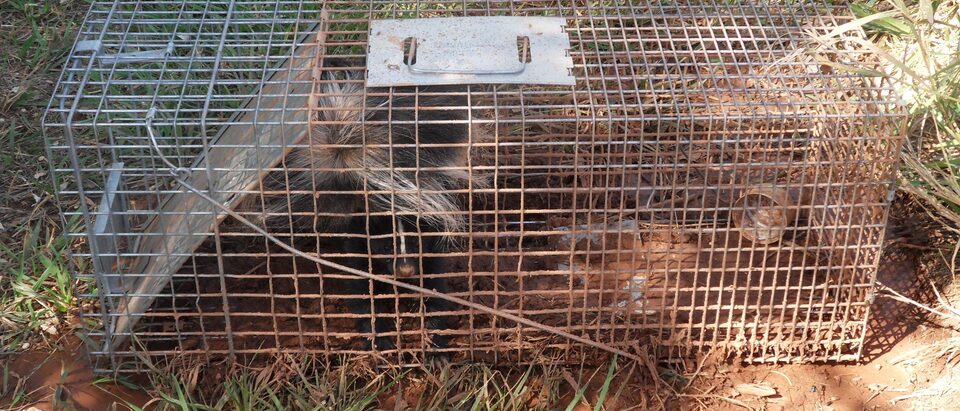
Use a live trap at least 32 inches long with a covered top. Covering the trap reduces the skunk’s visual stimuli and keeps it calmer, which lowers the chance of spraying. Bait the trap with canned cat food, sardines, peanut butter, or marshmallows. Place the trap near the den entrance at dusk when skunks are beginning their nightly foraging.

If the skunk is under a shed or deck without easy trap access, a one-way exclusion door is a better option. Install the door over the entry point. The skunk pushes through to exit and cannot re-enter. Leave the door in place for 72 hours, then seal the entry permanently.

Frequently Asked Questions

Will a skunk spray my dog in the garden?

Skunks spray only when they feel threatened. A dog that approaches a skunk in the garden is likely to get sprayed. Keep dogs on a leash during skunk-active hours (dusk through dawn). If your dog gets sprayed, wash with a mixture of hydrogen peroxide, baking soda, and dish soap.

Do skunks eat tomato plants?

Skunks eat ripe tomatoes that fall to the ground but do not typically eat the plants themselves. They target the fruit and any insects they find near the base of the plants. Protecting low-growing tomatoes with fencing or elevated cages reduces skunk access.

Will coffee grounds repel skunks?

There is no scientific evidence that coffee grounds repel skunks. While the strong smell may temporarily mask other scents, skunks do not find coffee grounds unpleasant enough to avoid an area with food. Coffee grounds are better used as compost than as a wildlife deterrent.

How do I fill skunk holes in my garden?

Fill skunk foraging holes with topsoil and tamp it down firmly. Water the area to settle the soil. If skunks keep re-digging the same spots, the soil contains grubs that need treatment. Apply beneficial nematodes to eliminate the grubs and the skunks will stop digging.

Are skunks dangerous to have in the garden?

Skunks in the garden pose a low direct danger to humans if left alone. They are not aggressive and will retreat if given space. The main concerns are damage to plants and lawns, the risk of spray if startled, and the potential for rabies transmission from an infected skunk. Nocturnal behavior means daytime skunk activity is a rabies warning sign.

What time of night are skunks most active in gardens?

Skunks are crepuscular and nocturnal. They are most active from dusk through midnight and again in the hours just before dawn. Peak garden activity occurs between 8 PM and 12 AM during warm months. Setting traps or applying repellents just before dusk maximizes effectiveness.

Related Resources

Why Trust Us

WildAnimalsCentral.com has been guiding homeowners through wildlife management challenges since 2018. Our garden protection guides are written in consultation with horticulturists, master gardeners, and wildlife control professionals. We test repellents and exclusion methods in real garden settings to verify their effectiveness before recommending them to our readers.

We prioritize practical, safe, and environmentally responsible solutions. Our recommendations avoid harsh chemicals and focus on methods that work with nature rather than against it. Every guide on this site aims to help you share your outdoor space peacefully with the wildlife around you.