
Skunk spray isn’t just a bad smell. It’s a chemical weapon, and understanding how it works is the key to actually getting the smell out.
If you’ve ever washed a sprayed dog and had the smell come back the next day, this guide explains why, and what actually fixes it. The short version is that the stuff is built to stick around, and most of what people do about it makes it worse.
What’s in it
Skunk spray is an oily, yellowish liquid made in two glands on either side of the skunk’s rear. The skunk aims it through two small openings with surprising accuracy.
The smell comes from a family of chemicals called thiols, which are sulfur compounds. Your nose picks up sulfur compounds at unbelievably low concentrations, which is why one spray can stink up a whole block. Thiols are the same chemical family behind rotten eggs and burnt rubber.
There’s a second group in the mix called thioacetates. These don’t smell as much at first, but when they hit water, they convert back into the stinky thiols. That’s the trick that makes the smell come back after a bath or a rainstorm.
How skunks use it
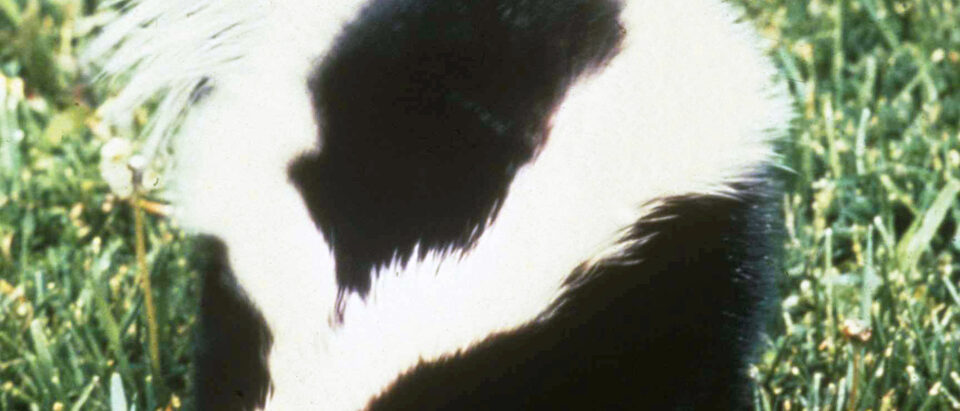
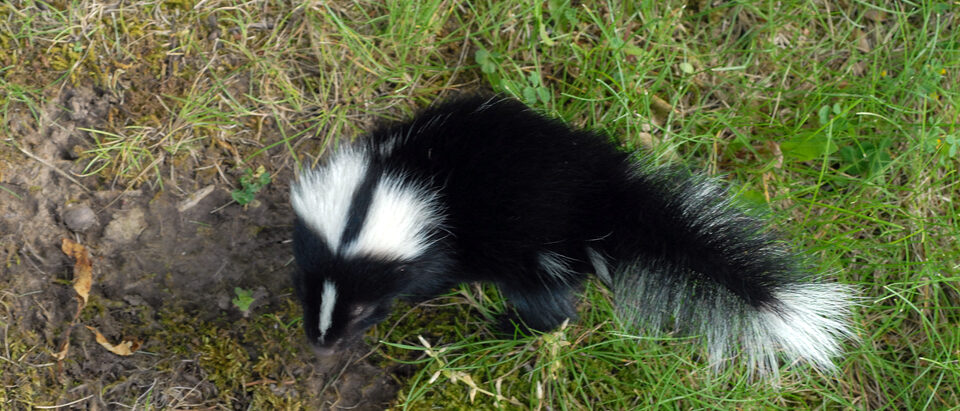
Skunks are reluctant to spray. Their black and white coloring is the first warning, and before they spray they stomp their front feet, raise their tail, hiss, and sometimes do a handstand to show off the markings. All of that is a chance for you to back off.
If you ignore the warning, the skunk twists its body so its head and tail both point at you, then fires. Up close it’s a stream aimed right at you. Farther away it’s a fine mist that covers a wider area.
The spray reaches roughly ten to fifteen feet, and some sources say a bit farther as a mist. A skunk can spray several times before its glands run dry and need time to refill.
if you see a skunk stomping and raising its tail, back away slowly. Sudden movement is what triggers the spray.
Why the smell sticks around so long
Thiols bind to proteins in skin, fur, and fabric, especially keratin, the protein in hair. That bond is why regular soap and shampoo barely touch it.
The thioacetates make it worse. Expose them to water and they turn back into thiols, which is why a dog that got sprayed smells fine for a day, then goes out in the dew and stinks again. The water reactivates the smell.
Because the spray is oily, it soaks into porous surfaces like wood, drywall, carpet, and upholstery, and keeps releasing odor over time, especially when it’s warm.
What it does to you and your pets
It’s not poisonous in the usual sense, but it’s rough. The immediate effects are stinging eyes, temporary blindness, and nausea. The spray irritates mucous membranes, which is why your eyes water and your nose runs. It hurts, but it usually clears up within an hour of washing.
Dogs sprayed in the face may vomit, drool, and paw at their eyes. A dog that inhales it deeply can have trouble breathing. In rare cases skunk spray causes a blood problem in dogs, and some breeds are more sensitive to it. If your pet is lethargic, pale, or has dark urine after being sprayed, get it to a vet.
How to actually get rid of the smell
Forget tomato juice. That’s a myth. It just masks the smell with its own, and once it dries the skunk smell is back.
What works is a mixture that chemically breaks the thiols apart. The formula that actually does this is:
- One quart of 3 percent hydrogen peroxide.
- A quarter cup of baking soda.
- A teaspoon of liquid dish soap.
Mix it, and apply it while it’s still foaming. Work it into the fur or fabric, avoid the eyes, leave it a few minutes, then rinse. Repeat if the smell lingers. Test a small spot first if you’re worried about color.
There are commercial pet deodorizers that use the same oxidizing chemistry, and they work too. The point is to break the chemical bonds, not cover up the smell.
Frequently Asked Questions
Not usually. Temporary blindness and breathing irritation clear up within an hour or so. Getting it directly in the eyes can irritate the cornea and may need a doctor, and a pet that inhales it deeply may need a vet.
Roughly ten to fifteen feet with accuracy. The mist can drift a little farther, but the direct hit range is around that distance. They can spray more than once, with less liquid each time.
Because water converts the thioacetates back into thiols. Washing with plain water can actually reactivate the smell. The hydrogen peroxide and baking soda mix stops this by breaking the thiols down first.
Without treatment, weeks, because the thiols bind to the fur. With the hydrogen peroxide treatment, you can usually knock it out in one or two washes.
Usually, with the right treatment. The hydrogen peroxide mix works on fabric too, though peroxide can bleach some colors, so test a small hidden spot first. Some fabrics that have soaked in the oil may need a few rounds.