
Skunk removal is not as simple as setting a trap and driving the animal somewhere else. Every state has its own rules about how skunks can be trapped, moved, and handled, and getting it wrong can land you with a fine, confiscated gear, or worse.
I am going to tell you the framework that stays the same almost everywhere, and then the most important thing of all: how to find the rules for your state, because the details change and you should not take my word, or anyone else’s, over your own state wildlife agency.
The Rules in Florida and the Carolinas
- North Carolina. Skunks are a furbearer with a regulated trapping season, and they are also a rabies vector species, which is the part people get wrong: a trapped skunk cannot be relocated under any circumstances. It is released on the property where it was caught or it is euthanised. Damage in the closed season is handled with a depredation permit from the NC Wildlife Resources Commission.
- Florida. FWC lists the striped skunk as present statewide except in the Keys. There is no season on them as game, and the state’s guidance for skunks around buildings is removal, not relocation, with rabies as the reason.
- South Carolina. SCDNR points to its licensed Wildlife Control Operators for skunk problems. Do not expect to be allowed to move a skunk to another property: relocation of a rabies vector species is not the route anywhere in the state.
If you are outside these states, the two questions to ask your wildlife agency are whether the animal is a rabies vector (that governs relocation) and whether there is a season (that governs when you can trap).
- Skunk removal is regulated by each state, and the rules differ a lot.
- Many states restrict or ban relocating skunks because of rabies. North Carolina is one of them: skunks are a rabies vector species there, so a trapped skunk cannot be moved anywhere and must be released on the spot where it was caught or euthanised.
- Skunks are a rabies vector species, which means stricter handling rules.
- You may need a permit, and commercial operators need a license from the state agency, which in Florida, North Carolina and South Carolina means FWC, the NC Wildlife Resources Commission or SCDNR. I have never seen a state where you can trap a skunk in season without the right license or permit for the job.
- Always confirm the current rules with your state wildlife agency before you act.
Who makes the rules
Wildlife is regulated at the state level, through your state’s fish and game department or natural resources agency. The federal government stays out of it unless federal land or restricted chemicals are involved. Local cities and counties can add their own rules on top of the state’s, especially around trapping and discharging firearms.
The key distinction is how a state classifies skunks. In some states they are furbearers with a defined trapping season. In others they are unprotected, meaning a landowner can deal with them year-round. In still others they fall under nuisance wildlife rules that only kick in when the animal is causing damage. The classification determines whether you need a permit and whether there is a season.
This is exactly why a one-size-fits-all answer is wrong. What is legal in one state can be a violation in the next one over.
Why rabies changes everything
Skunks are one of the main rabies carriers in the United States, and that single fact drives most of the restrictions around them.
Because of that, many states require that a skunk that has bitten a person or pet be put down and tested for rabies, and there is no live test for rabies, the brain tissue has to be examined. States with higher skunk rabies rates tend to be stricter about handling and moving skunks, because relocating a rabid animal just spreads the disease somewhere new.
This is the main reason relocation is so often banned or discouraged. A skunk dropped in unfamiliar territory often dies anyway, and if it is carrying rabies, you have moved a public health problem to someone else’s neighborhood.
The pattern on permits and relocation
Here is the general shape of the rules across the country, with the understanding that your state may differ:
- Permits. Some states require a nuisance wildlife permit to trap or kill a skunk, while others let a landowner handle a skunk on their own property without one. Lethal methods are more likely to require a permit than live trapping.
- Relocation. A growing number of states ban moving a trapped skunk to a new location entirely, largely because of rabies. Even where it is legal, wildlife agencies usually discourage it.
- Seasons. Where skunks are furbearers, there may be a defined trapping season, and out-of-season removal needs a separate nuisance permit.
- Licensing. If you hire someone, that operator needs the proper state license, and the rules for commercial operators are stricter than for a homeowner handling their own problem.
Rather than guessing where your state falls, look it up. Your state wildlife agency’s website will spell out what you can and can’t do, and it will be the current rule, not something someone remembered from a forum.
How to find your state’s rules
- Search for your state’s wildlife or fish and game agency and find its nuisance wildlife page.
- Look for the section on skunks specifically, or a nuisance animal table that lists permits and seasons.
- Check your local city and county codes too, since firearm and trapping rules often live there.
- If you are unsure, call the agency. They would rather answer your question up front than deal with a violation later.
If a skunk has had contact with a person or pet, contact animal control or your health department right away. Rabies is not something to figure out on your own.
Handling and safety
Skunks can carry rabies, so treat any skunk that acts strangely, out during the day, disoriented, drooling, or unusually aggressive, as a possible rabies case. Do not approach it. Call animal control or the health department.
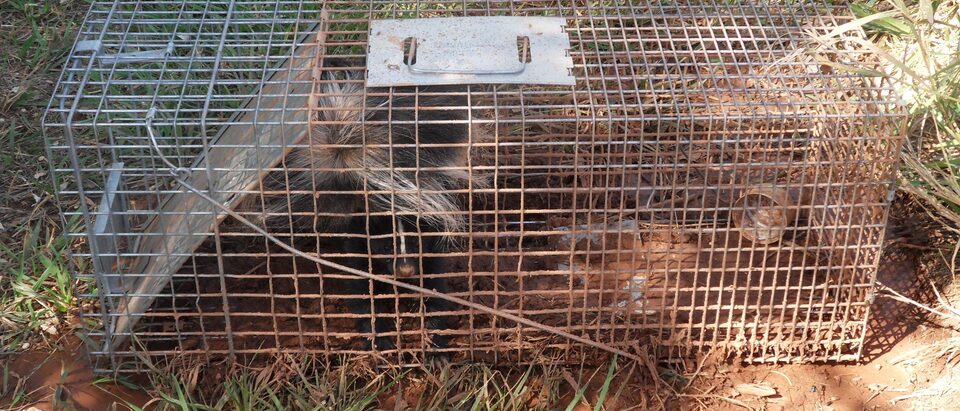
Even a healthy skunk should be handled with care and proper equipment. If you trap one, cover the trap to keep it calm, and don’t reach toward it. A skunk that feels cornered will spray, and the rabies risk means you should not be handling one without training and current vaccination.
Penalties for getting it wrong
The penalties for violating wildlife laws vary, but they can be real. Trapping without a required permit, trapping out of season, or relocating an animal where it is banned can all bring fines, and repeat offenses can cost you your trapping privileges.
Relocating a skunk illegally can also come back on you if the animal causes damage or a disease issue at the release site. The safest approach is to know the rule before you set the first trap.
Frequently Asked Questions
It depends on your state. Some states let landowners trap skunks on their own property without a permit, while others require a nuisance wildlife permit. Check with your state wildlife agency before you trap, because unpermitted trapping can bring a fine.
Relocation is the part that trips people up. North Carolina bans it outright for skunks, because they are a rabies vector species: a trapped skunk is released where it was caught or euthanised. Wherever you are, ask the state agency before you plan to move one, and remember that a relocated skunk usually does not survive anyway Relocated skunks often die from stress or territorial fights, and moving a rabid one spreads disease. Most states recommend euthanasia over relocation for trapped skunks.
It is an animal that is a primary carrier of rabies. Skunks are one of the main rabies vectors in the United States, along with raccoons, bats, and foxes. That status means stricter handling rules and mandatory testing when there has been a bite.
Sometimes, but it depends on local firearm ordinances and state rules, and some states require a hunting license even on private land. Check with local law enforcement and your state wildlife agency before you discharge a firearm.
Contact your vet and your local health department right away. The skunk will likely need to be captured and tested for rabies, and time matters. Don’t handle the skunk yourself.
The Bottom Line
Skunk removal is a legal minefield because the rules change state by state and skunks are a rabies vector. The framework, permits, seasons, relocation bans, licensing, stays roughly the same everywhere, but the details are local.
Before you trap, shoot, or move a skunk, check your state wildlife agency’s current rules, and your local ordinances. A five-minute lookup beats a fine or a rabies scare every time.