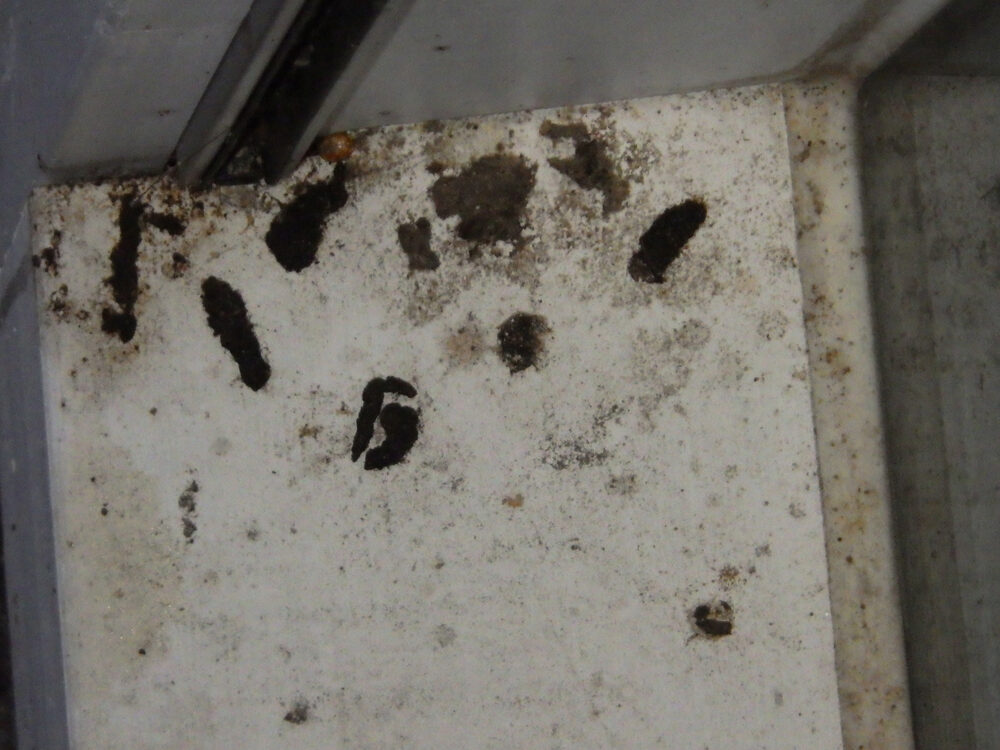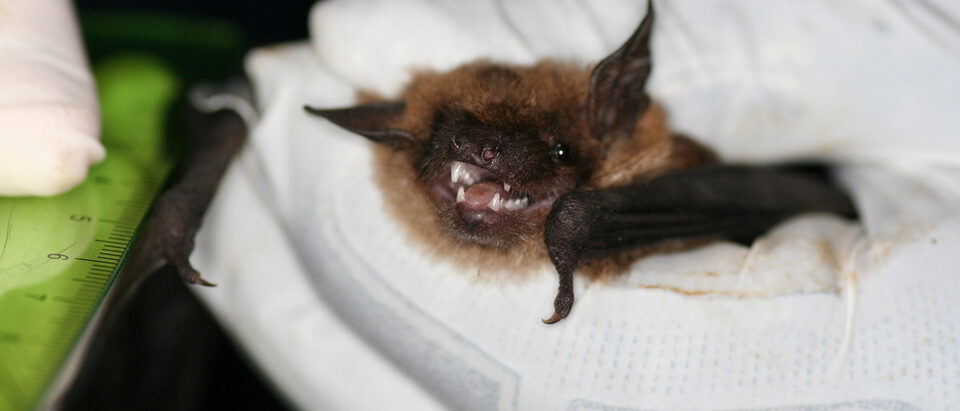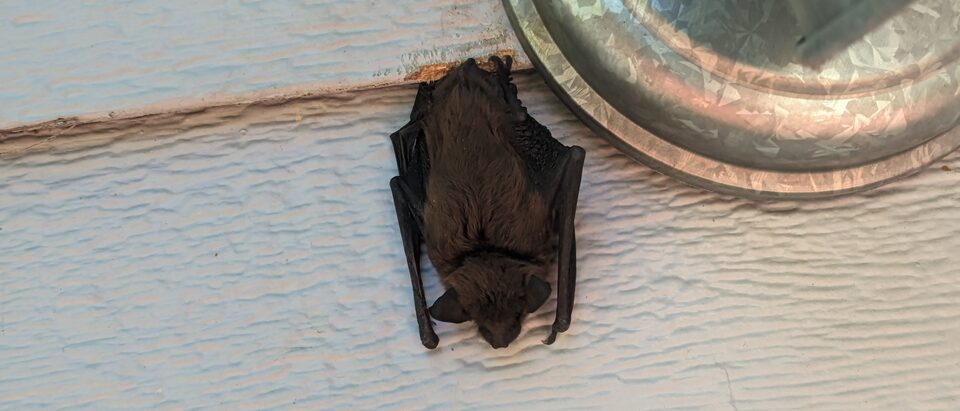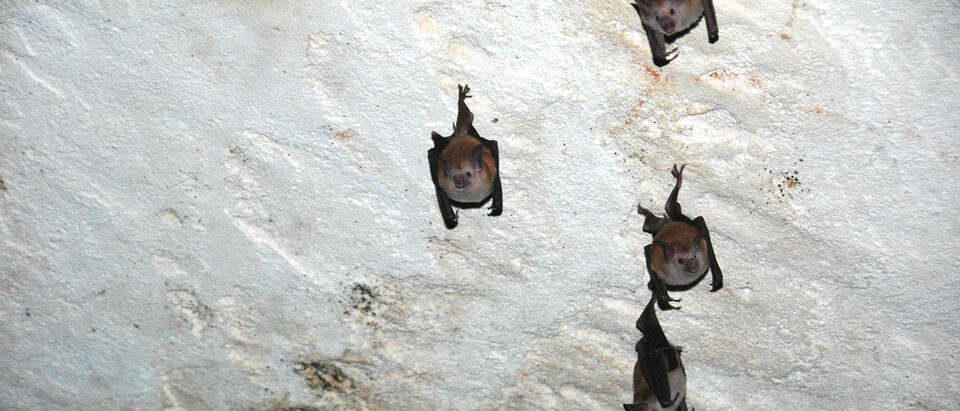
Bat droppings pile on attic insulation indicating infestation

Signs of Bats in Your House: Detection & Identification Guide (2026)

Most homeowners discover they have bats not by seeing the animals themselves, but by noticing the signs they leave behind. Bats are nocturnal and secretive. A colony can live in your attic for months or even years before you see a single bat.

Learning to recognize the early warning signs , from droppings and stains to sounds and smells , can save you thousands of dollars in damage and protect your family from health risks.

Key Takeaways

  • Listen for sounds: Scratching, squeaking, and crawling sounds at dusk and dawn are classic signs of an attic bat roost.
  • Look for droppings: Bat guano accumulates in piles under roosts. It is elongated, segmented, and crumbles into sparkly powder.
  • Check for stains: Oily rub marks around entry points and yellowish urine staining on walls indicate bat activity.
  • Smell for ammonia: A strong ammonia odor in the attic or near exterior walls is a reliable sign of a bat colony.
  • Watch at dusk: Seeing bats emerge from your roofline at sunset is the most definitive sign. Count them to estimate colony size.

1. Bat Droppings (Guano) , The Most Common Sign

The most obvious sign of a bat infestation is finding bat droppings. Bat guano accumulates in distinct piles directly beneath roosting spots , on attic insulation, floorboards, window sills, or exterior walls below entry points.

Unlike mouse droppings, which are scattered randomly, bat guano piles are concentrated and can grow quite large over time.

Bat droppings are elongated capsules with rounded ends, roughly ¼ to ⅓ inch long. They have a segmented appearance and crumble into a fine, sparkly powder when crushed. The sparkle comes from crushed insect exoskeletons , the indigestible remains of the moths, beetles, and mosquitoes that bats eat.

Pro Tip

If you find droppings but are not sure whether they are from bats or mice, see our detailed bat guano vs mouse droppings identification guide for a side-by-side comparison.

<!– wp:heading –>

2. Rub Marks and Staining

Bats have oily fur, and each time they enter or exit through a gap, they leave behind dark, greasy stains. These rub marks are most visible around potential entry points on the roofline , soffit edges, vent openings, chimney flashing, and fascia board gaps.

Over time, the accumulated oil and dirt from hundreds of passages creates a distinct dark stain that is easy to spot once you know what to look for.

Rub marks are often accompanied by yellowish-white urine staining. Bat urine contains uric acid crystals that leave visible stains on attic wood, insulation, and even ceiling drywall.

Large colonies can produce enough urine to saturate attic insulation and cause ceiling stains visible from inside your home.

3. Ammonia Smell

A strong, pungent ammonia odor is one of the most reliable signs of a bat infestation , and one you can detect without climbing into the attic. The smell comes from uric acid in bat urine mixing with decomposing guano.

It is often noticeable near exterior attic vents, chimney areas, or in rooms directly below the attic.

The ammonia smell from a bat colony is distinct from other pest odors. It is sharper and more chemical-smelling than the musky odor of mouse urine. If the smell is strong enough to detect from inside your living space, you likely have a large, established colony that requires professional removal.

4. Noises in the Attic

Bats are not silent. If you have a bat colony in your attic, you will hear them. The most common sounds include:

  • Scratching and crawling , Bats moving across attic insulation or along rafters create distinct scratching sounds, most noticeable at dusk and dawn when they are active.
  • Squeaking and chirping , Bats communicate with high-pitched social calls. Mother bats and pups also make audible squeaking sounds, particularly during maternity season.
  • Rustling and fluttering , The sound of bat wings against attic surfaces or the rustle of a large colony shifting position can be audible from below.

Bat noises are often mistaken for mice or rats. The key difference is timing , mouse noises can occur any time, while bat noises are concentrated at dusk (when bats wake and prepare to exit) and dawn (when they return).

If your “mouse problem” only makes noise at dawn and dusk, it may actually be a bat colony.

5. Seeing Bats at Dusk

The most definitive sign of a bat infestation is seeing bats emerge from your home at dusk. Stand outside at sunset and watch your roofline from different angles. Bats exit rapidly and silently, often appearing as small darting silhouettes against the evening sky.

A single bat sighting may mean a lone straggler, but seeing multiple bats emerge from the same area indicates an established colony.

Pro Tip

Count the bats you see emerging. A colony of 10-20 bats is small and may be manageable with DIY exclusion. Fifty or more bats usually requires professional removal. See our bat removal cost guide for pricing by colony size.

6. Bats in Living Spaces

Finding a bat in your bedroom, living room, or kitchen is the most alarming sign , but it is also one of the least common. Bats occasionally enter living spaces through open windows, uncapped chimneys, or gaps around utilities.

A single bat in your house does not necessarily mean you have an attic colony, but it warrants a thorough inspection.

If you find a bat in your living space, do not panic. Open windows and doors to give it an exit, or contain it in a room and call a wildlife professional. Never handle a bat with bare hands , bats are the primary rabies vector in the United States.

See our bat in the house emergency guide for immediate steps.

Seasonal Patterns of Bat Signs

Bat activity and the signs you notice vary by season:

SeasonActivity LevelSigns to Expect
Spring (Mar-May)HighStrong activity sounds, fresh guano piles, bats emerging at dusk, mating calls
Summer (Jun-Aug)Very HighMaternity colony noises (pups), maximum guano accumulation, ammonia smell peaks
Fall (Sep-Nov)ModerateBats preparing for hibernation, some migration activity, guano accumulation continues
Winter (Dec-Feb)LowMinimal activity in cold regions. Hibernating bats may be silent. Watch for winter bats in heat vents

What to Do If You Detect Bat Signs

If you have identified one or more signs of bats in your home, here is your action plan:

  1. Confirm the infestation , Use the dusk survey method to see bats exiting. Count them.
  2. Inspect thoroughly , Follow our bat inspection guide to locate all entry points.
  3. Plan exclusion , Install one-way exclusion valves. Wait 3-7 days. See our valve installation guide.
  4. Seal entry points , Permanently seal all gaps with appropriate materials. See our bat-proofing guide.
  5. Clean up , Remove guano safely. See our bat guano cleanup guide.

Frequently Asked Questions

How quickly do bat signs appear after a colony moves in?

Guano accumulation becomes noticeable within weeks of a colony establishing. Rub marks develop over months. Strong ammonia smell typically appears with colonies of 20+ bats within one season.

Can I have bats without seeing any signs?

It is possible but unlikely. Even small colonies of 5-10 bats produce guano, sounds, and rub marks. If you suspect bats but see no signs, you may have a small roost that is seasonal or a transient night roost.

Are bat signs different for different bat species?

The basic signs (guano, staining, sounds) are consistent across North American bat species. However, colony size and roosting preferences vary. Big brown bats (Eptesicus fuscus) prefer attics, while little brown bats (Myotis lucifugus) often roost in bat houses and trees.

How do I distinguish bat sounds from squirrel sounds?

Bat sounds are higher-pitched and more rapid than squirrel sounds. Squirrels create heavier thumping and running sounds during daylight hours. Bat sounds are lighter, scratchier, and occur at dawn and dusk.

Related Resources

For complete bat control, see our hub guide Bat in the Attic: Signs, Removal, and Exclusion. Inspection: how to inspect for bats. Products: best bat exclusion products.

Costs: bat removal cost guide. Emergency: bat in the house.

? Bat guano vs mouse droppings ID guide · Complete attic inspection guide · Bat in the Attic guide

Why Trust Us

WildAnimalsCentral.com provides expert-verified wildlife information based on peer-reviewed research, state wildlife agency guidelines, and consultations with licensed wildlife exclusion professionals. Our content is updated annually to reflect the latest regulations and best practices.

We do not recommend methods that harm protected species or violate local laws.