
Rat and mouse droppings look alike until you know what to look for, and telling them apart matters more than you would think. Rats and mice need different traps, different baits, and different strategies, so identifying the right rodent saves you a lot of wasted effort.
The good news is that size tells you almost everything. Here is how to tell rat droppings from mouse droppings at a glance.
- Rat droppings are roughly half to three-quarters of an inch long. Mouse droppings are about an eighth to a quarter of an inch.
- Rat droppings are capsule-shaped with blunt ends. Mouse droppings are rod-shaped with pointed ends.
- Size is the most reliable clue. Shape and location back it up.
- Both are hazardous. Wet-clean, never sweep or vacuum.
Side-by-side comparison
| Feature | Rat Droppings | Mouse Droppings |
|---|---|---|
| Size | 1/2 to 3/4 inch | 1/8 to 1/4 inch |
| Shape | Capsule-shaped, blunt ends | Rod-shaped, pointed ends |
| Color | Dark brown to black, glossy when fresh | Dark brown to black, dull when fresh |
| Amount | Fewer, larger piles | Scattered randomly in clusters |
| Location | Along walls and near food | Anywhere they travel, including cabinets and drawers |
| Odor | Strong musky smell in big accumulations | Milder, less noticeable |
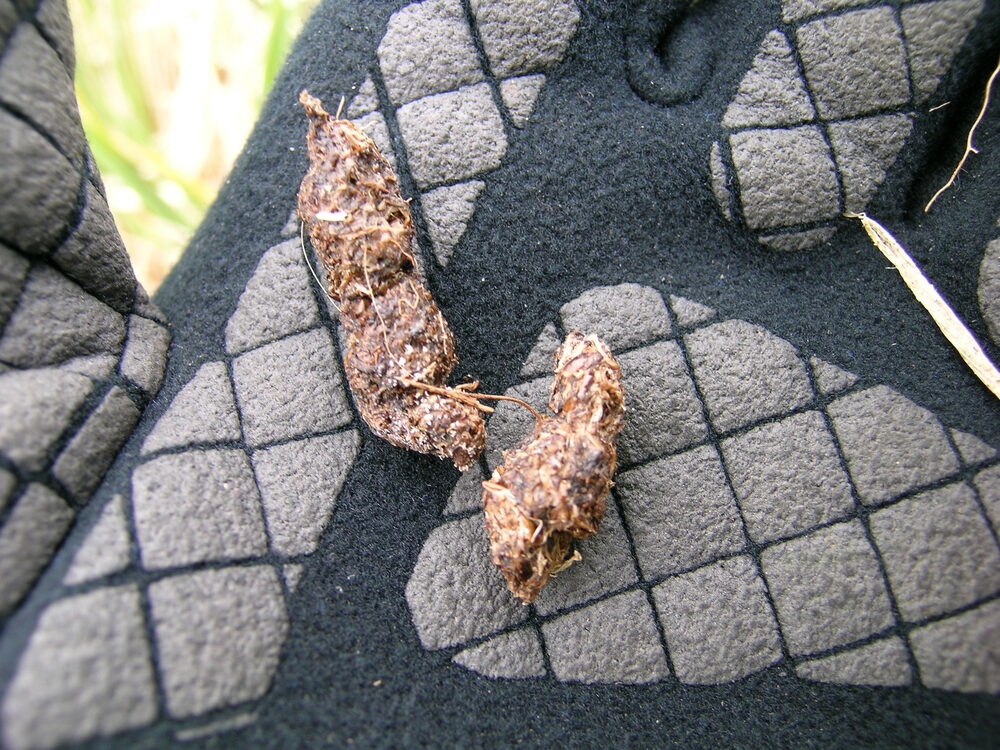
Norway rat droppings. Photo: deboas, CC BY 4.0
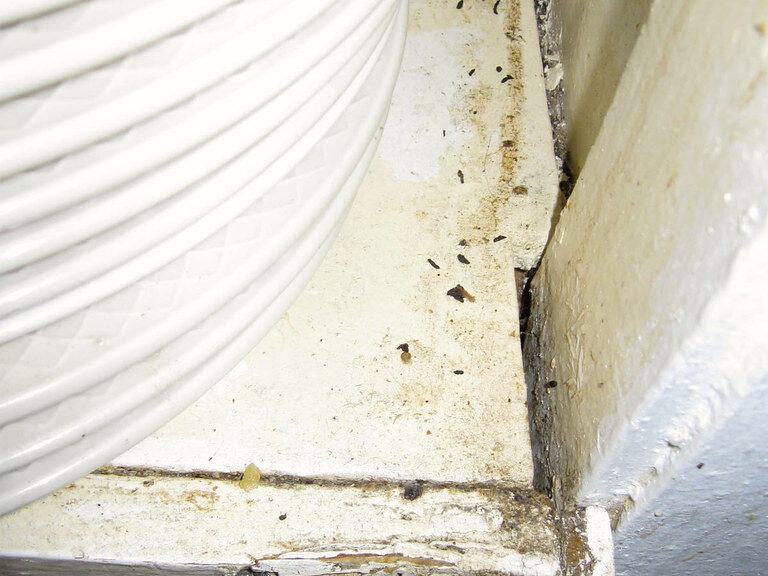
House mouse droppings. Photo: NYSIPM Image Gallery, CC BY 2.0
Size is the tell
The fastest way to tell them apart is size. Rat droppings are about the length of a large olive pit, half an inch or more. Mouse droppings are about the size of a grain of rice, a quarter of an inch or less. Put them side by side and there is no mistaking the two.
Shape backs it up. Rat droppings are thicker, with blunt, rounded ends. Mouse droppings taper to points at both ends, like little dark rice grains. Roof rat droppings are more slender than Norway rat droppings, but both are clearly bigger than anything a mouse leaves behind.
Pro tip: if you find droppings of clearly different sizes in the same place, you might have both rats and mice. It is not common, but it happens. Let the bigger droppings tell you which one is the main problem.
The health risks
Both kinds of droppings are hazardous, and the diseases they carry overlap but are not identical.
Rat droppings can carry bacteria that cause leptospirosis, plague, and rat-bite fever. Mouse droppings can carry hantavirus, salmonella, and lymphocytic choriomeningitis virus. Hantavirus in particular can be serious, so do not take any of this lightly.
Either way, the cleanup rule is the same: never sweep or vacuum dry droppings. Spray them with a bleach solution, about one part bleach to nine parts water, let it sit for five minutes, and wipe up with paper towels. Wear gloves and a mask.
Frequently Asked Questions
In most cases, yes. Size is the most reliable clue. If you are still unsure, look for other signs like gnaw marks, tracks, and sounds to confirm which rodent you have.
Longer than you would guess. Hantavirus can stay infectious in dried droppings for days or weeks, and bacteria like leptospirosis survive in moist droppings. Treat every dropping as hazardous no matter how old it looks.
Yes, a little. Norway rat droppings are thicker and more capsule-shaped, while roof rat droppings are more slender with slightly pointed ends. Both are clearly larger than mouse droppings.
Spray them with a bleach solution, about one part bleach to nine parts water, let it sit five minutes, then wipe up with paper towels and bag the waste. Wear gloves and a mask, and never vacuum or sweep dry droppings.
Gnaw marks are a good clue, rats leave bigger, rougher marks than mice. Tracks and grease smears along walls also help. Combine the droppings with those signs and you will know which animal you are dealing with.
The Bottom Line
Size is the whole trick. Rat droppings are big and blunt, mouse droppings are small and pointed. Once you know which rodent left them, you can choose the right traps and bait instead of guessing.
And no matter which one it is, clean up the droppings the safe way, wet them down and wipe them up, never sweep or vacuum.
If the droppings are not from a rat or a mouse, the animal droppings identification chart sorts the other candidates by size, shape and where they were left.