
Electronic rodent repellents use ultrasonic sound waves or electromagnetic pulses to deter rats and mice. Unlike traps or poisons, electronic repellents claim to drive rodents away without killing them. But do they actually work? The short answer is: they can help, but they are not a standalone solution. This guide covers the best electronic repellents and how to use them effectively as part of a comprehensive rodent control plan.
- How they work: Ultrasonic devices emit high-frequency sound between 20,000 and 60,000 Hz that is uncomfortable for rodents but inaudible to humans.
- Effectiveness: Ultrasonic repellents have limited effectiveness. Rodents can adapt to the sound. Best used as a supplement to trapping, not a replacement.
- Placement matters: Ultrasonic sound does not penetrate walls. Place one device per room. Multiple devices needed for whole-home coverage.
- Best use cases: Garages, basements, attics, and storage areas where trapping is difficult. Not effective outdoors.
- Limitations: Sound is blocked by furniture, curtains, and insulation. Rodents may return when the device is turned off.
Do Ultrasonic Repellents Work?
Scientific studies show mixed results. Some research finds that ultrasonic devices reduce rodent activity temporarily. Other studies find no significant effect. Rodents can habituate to the sound within days or weeks through a process called auditory adaptation. This means the repellent effect diminishes over time as rodents learn the sound is not a threat.
The best approach is to use electronic repellents as a supplement to traditional trapping and exclusion. They may help deter rodents from entering specific areas, but they will not eliminate an existing infestation. Think of them as a deterrent, not a solution.
Quick Comparison
| Product | Type | Best For | Buy |
|---|---|---|---|
| Victor PestChaser 3-Pack | Ultrasonic plug-in | Best Overall | Check price |
| Loraffe 4-in-1 Ultrasonic Repellent | Ultrasonic + strobe | Best Multi-Mode | Check price |
| Victor PestChaser Pro | Heavy-duty ultrasonic | Best Heavy-Duty | Check price |
Best Overall: Victor PestChaser Rodent Repellent (3-Pack)
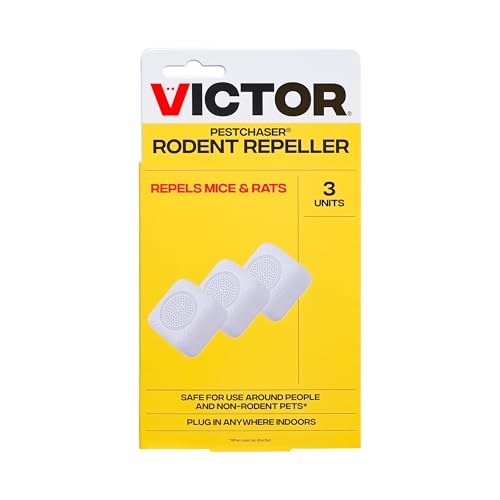 Best Overall
- Type
- Ultrasonic plug-in (3-pack)
- Coverage
- Average-sized rooms up to 500 sq ft
- Feature
- Built-in nightlight
- Safe
- Non-toxic, EPA exempt under FIFRA 25(b)
The Victor PestChaser is the most popular plug-in repellent on the market. It uses ultrasonic sound technology with a frequency range designed to irritate rodents without affecting humans. The built-in nightlight adds convenience for bedrooms and hallways, and the compact design plugs directly into a standard wall outlet.
Best for bedrooms, living areas, and small to medium rooms up to 500 square feet. The ultrasonic frequency is EPA exempt under FIFRA 25(b) as a minimum risk pesticide, meaning it requires no EPA registration.
Best Multi-Mode: Loraffe 4-in-1 Ultrasonic Repellent
 Best Multi-Mode
- Type
- 4-in-1 (ultrasonic, impulse, predator sounds, strobe)
- Coverage
- Up to 1,200 sq ft in open areas
- Modes
- TEST, ULTRA, DUO, TRIO
- Power
- 100-240V AC
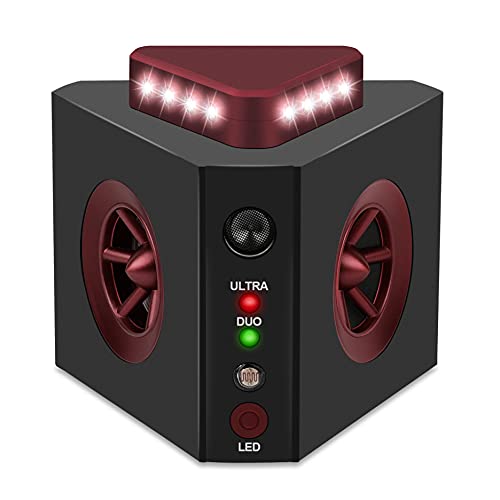
The Loraffe 4-in-1 combines four deterrent modes in one device: ultrasonic waves, impulse waves, predator sounds, and a 12-LED strobe light. The three speakers and dusk-to-dawn strobe sensor give it broader coverage than standard plug-in units.
Each unit covers up to 1,200 square feet in open areas. Four operating modes (TEST, ULTRA, DUO, and TRIO) let you match the output to the pest, and the frequency shifting reduces rodent adaptation. This makes it one of the more advanced options for homeowners dealing with persistent rodent activity.
Best Heavy-Duty: Victor PestChaser Pro Ultrasonic Repeller
 Best Heavy-Duty
- Type
- Ultrasonic plug-in
- Coverage
- Large spaces, attics, garages, basements
- Power
- 6-foot cord
- Safe
- Non-toxic
The Victor PestChaser Pro is the heavy-duty version designed for larger spaces like garages, basements, and workshops. It has a higher output power than the standard PestChaser, producing a stronger ultrasonic field for big rooms, attics, and utility spaces.
The Pro model has a 6-foot power cord for flexible placement, and it does not include a nightlight, focusing purely on ultrasonic output for maximum effectiveness.
How to Use Electronic Repellents Effectively
Place devices 12 to 24 inches above the floor, pointing toward the area where rodents are active. Do not place behind furniture or curtains, as these block the ultrasonic waves. Use one device per room for consistent coverage.
Combine with traps and exclusion for best results. Electronic repellents work best as a deterrent to prevent new rodents from entering after the existing colony has been removed through trapping. The combination of removal plus deterrence provides the most reliable long-term control.
Limitations and Considerations
Ultrasonic sound does not penetrate walls, furniture, or heavy insulation. This means each room needs its own device. Outdoor effectiveness is very limited because ultrasonic sound dissipates quickly outdoors and is blocked by vegetation.
Rodents, especially Norway rats, are neophobic and may initially avoid the ultrasonic sound but eventually habituate. The repellent effect is strongest in the first few weeks and diminishes over time. Some devices use frequency shifting to slow this habituation process.
Electronic repellents are most effective as a preventive measure after trapping and exclusion are complete. Use them to protect newly sealed spaces from re-infestation while the rodents search for new entry points. See my best rat traps guide for trapping solutions.
Frequently Asked Questions
Most devices are safe for dogs and cats. However, small pets like hamsters, guinea pigs, and rabbits can hear ultrasonic frequencies and may be stressed. Check the device specifications before using in rooms with small pets.
Initial results may appear within 1 to 2 weeks. Rodents may leave the area temporarily but often return. Continuous use is required, and the repellent effect diminishes as rodents habituate to the sound.
Outdoor effectiveness is very limited. Ultrasonic sound dissipates quickly outdoors and is blocked by vegetation, walls, and obstacles. Focus on indoor use for best results.
Effectiveness varies by species. House mice are more affected than Norway rats, which are more cautious and may adapt faster. Roof rats fall somewhere in between. No electronic repellent works on all rodent species equally.
You may see a change within a few days, but rats habituate to ultrasonic sound within one to two weeks in most studies. For this reason, electronic repellents work best as a supplement to traps, sealing, and food removal rather than a standalone cure.