
Scratching inside your walls is unnerving, and it’s one of the most common signs of mice. They squeeze in through tiny gaps, travel between floors, and chew on wiring and insulation while they’re at it. Here’s how to confirm it’s mice, get them out, and keep them out.
How to Tell If There Are Mice in Your Walls
- Scratching and scurrying. This is the big one, especially at night. Mouse sounds are light and high-pitched, not the heavier thumping you get from rats.
- Droppings. Small, dark, rod-shaped with pointed ends, along baseboards, in cabinets, and near food. See my droppings identification guide.
- Gnaw marks. On wood, drywall, plastic, and wiring. Fresh marks are light-colored and darken over time.
- Grease marks. Oily smudges along walls and baseboards where mice travel, most visible on light surfaces.
- Nesting material. Shredded paper, fabric, or insulation tucked into a cavity means an active nest.
How to Remove Mice From Walls
- Find the entry points. Check around pipes, wires, vents, and foundation cracks. A mouse can fit through a gap the width of a pencil.
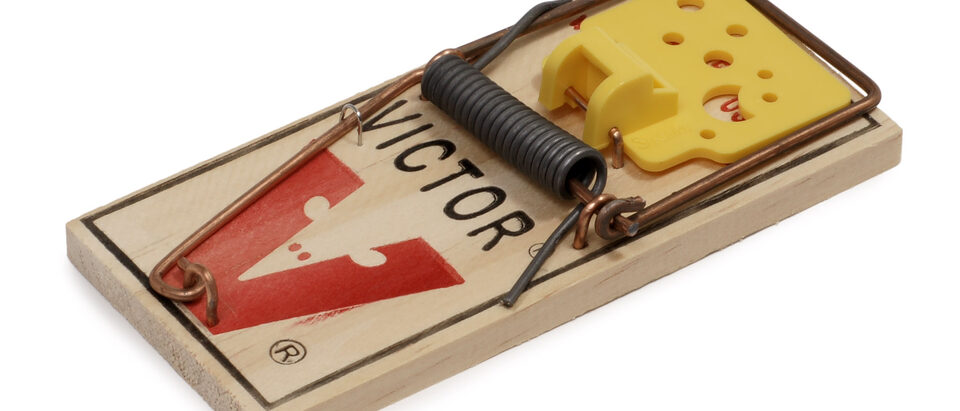
- Set traps along the walls. Snap traps or electronic traps work best, placed perpendicular to the wall with the trigger end against it. Peanut butter is the go-to bait.
- Seal the entry points. Once you’ve caught them, stuff gaps with copper mesh and expanding foam. Copper mesh doesn’t rust and mice can’t chew through it.
- Keep monitoring. Keep traps out for a couple of weeks after the last catch. New mice can move in once the originals are gone.
- Clean up safely. Wearing gloves and a respirator, disinfect droppings and urine with a bleach solution rather than sweeping them up dry.
Health note: Don’t sweep or vacuum mouse droppings. That kicks particles into the air. Spray them with a bleach solution (about one part bleach to nine parts water), let it sit for a few minutes, then wipe up with paper towels and bag everything. See my diseases guide for more.
How to Keep Them From Coming Back
Sealing gaps is the most important step after removal. A mouse will reuse the same entry point if it’s left open.
- Copper mesh for small gaps around pipes and wires. It doesn’t rust and they can’t chew it.
- Expanding foam for irregular gaps, ideally a pest-blocking formula.
- 1/4 inch hardware cloth for bigger openings like vents and foundation gaps.
- Exterior silicone caulk for cracks in the foundation and around window frames.
See my best mouse traps guide for product recommendations, or my rodent proofing guide for the bigger picture.
Frequently Asked Questions
Basically as long as they have food and water nearby. They travel freely between floors and can go months undetected.
No. Once they’ve nested, they’ll stay as long as food and water hold out, and they’ll breed while they’re at it. You have to actively remove them.
Yes. They chew on wiring and strip the insulation, which is a known cause of house fires. If you suspect mice in the walls, have an electrician check the wiring.
Keep monitoring for a couple of weeks after the last sign. No sounds, no droppings, and no trap catches means it’s probably resolved.