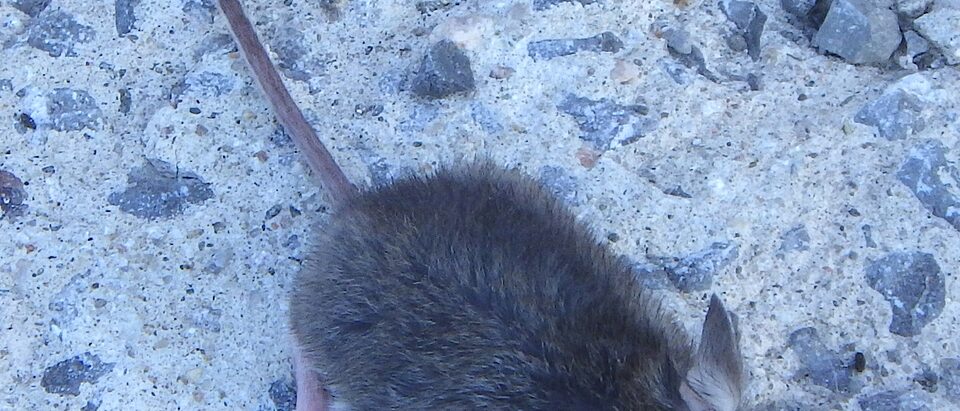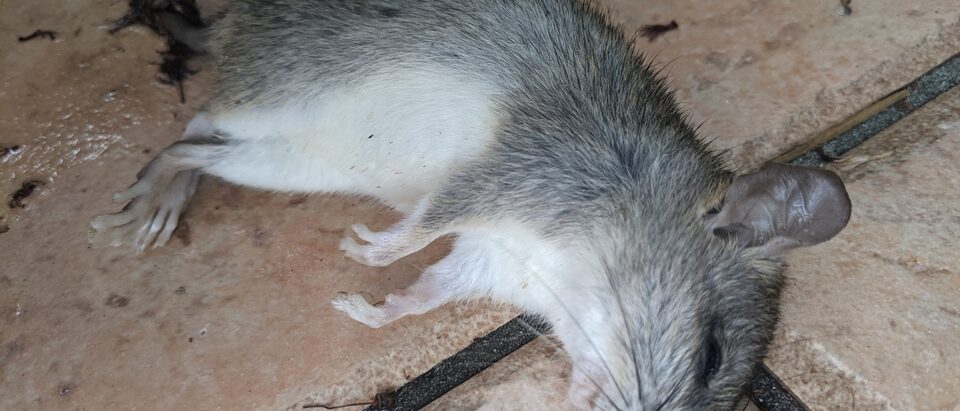

Traps remove the mice you already have; sealing the entry points is what keeps new ones out. Mice squeeze through gaps as small as a dime, and an attic full of insulation is the perfect nesting spot. The reliable sequence is inspection, trapping, cleanup, then permanent exclusion.
- Start with traps, not poison. Poison leaves mice to die in walls and insulation where they rot and smell.
- Set traps along runways, not in the open center of the attic.
- Do not seal every opening before trapping starts. You can trap mice inside wall voids.
- Exclusion with steel wool, copper mesh, and hardware cloth is what ends the problem.
Signs of Mice in the Attic
The first clue is usually noise: scratching, scurrying, or gnawing at night. Mice are nocturnal, so the sounds are loudest after dark. During the day, look for spindle-shaped droppings in the insulation, oily rub marks along beams, and chewed wiring or boxes. Start with the noise identifier if you have not seen the animal yet.
Fresh droppings are dark and soft, while old ones are gray and crumbly. If you see droppings in several spots, you have an established colony, not a stray mouse.
Step 1: Inspect and Map the Activity
Put on gloves, a mask, and bring a flashlight. Look for droppings, nests, and gnaw marks, and note where they concentrate. Check insulation edges, beams, and the gaps where pipes and wires pass through. Mark likely entry points but do not seal them yet.
The goal of the inspection is to learn where mice travel so you can place traps on their actual runways.
Step 2: Trap Along Runways
Snap traps are the fastest, most effective tool for attic mice. Place them perpendicular to walls and beams with the trigger facing the wall, spaced a few feet apart. Bait each with a small dab of peanut butter. Use enough traps: a dozen for a typical attic is not too many.
For no-touch disposal, an enclosed electronic trap works well on a dry, stable attic surface. Check traps daily and remove any caught mice promptly in sealed bags.
Step 3: Clean Up Safely
After activity drops, clean the contamination. Wear an N95 or similar respirator and gloves. Dampen droppings and nests with a disinfectant or a bleach-and-water solution before wiping them up, and never sweep or vacuum dry droppings, which can aerosolize dust.
Contaminated insulation should be removed and replaced. Wash stored items, and swap cardboard boxes for sealed plastic bins so mice have less nesting material.
Step 4: Seal Every Entry Point
This is the step that ends the problem. Mice enter through roofline gaps, soffits, vents, and utility penetrations. Seal small gaps with steel wool or copper mesh backed by caulk. Cover vents with hardware cloth, and use metal flashing for roofline and siding gaps. Plain foam is not enough; mice chew through it.
Trim tree branches back from the roof so mice do not have a direct pathway to the attic.
Trap first, then seal. If you seal every gap before removing the mice, you risk trapping them in walls and ceilings, which creates a dead-mouse odor problem that is much harder to fix.
When to Call a Professional
Call a pro when you have chewed wiring, heavy insulation contamination, or an infestation that spans multiple rooms. These signs point to an established colony that needs full exclusion and cleanup. Professional mouse removal with exclusion typically runs $300 to $600, and it is worth it when the DIY approach is not ending the problem.
Frequently Asked Questions
Mice climb through roofline gaps, damaged soffits, unscreened vents, and gaps around pipes and wires. Overhanging tree branches give them a direct route to the roof. Any opening wider than a quarter inch is a doorway.
No. An attic provides warmth, shelter, and nesting material, so mice have no reason to leave. The population grows until you remove them and seal the entry points.
Yes. Mice chew wiring, which is a fire hazard, and their droppings and urine can carry diseases. Dried droppings release dust that can be harmful to breathe, which is why cleanup requires a respirator and damp removal.
With traps set on the right runways, most of the mice are caught within the first several days. Full removal, cleanup, and exclusion usually take one to two weeks depending on the size of the infestation.
Snap traps are the best all-around choice: cheap, effective, and easy to place in bulk along runways. Electronic traps are cleaner to empty if you prefer no-touch disposal. Glue traps work but are considered less humane.