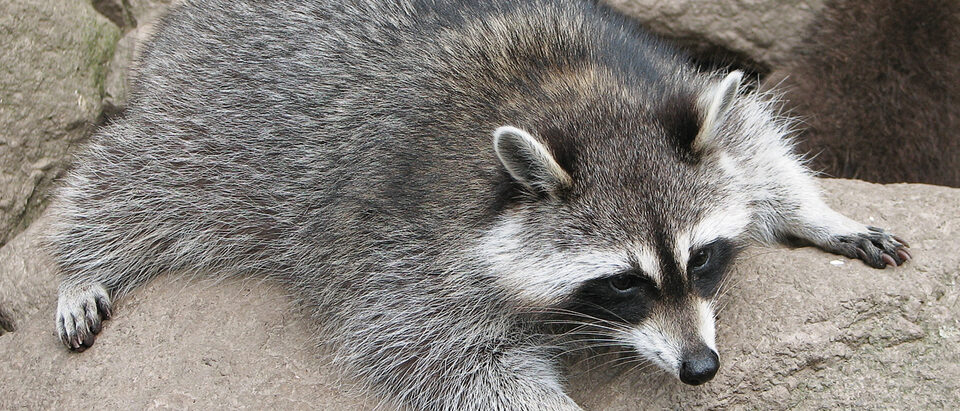

Raccoons get on your roof the same way they get anywhere else, by climbing. Trees, downspouts, vines, and siding all work as ladders, and once they’re up there they may just be passing through or looking for a way into your attic. Here’s how to get them off and keep them off.
How to Tell If Raccoons Are on Your Roof
- Thumping and scratching at night, especially near the roofline or chimney.
- Torn or displaced shingles.
- Droppings on the roof, deck, or patio below access points.
- Damaged vent covers that look pushed in or chewed.
- Paw prints on siding, downspouts, or windows near the roof.
How to Remove Raccoons From the Roof
- Find the access point. Look for damaged soffits, loose vents, or gaps. Raccoons reuse the same entry point, so it’s usually easy to spot.
- Trim tree branches back at least 8 feet from the roofline. That cuts the main route up.
- Add motion-activated deterrents. A sprinkler or light near the entry point spooks them.
- Use a one-way exclusion door if they’ve already gotten into the attic. It lets them out but not back in.
- Seal everything permanently. Once the raccoon is gone, close every gap with 1/4 inch hardware cloth and galvanized steel flashing, and cap the chimney.
Safety note: Don’t try to handle a raccoon on your roof. A cornered one can be aggressive and may carry rabies. If you can’t safely get to the roof or the raccoon won’t leave, call a licensed wildlife control operator.
How to Keep Raccoons Off Your Roof
- Trim tree branches at least 8 feet from the roofline.
- Install a chimney cap with 1/4 inch mesh.
- Cover all vents with 1/4 inch hardware cloth.
- Add downspout guards so they can’t climb the pipes.
- Remove food sources like bird feeders and unsecured garbage near the house.
For more, read my raccoon roof guide and attic removal guide.
Frequently Asked Questions
They climb trees, downspouts, vines, and siding, and they can jump from overhanging branches. Strong claws and hind legs make them good climbers. Downspout guards and trimmed trees remove most of the routes.
Maybe, if it doesn’t find food or shelter up there. But once it has a den in the attic or chimney, it’s staying until you push it out.
Yes. They can rip up asphalt shingles, especially at edges and corners, to get into the attic or make a nest. They can also damage flashing around chimneys and vents. Fix damaged shingles quickly.
It varies by location, how bad the problem is, and whether you need exclusion work done. Get quotes from a few licensed operators before you commit.
The Bottom Line
Getting raccoons off your roof means trimming trees, sealing entry points, and using motion-activated deterrents. If they’ve made it into the attic, a one-way door is the move. The two things that matter most: cap the chimney with 1/4 inch mesh and cover every vent with hardware cloth. Raccoons are persistent, but that combination usually wins.