
Here is the thing people get tangled up on: a groundhog and a woodchuck are the exact same animal. Same critter, two names. A marmot is a bigger group that the groundhog belongs to. So every groundhog is a marmot, but not every marmot is a groundhog. That is the whole puzzle in one line.
This guide sorts out the names, the differences, and how to tell them apart when you see one.
Groundhog and woodchuck: same animal
Groundhog and woodchuck are two common names for the same species, which scientists call Marmota monax. Which name you use mostly depends on where you grew up.
“Woodchuck” is the older name, and it comes from a Native American word, not from chucking wood. The tongue twister is just a joke built on a name nobody fully remembers the origin of. “Groundhog” is more descriptive, it digs in the ground and carries some heft like a small pig.
Groundhogs are the largest member of the squirrel family, and they are better athletes than they look. They can climb a tree to get away from trouble, and they are decent swimmers.
Where marmots fit in
Marmots are a group of large ground squirrels. There are about 15 species worldwide, and the groundhog is the most widespread one in North America. Other marmots include the yellow-bellied marmot, the hoary marmot, and the Olympic marmot.
Think of it like robins and birds: a robin is always a bird, but most birds are not robins. A groundhog is always a marmot, but most marmots are not groundhogs.
How to tell a groundhog from other marmots
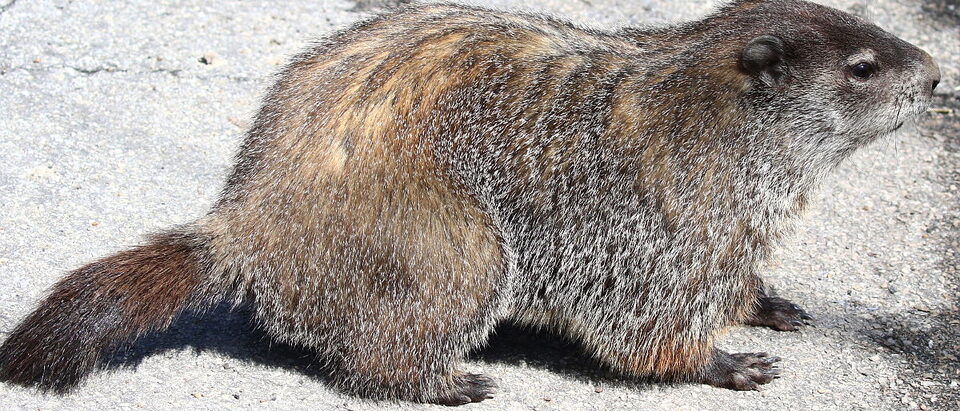
Groundhogs have brown or grizzled fur with a lighter belly, short legs, and a bushy tail. They are built low and heavy, usually somewhere in the 5 to 14 pound range as adults.
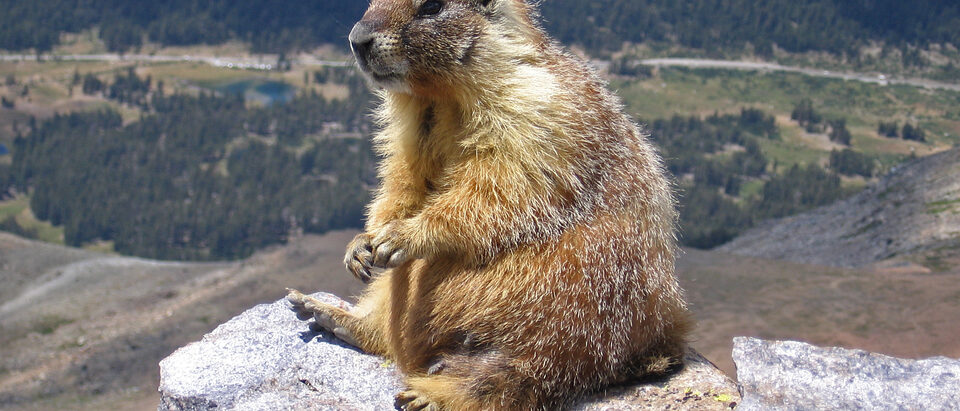
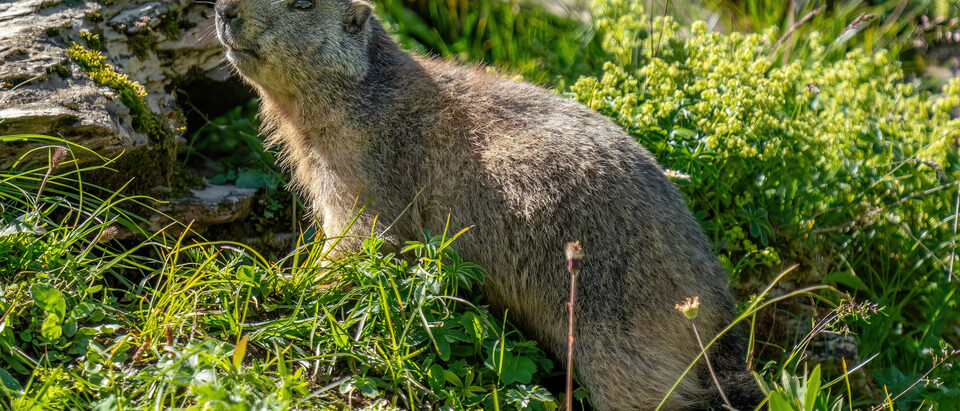
Other marmots mostly live up high. Yellow-bellied marmots hang out in rocky mountain slopes in the West. Hoary marmots are silvery-gray and live in cold northern and alpine country. European alpine marmots run bigger than my groundhog.
The practical tell is location. If you see a big chunky rodent in a backyard or a farm field, it is a groundhog. The alpine marmots do not come down to the suburbs.
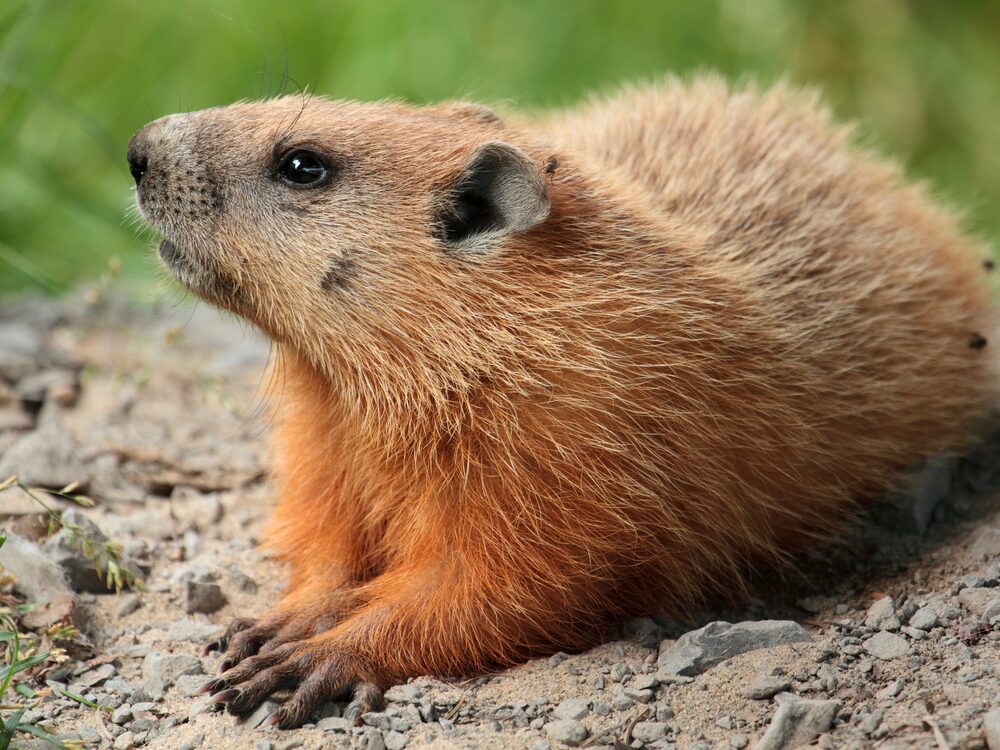
Groundhog. Photo: Cephas, CC BY-SA 3.0
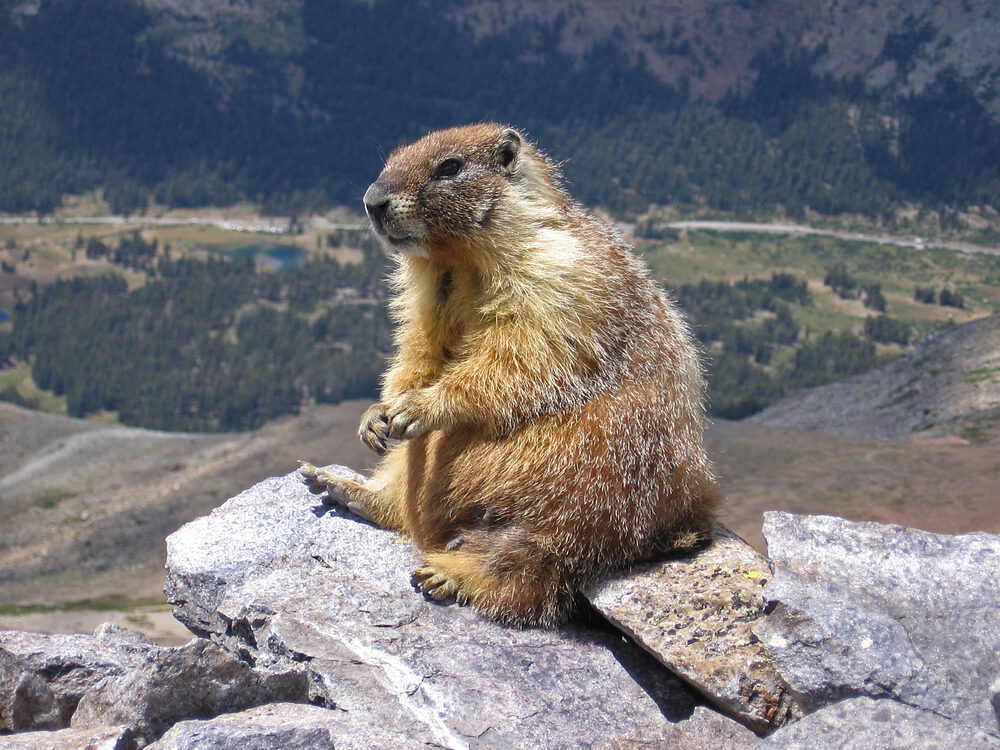
Yellow-bellied marmot in Yosemite. Photo: Inklein, jjron, CC BY-SA 3.0
Habitat and behavior
Groundhogs are lowland animals. Fields, pastures, roadsides, and your garden are all fair game. They dig big burrow systems and mostly keep to themselves outside of mating season.
The alpine marmots are colony animals that live in groups and post lookouts that whistle when danger shows up. That whistling habit is why some people call groundhogs whistle pigs too.
Quick comparison
| Feature | Groundhog / Woodchuck | Yellow-Bellied Marmot | Hoary Marmot |
|---|---|---|---|
| Scientific Name | Marmota monax | Marmota flaviventris | Marmota caligata |
| Weight | 5-14 lbs | 5-11 lbs | 8-15 lbs |
| Fur Color | Brown, grizzled | Brown with yellow belly | Silvery-gray |
| Habitat | Lowland fields | Alpine rocky slopes | Arctic tundra |
| Social Structure | Solitary | Colonial | Colonial |
| Range | East/Central US, Canada | Western US mountains | Alaska, NW Canada |
Frequently Asked Questions
Yes. Two names, one animal. Both are the species Marmota monax.
A groundhog is a kind of marmot. Marmots are a group of about 15 species, and the groundhog is just the most widespread North American one.
Not really. Groundhogs stick to lowland fields and suburbs. The other marmots live in mountains and northern tundra. Their ranges do not overlap much.
No. They are separate species. Different genetics, different habits, different homes.
Because of the loud whistle they make to warn each other about danger. It is one of the few sounds they make, and it carries well across an open field.