
The first thing I look for when someone says “something is digging under my shed” is the entrance. A groundhog burrow looks different from every other hole in the yard, and once you know the signs, you can identify one in about ten seconds.
Here is how to spot one, how to tell it apart from other animals, and what to do about it.
What a Groundhog Burrow Looks Like
A groundhog burrow entrance is round and big, roughly the width of a dinner plate, though it varies. The giveaway is the dirt.
Groundhogs kick dirt out behind them, which leaves a wide, fan-shaped mound spread out in front of the entrance. It is usually darker and looser than the surrounding soil because it came from deeper down. A mole hill is a small round volcano of dirt. A groundhog mound is a big half-moon fan, and the hole stays open.
How Big the Tunnel System Runs
Groundhogs do not dig one hole. They dig a network. The tunnel can run several feet deep and stretch a good distance, with a nesting chamber and a separate spot they use as a toilet. There are also escape exits, which is why you might find more than one opening around the yard.
That is the key thing to remember: where you see one entrance, there are usually others, often hidden under brush.
Where to Look
Groundhogs like well-drained soil, so they dig into slopes, hillsides, and raised ground that will not flood. Check:
- Along fence lines and field edges.
- Under sheds, decks, and porches.
- At the base of trees and rock walls.
- Near the vegetable garden. They like to live close to the food.
Telling a Groundhog Hole From Other Animals
- Chipmunks and voles make much smaller holes.
- Rabbits make smaller, neater openings with no big mound of dirt.
- Skunks dig a shallow cone-shaped hole, often with a smell, and they are more likely under a porch than out in open ground.
- Foxes and coyotes make larger openings, often with bones or scat scattered near the entrance.
The big fan-shaped mound and the open, plate-sized hole is the signature. If you see that, you are looking at a groundhog.
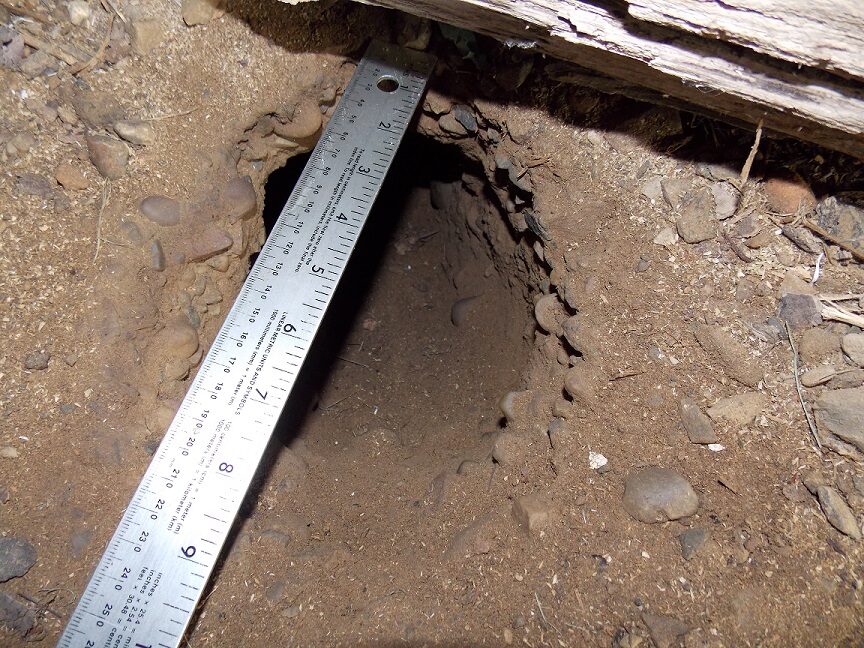
Groundhog burrow entrance. Photo: Ladycamera, CC BY-SA 4.0
The Damage to Watch For
Groundhogs are more than an eyesore. The burrow itself is the problem:
- Tunnels under foundations, slabs, and sheds can cause settling and cracks over time.
- Mounds and holes in the yard are a trip hazard and wreck a mower deck.
- They eat gardens down to nothing. A groundhog will strip a row of beans or lettuce in a day.
- On farms, their holes can damage equipment and injure livestock that step in them.
That is why most people do not ignore a groundhog burrow once they find it.
The Newspaper Test for an Active Burrow
Before you do anything, figure out if the burrow is actually in use. Loosely stuff the entrance with crumpled newspaper or dry leaves. Check it a day later. If the plug has been pushed out, the burrow is active.
A trail camera pointed at the entrance for a couple of days is even better. It confirms what is using it and whether there are babies in there, which matters before you try removal.
How to Fill a Burrow the Right Way
Never fill a burrow while the animal is inside. It will just dig its way out and make new tunnels, or die in there and stink up the yard.
Once you have confirmed it is empty, fill it with a mix of soil and gravel, packed in layers as you go. Tamp it down firmly. Adding a few large stones near the entrance makes it less inviting to a returning groundhog or the next one.
Removing a Groundhog From an Active Burrow
If the burrow is occupied, trapping or exclusion is the way to go:
- Live trapping is the most common method. A large cage trap placed right at the main entrance, baited with cantaloupe or sweet corn, catches most groundhogs in a few days.
- One-way doors let the groundhog leave but not get back in. You have to be sure it is outside when the door goes on, and you need to confirm there are no young still inside.
Check your local rules before you trap or move a groundhog. Relocation is restricted or outright banned in a lot of places, so know the law first.
Frequently Asked Questions
Several feet, typically. The nesting chamber sits at the deepest point, and the depth helps protect them from both flooding and cold. Escape tunnels branch off at shallower levels.
Usually more than one. The main entrance has the biggest mound, and there are smaller escape holes hidden under vegetation or brush. Always assume there are exits you have not found yet.
I would not. A groundhog can seal off a flooded tunnel or dig upward and out, and the water can undermine your foundation or make a muddy mess. Trapping or a one-way door works better.
Adults are mostly solitary, each with its own system. A male and female may share during mating season, and the young live in the mother’s burrow until they are old enough to leave, usually by late summer.
Spring through fall. They hibernate through the winter in most regions, so you will not see new digging then. Spring is when you want to catch a burrow before babies arrive.