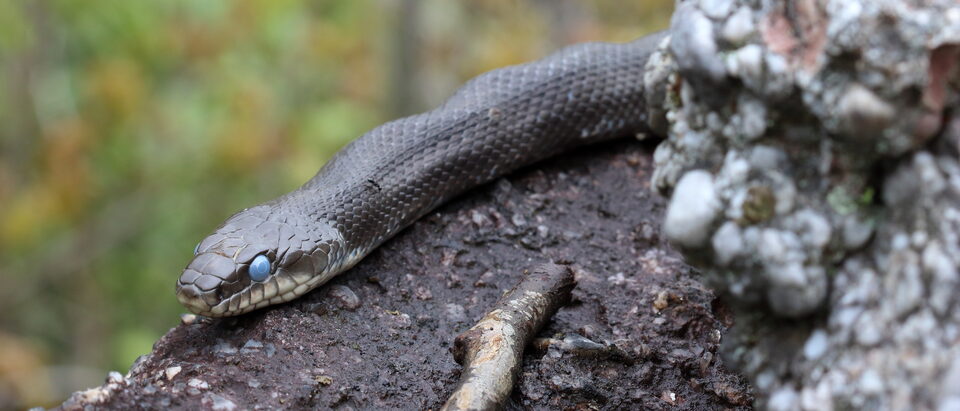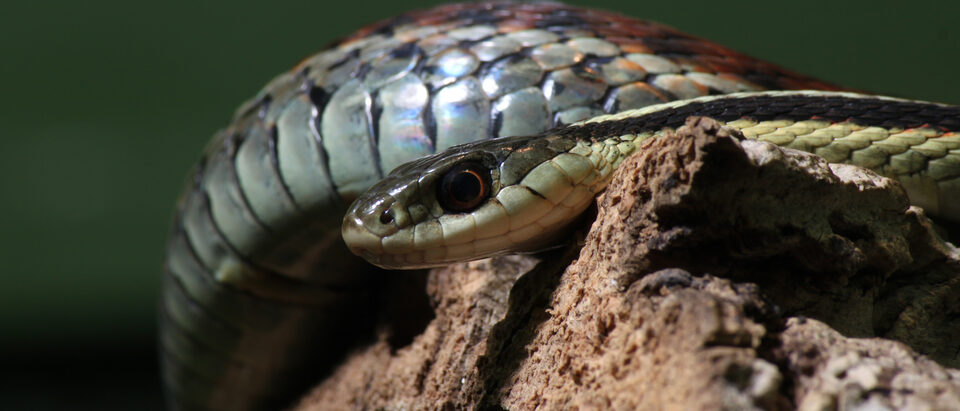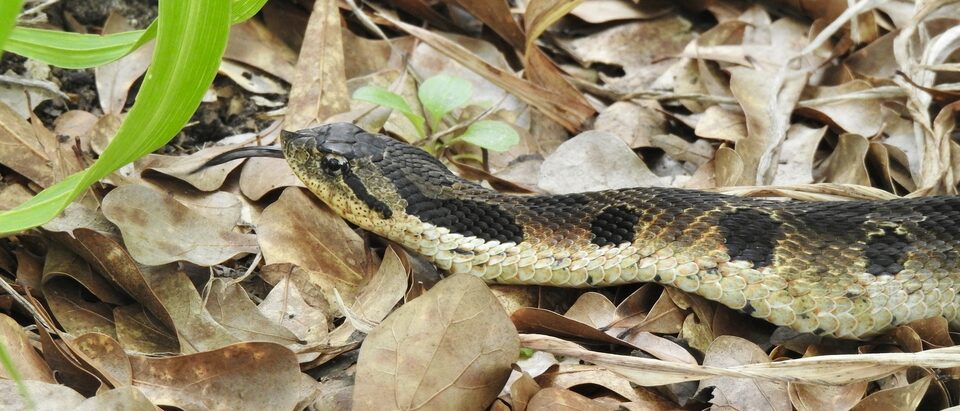

Snakes end up under decks for the same reason rodents do: shade, shelter, and a nearby food supply. The way to remove them is to take away the shelter and the food, not to chase the snake.
- Most deck snakes are harmless garter snakes or rat snakes, not venomous species.
- Remove hiding spots and rodent prey and the snake leaves on its own.
- Most commercial snake repellents are not proven to work.
- Seal the deck perimeter with hardware cloth after the snake is out.
Confirm It Is a Snake
The most common deck snakes are harmless garter snakes and rat snakes. You may see a snake sunning itself on the deck or slipping under the edge into the cool, shaded space below. Shed skins near the deck are a clear sign a snake is living there.
If you can identify the snake as non-venomous, you usually have nothing to fear. If you cannot identify it, keep your distance, whatever shape its head seems to be.
Remove the Shelter
Snakes need cool, dark hiding places. Clear the area under and around the deck of debris, woodpiles, rock piles, leaf litter, and tall grass. Trim vegetation back from the deck edge and mow around the perimeter. A clean, open space with nowhere to hide is unattractive to a snake.
Snakes also follow their prey, so the biggest single step is controlling the rodents under the deck. Solve the mice or rats, and the snake loses its reason to stay.
What Does Not Work
Be skeptical of snake repellents. No repellent is registered for snake control in the United States, and research testing sulfur, mothballs, cayenne, and other home remedies against rat snakes found that none of them worked. Ultrasonic devices have no demonstrated effect on snakes either.
Save your money and focus on the two things that do work: removing shelter and removing prey.
Snakes cannot dig or chew, so they enter through gaps that already exist. Sealing the deck perimeter with hardware cloth keeps both snakes and the rodents they hunt out. That single change solves both halves of the problem.
Remove the Snake If Needed
If you can see a non-venomous snake and want it gone immediately, you can sweep it into a tall trash can with a broom and release it in nearby natural cover. Never handle a snake you cannot positively identify, and never grab one by the tail, since a snake can strike quickly.
For a venomous or unidentified snake, call a wildlife professional. A snake under a deck is often easiest to leave alone once you remove the shelter and prey, since it will move on by itself.
Seal the Perimeter
After the snake is out, install 1/4-inch hardware cloth around the deck edge, buried several inches deep, to close the gap snakes and rodents use. Seal cracks and gaps around the foundation with caulk or steel wool. A barrier that keeps out mice also keeps out the snakes that follow them.
When to Call a Professional
Call a professional for a venomous or unidentified snake, or if you are simply not comfortable handling any snake. A wildlife operator can identify the species, remove it safely, and point out the entry points and rodent issues that brought it in. The DIY vs. pro quiz tells you in five questions whether this one is a job for you or for a licensed pro.
Frequently Asked Questions
Most are harmless garter snakes or rat snakes. The risk comes from trying to handle a snake you cannot identify. Treat any unidentified snake as potentially venomous and keep your distance.
Shade, shelter, and food. The dark, cool space under a deck is ideal hiding cover, and snakes follow the rodents that also live there. Remove the shelter and the prey, and the snake leaves.
No. Research has not found sulfur, mothballs, cayenne, or other common repellents to be effective, and no snake repellent is registered for snake control. Focus on removing shelter and prey instead.
Usually yes, once the hiding spots and rodent prey are gone. A snake with no shelter and no food has no reason to stay under the deck.
Seal the deck perimeter with hardware cloth buried several inches deep, clear debris and vegetation, and control rodents. These three steps remove the shelter, the food, and the entry point.