
Snake fencing is the most reliable long term solution for keeping snakes out of your yard. Unlike repellents that need reapplication, a properly installed fence works 24/7.
Mesh size, material, and burial depth determine whether a fence stops snakes or just slows them down.
- 1/4 inch mesh is the gold standard: Snakes can squeeze through surprisingly small gaps. Hardware cloth with 1/4 inch openings stops even the smallest snake species.
- Galvanized steel lasts longest: Metal galvanized hardware cloth with 1/4 inch mesh openings measured diagonally; 1/4 inch blocks all snake species while 1/2 inch may allow slender juveniles to pass, the gold standard for snake exclusion resists weather, UV damage, and digging animals for years. Plastic mesh is cheaper but degrades faster in direct sun.
- Buried fencing prevents tunneling: For full protection, bury the bottom 4 to 6 inches of fence underground and angle it outward to stop snakes from digging under.
- Fences work best with habitat management. Snake exclusion fencing should be paired with gravel or concrete footer along the base to prevent burrowing species like hognose snakes from digging under: A fence alone is not enough. Keep grass short, remove debris, and seal gaps in foundations for a complete snake exclusion strategy. Explore my full snake control hub for more methods. Explore my full snake control hub for more methods. Explore my full snake control hub for more methods.
Quick Comparison
| Product | Material | Mesh Size | Best For | Buy |
|---|---|---|---|---|
| Amagabeli Hardware Cloth | Galvanized steel | 1/4 inch | Best Overall | Check price |
| Black PVC Coated Hardware Cloth | PVC coated steel | 1/2 inch | Best Rust Resistant | Check price |
| MAPORCH Plastic Fence | Plastic | Small | Best Lightweight | Check price |
| Pet & Garden Safeguard | Plastic netting | Small | Best for Gardens | Check price |
| Miuwauer Mesh 10FT | Plastic | Small | Best Budget | Check price |
| Kipuafar Mesh 33FT | Plastic | Small | Best Long Roll | Check price |
Detailed reviews of each fencing material, including installation tips and durability notes, follow below.
Best Overall: Amagabeli Hardware Cloth 1/4 inch Galvanized (36 x 100ft)
 Best Overall
- Material
- Galvanized steel wire
- Mesh size
- 1/4 inch openings
- Dimensions
- 36 inches high x 100 feet long
- Durability
- Rust resistant, weather resistant, UV stable
The Amagabeli galvanized hardware cloth with 1/4 inch mesh openings measured diagonally; 1/4 inch blocks all snake species while 1/2 inch may allow slender juveniles to pass, the gold standard for snake exclusion is the most effective snake fencing material in my comparison.
The 1/4 inch mesh openings measured diagonally; 1/4 inch blocks all snake species while 1/2 inch may allow slender juveniles to pass are small enough to block even the youngest garter snakes and ringneck snakes, while the galvanized steel construction resists rust, UV damage, and weather for years.
The 36 inch height provides enough surface to bury 6 inches underground and still leave 30 inches above ground, which is the recommended height for most snake species.
Installation requires basic tools: wire cutters, heavy duty staples or fence nails, and wooden posts. The 100 foot roll covers a substantial perimeter. For the highest level of protection, pair this with a concrete footer or a layer of gravel along the base to prevent burrowing.
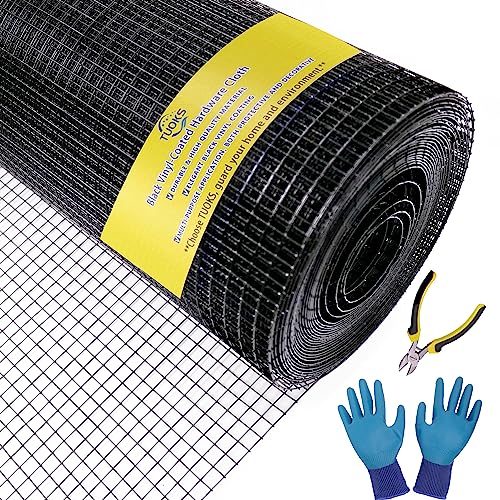
Best Rust Resistant: Black PVC Coated Hardware Cloth 1/2 inch (24 x 100ft)
 Best Rust Resistant
- Material
- Steel wire with black PVC coating
- Mesh size
- 1/2 inch openings
- Dimensions
- 24 inches high x 100 feet long
- Durability
- Rust resistant PVC coating, UV stable
This PVC coated galvanized hardware cloth with 1/4 inch mesh openings measured diagonally.
1/4 inch blocks all snake species while 1/2 inch may allow slender juveniles to pass, the gold standard for snake exclusion combines the strength of steel with a protective black vinyl coating that prevents rust and corrosion.
The 1/2 inch mesh openings measured diagonally; 1/4 inch blocks all snake species while 1/2 inch may allow slender juveniles to pass are slightly larger than the Amagabeli but still small enough to block most snake species.
The black coating makes it less visible than bare galvanized steel, which is a consideration for front yard or visible property lines.
The 24 inch height is shorter than the full size option, making it better suited for garden borders, raised beds, and targeted exclusion zones rather than full property perimeter fencing. It is also easier to cut and shape than the heavier galvanized cloth.
Best Lightweight: MAPORCH Black Plastic Wire Mesh Fence (15.7IN x 10FT)
 Best Lightweight
- Material
- Black plastic
- Dimensions
- 15.7 inches high x 10 feet long
- Installation
- Scissors only, no tools needed
- Durability
- Moderate, degrades in direct sun over time
MAPORCH plastic mesh fencing is a lightweight and affordable option for temporary or low pressure snake exclusion.
The plastic construction is easy to cut with scissors, requires no specialized tools, and can be installed in minutes with zip ties or garden stakes. It is best suited for garden beds, chicken runs, and seasonal use around raised planters.
The plastic material is not as durable as galvanized steel and will degrade over time with prolonged sun exposure. It is a practical solution for renters, temporary enclosures, or situations where a permanent fence is not feasible.
Best for Gardens: Pet and Garden Safeguard Black Plastic Netting (15.7IN x 16.4FT)
 Best for Gardens
- Material
- Black plastic netting
- Dimensions
- 15.7 inches high x 16.4 feet long
- Best use
- Garden beds, under deck coverage, raised planters
- Durability
- Moderate, store indoors during winter
Pet and Garden Safeguard netting is a decorative plastic mesh designed specifically for garden beds and raised planters. The small grid pattern blocks snakes while allowing airflow and sunlight through to plants. The 16.4 foot roll provides enough material for several standard garden beds or a single long border.
The netting is flexible and can be draped over hoops, attached to stakes, or laid flat over seed beds. It is also useful for covering the gaps under decks and porches where snakes often seek shelter.
Best Budget: Miuwauer Plastic Mesh Fence (15.7IN x 10FT)
 Best Budget
- Material
- High density PE plastic, black
- Dimensions
- 15.7 inches high x 10 feet long
- Mesh opening
- 0.3 inches
- Best use
- Gaps under porches, single beds, crawlspace vents
Ten feet of black plastic netting with a 0.3 inch mesh opening, for under fifteen dollars. It is not the fence that stops a determined rat snake on its own, but it is the cheapest way to close the specific gaps that matter: under a porch, along a single garden bed, around a crawlspace vent, or across the bottom of a gate.
The material is high density PE plastic, so it will not rust, it cuts with scissors, and it has enough flexibility to follow uneven ground such as the base of a shed or a rubble wall. The listing is explicit that the 0.3 inch opening is what makes this a snake barrier rather than a generic garden net: a snake goes through anything it can fit its head into.
Install it with the bottom few inches buried or pinned with landscape staples. On its own the roll is not a fence, it is a way to seal the openings a fence would leave.
Best Long Roll: Kipuafar Plastic Wire Mesh Fence (15.7IN x 33FT)
 Best Long Roll
- Material
- 500gsm ABS plastic, hexagonal weave
- Dimensions
- 15.7 inches high x 33 feet long
- Best use
- Shed, patio and garden perimeters
- Durability
- Rust and corrosion resistant, holds up to heat
Thirty-three feet in one roll is the point of this one: three times the length of the budget roll, so a fence line around a shed, a patio or a garden runs without a splice in the middle. Splices are where snakes get through, because the overlap shifts the moment anything pushes on it.
The material is 500 gram ABS plastic with a hexagonal weave, which the listing describes as resistant to rust and corrosion and high temperature stable. In practice that means it does not go brittle and crack the way thin netting does after a summer in the sun, which is what makes a plastic fence worth installing rather than replacing every spring.
It is light enough to install on your own and easy to cut to the vent or gate you are working around, and the same roll does double duty as a chicken or puppy barrier.
For any snake fence, bury the bottom 4 to 6 inches of material at a 45 degree angle pointing outward. This creates an underground lip that prevents snakes from burrowing under the fence.
How to Install a Snake Fence
Choose the Right Height and Mesh
A fence that is 30 inches above ground with 4 to 6 inches buried is sufficient for most snake species. Climbing snakes like rat snakes may require a taller fence or an angled overhang at the top. Use 1/4 inch mesh for complete protection against all snake sizes.
Secure the Bottom Edge
Dig a trench 4 to 6 inches deep along the fence line. Place the bottom of the fence material in the trench and bend it outward at a 45 degree angle away from the protected area. Backfill the trench with soil or gravel. This outward angle blocks snakes that try to dig under the fence.
Inspect and Maintain
Check the fence line monthly for gaps, tears, or areas where soil has settled and exposed the bottom edge. Plastic fences require more frequent inspection than galvanized steel. Replace damaged sections immediately to prevent snakes from finding the weak point.
Frequently Asked Questions
1/4 inch mesh stops all snake species, including newborn snakes that are only a few inches long. 1/2 inch mesh stops most adult snakes but may allow very small or slender species to pass through.
For full protection, choose 1/4 inch galvanized hardware cloth with 1/4 inch mesh openings measured diagonally; 1/4 inch blocks all snake species while 1/2 inch may allow slender juveniles to pass, the gold standard for snake exclusion.
30 inches above ground is the recommended height for most snake species. If you have climbing snakes like rat snakes, extend the fence to 36 inches or add an angled overhang at the top. Remember to account for the portion that will be buried underground.
Some snake species are excellent climbers. Rat snakes and black racers can climb vertical surfaces if they find a rough surface to grip. Smooth metal or plastic mesh makes climbing more difficult. An angled outward overhang at the top of the fence prevents climbing snakes from going over.
A properly built 1/4 inch galvanized mesh fence, at least 30 inches tall and buried 6 inches with the top angled outward, will exclude most terrestrial snakes including copperheads and rattlesnakes. No fence is 100 percent, but this design is the standard used around homes and camps.
Keep grass and debris clear on both sides so snakes cannot use vegetation to climb over, check the buried edge after heavy rain, and repair any gaps at gates or utility penetrations immediately. A small hole undoes the whole fence.
Some can, especially rat snakes, which climb well. The outward angle or lip at the top of a proper snake fence is what stops climbers. A straight vertical fence with no lip will not stop a climbing snake.