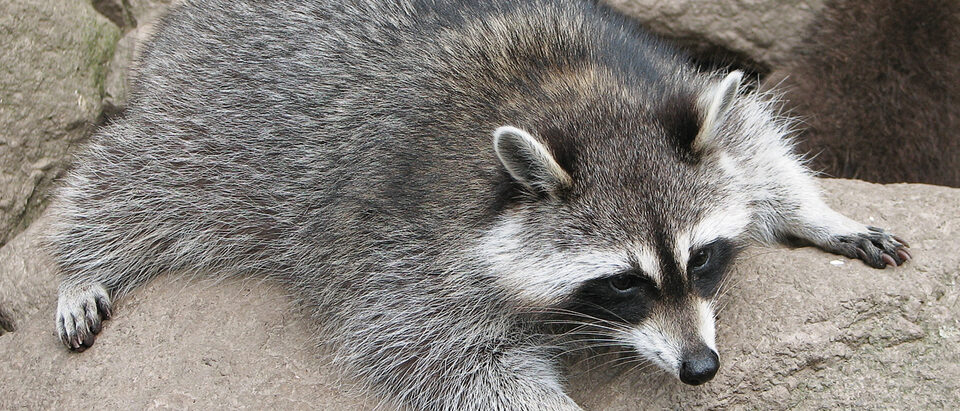

A raccoon in your kitchen is stressful, but it’s a problem you can handle if you stay calm. These animals are smart and strong, and their front paws can open cabinets and tear into food. Your job is to get it out without cornering it, because a cornered raccoon gets aggressive. Here’s the five-step play.
Step 1: Secure the Area
Your first move is to cut off the food and keep the raccoon from wandering deeper into the house.
- Clear the counters. Move food into the fridge or a closed pantry.
- Close doors to other rooms so the raccoon stays in the kitchen.
- Get pets and kids out of the area.
- Put on gloves and long sleeves in case you need to get close.
Step 2: Create an Escape Route
Give the raccoon an obvious way out and it will usually take it.
- Open a door or window that leads outside. A door straight to the yard is best.
- Take the screen off an open window so it can get through.
- Clear a path from the raccoon to the exit, moving chairs and anything in the way.
- Turn off the lights. Raccoons move more comfortably in the dark.
Step 3: Give It a Nudge With Deterrents
If it hasn’t left in about half an hour, try these.
- Make noise. Bang pots or play music near the kitchen entrance, aimed in the raccoon’s general direction, not directly at it.
- Shine a light. A bright flashlight or work light pointed toward it from a safe distance can encourage it to move.
- Use ammonia rags. A rag soaked in ammonia near the raccoon can push it to leave. Keep ammonia away from food surfaces.
Don’t corner a raccoon in a kitchen. A trapped one may bite or scratch. If it’s growling, hissing, or baring teeth, back off and call a pro. Don’t try to grab it.
Step 4: Know When to Call a Professional
Call a licensed wildlife control operator if:
- The raccoon has been in the kitchen more than a couple of hours.
- It’s acting aggressive or sick, staggering, drooling, or disoriented.
- You think there are babies nearby.
- You can’t safely set up an exit.
- It’s stuck in a wall, cabinet, or appliance.
Step 5: Seal Up How It Got In
Once the raccoon is out, find and close its entry point so it can’t come back.
- Check for gaps around pipes, vents, and where the floor meets the wall.
- Lock pet doors at night.
- Secure garbage cans with locking lids.
- Seal gaps with 1/4 inch hardware cloth, steel wool, and expanding foam.
For more, read my attic removal guide and raccoon behavior guide.
Frequently Asked Questions
They have surprisingly dexterous front paws and a strong sense of touch, and they can work latches and lids. Some can get into an unlatched fridge or cabinet. Store food in containers with locking or hard-to-open lids.
Through pet doors, open windows, damaged vents, and gaps around pipes. They’re strong climbers and can reach upper-floor windows via trees or downspouts. Look over your exterior for any opening a raccoon could squeeze through.
It wants out more than it wants a fight. But if it’s cornered or protecting young, it can bite or scratch, and raccoons can carry rabies. Any bite needs medical attention right away. Don’t corner it.
Costs vary a lot by location, time of day, and how complicated the job is. Get quotes from a few licensed operators and ask whether the quote covers sealing up the entry point too.
The Bottom Line
A raccoon in the kitchen is manageable. Secure the food, open an exit, and nudge it out with noise, light, or ammonia. If it won’t leave or seems sick or aggressive, call a pro. Then seal every entry point, because the most common ways in are pet doors, open windows, and gaps around pipes.