
Rodenticides are powerful tools for rat control, but they must be used with extreme caution. Rat poisons, or rodenticides, are anticoagulant compounds that cause internal bleeding in rats over several days. While effective, they pose risks to pets, children, and wildlife.
This guide covers the best rat baits and poisons, how to use them safely, and when to choose alternative methods. For more, see Best Electronic Rat and Mouse Repellents: Do They Work?.
- Types of rodenticides: First-generation anticoagulants (warfarin) and second-generation anticoagulants (brodifacoum, bromadiolone). Second-gen are more potent.
- Bait stations: Always use tamper-resistant bait stations. Never place loose bait where pets or children can access it.
- Safety: Keep bait stations away from pet areas. Dispose of dead rats promptly to prevent secondary poisoning.
- Effectiveness: Rodenticides are effective for large infestations and outdoor use. For indoor use, traps are preferred.
- Legal status: Some rodenticides are restricted or banned in certain states. Check local regulations before purchasing.
Types of Rodenticides
Rodenticides fall into two main categories:
First-Generation Anticoagulants
First-generation anticoagulants (warfarin, diphacinone, chlorophacinone) require multiple feedings over several days to be lethal. They are less toxic to non-target animals and are considered safer for use around pets and wildlife.
However, rats must feed on them multiple times, which can be challenging with neophobic rats.
Second-Generation Anticoagulants
Second-generation anticoagulants (brodifacoum, bromadiolone, difenacoum, difethialone) are single-feed rodenticides, a single feeding is lethal. They are more potent and more effective against resistant rat populations.
However, they pose a higher risk of secondary poisoning to predators that eat poisoned rats.
The label is the law. Every bait here is registered for rats and mice, in specified sites, usually inside a bait station. Putting a rat bait down for a squirrel or a gopher is an off-label use and a violation of federal pesticide law, and the second-generation anticoagulants are the ones regulators keep tightening, so buy what the label actually covers.
How to Use Rodenticides Safely
If you choose to use rodenticides, follow these safety guidelines:
- Always use tamper-resistant bait stations, never place loose bait blocks
- Place bait stations along walls, fences, and foundations where rats travel
- Keep bait stations away from areas where pets, children, or wildlife can access them
- Check bait stations weekly and refill as needed
- Dispose of dead rats promptly, wear gloves, double-bag, and dispose in the trash
- Do not use rodenticides in attics, walls, or crawl spaces where dead rats cannot be retrieved
- Follow all label instructions, the label is the law
Rodenticides are toxic to pets, children, and wildlife. If you have pets or children, consider using traps instead of poisons. If you use rodenticides, use tamper-resistant bait stations exclusively. If you suspect your pet has ingested rodenticide, contact a veterinarian immediately.
Vitamin K is the antidote for anticoagulant rodenticides.
Quick Comparison
| Product | Type | Best For | Buy |
|---|---|---|---|
| Tomcat Bait Chunx Pail 4.25 lbs | Bait Blocks | Best Overall | Check price |
| JT Eaton 704-PN Bait Block Pail | Bait Blocks | Best Value | Check price |
| Fastrac Blox Rodenticide 4 lb Pail | Bait Blocks | Best Professional | Check price |
| FirstStrike Rodent Soft Bait 4 lb | Soft Bait | Best Soft Bait | Check price |
| Tomcat All Weather Bait Chunx 9 lb | Bait Blocks | Best All-Weather | Check price |
| EcoClear RatX Natural Pellets | Natural | Best Non-Toxic | Check price |
Best Overall: Tomcat Bromethalin Bait Chunx
 Best Overall
- Active ingredient
- Bromethalin
- Size
- 4.25 lb pail of 1 oz blocks
- Type
- Bait blocks
- Kill
- Up to 12 rats per block
- Use
- With bait stations
Tomcat Bromethalin Bait Chunx are the best-selling rat poison on Amazon with a 4.6-star rating. These bait blocks contain bromethalin, a second-generation single-feed rodenticide that kills rats after a single feeding.
The 4.25-pound pail contains approximately 48 bait blocks, enough for multiple bait stations or frequent refills. The blocks are weather-resistant for outdoor use and have a hole in the center for securing them on bait station rods.
Bromethalin is effective against warfarin-resistant rat populations.
Best Value: JT Eaton 704-PN Bait Block
 Best Value
- Active ingredient
- Diphacinone (first-generation)
- Size
- Pail of 144 x 1 oz blocks
- Type
- Solid bait blocks
- Use
- Bait stations
JT Eaton 704-PN Bait Blocks contain diphacinone, a first-generation anticoagulant that requires multiple feedings. This makes them safer for use around pets and wildlife because a single feeding is unlikely to be lethal.
The 1-ounce blocks are the perfect size for standard bait stations and have a weather-resistant coating for outdoor use. With over 9,700 reviews and a 4.4-star rating, these are the most reviewed rodenticide bait blocks on Amazon.
The pail contains 144 blocks, enough for a large property or multiple seasons.
Best Professional: Fastrac Blox Rodenticide (4 lb Pail)
 Best Professional
- Type
- Bait blocks (blox)
- Package
- 4 pound pail, refill format
- Placement
- Locking tamper resistant bait stations only
- Active ingredient
- Not stated on the listing, check the label
This is the professional format rather than the consumer one. Fastrac Blox are single blocks made for locking bait stations, and this is the 4 pound pail: the refill size a pest control technician buys, not the small consumer pack with a plastic tray inside.
Blox rather than pellets or paste is the reason professionals use them. A block sits on the rod inside a tamper resistant station and cannot be carried away, kicked out of place or scattered, which is what keeps bait where you put it and away from anything that is not a rat. The pail also seals, so the blocks stay dry between visits.
Two warnings that belong in the same paragraph as the product. This is a poison that requires a bait station rather than loose blocks, and the listing does not publish the active ingredient, so read the label before you buy if the difference between a first and second generation anticoagulant matters to you. If it does not, and you want a professional pail for a barn, this is the pick.
Best Soft Bait: FirstStrike Rodent Soft Bait 4 lb
 Best Soft Bait
- Active ingredient
- Difethialone 25 ppm
- Format
- Soft bait sachets, 10 grams each
- Package
- 4 lb bag, about 180 sachets
- Placement
- Tamper-resistant bait stations, indoors and out
FirstStrike is a soft bait in 10-gram sachets with difethialone at 25 ppm as the active ingredient. The soft format stays palatable in heat and dry air, where wax blocks can harden and lose their appeal, so it is a common pick for warm garages and attics. A 4-pound bag holds about 180 sachets.
Best All-Weather: Tomcat All Weather Bait Chunx (9 lb)
 Best All-Weather
- Active ingredient
- Diphacinone, a first generation anticoagulant
- Package
- 9 pound pail
- Use
- Outdoor, weather resistant blocks
- Placement
- Tamper resistant bait stations only
All weather means exactly what it says: these are chunky blocks for outdoor use, made to stay palatable through rain and damp rather than turning to mush in a week. The listing names the active ingredient as diphacinone, which is a first generation anticoagulant, and that is worth understanding before you buy: first generation baits generally take more feeding than the single feed products, which makes them a better fit for ongoing control around a barn than for one rat under a sink.
The package here is the 9 pound pail, so it is the refill size rather than the small consumer box. If your problem is a compost pile, a chicken run or a feed shed rather than a single animal, buying at this size is cheaper per block and means fewer trips to the store.
The rules do not change with the size of the pail. Bait goes in tamper resistant stations, never loose in a shed, and it stays away from anywhere a pet or a child can reach.
Best Non-Toxic: EcoClear RatX Rat Killer
 Best Non-Toxic
- Type
- Non-toxic (FIFRA 25(b) exempt)
- Kill
- Patented mechanical dehydration
- Use
- Indoor and outdoor
- Safe
- Around pets and livestock
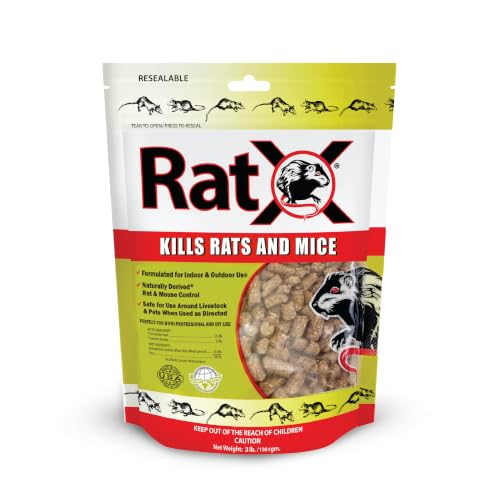
RatX is the leading non-toxic alternative to chemical rodenticides. It uses a proprietary formula of natural ingredients that are lethal to rats but harmless to pets, children, and wildlife. The pellets work by dehydrating rats through a natural osmotic process that is species-specific to rodents.
RatX is EPA-exempt under FIFRA 25(b) as a minimum risk pesticide, meaning it can be used without the restrictions of chemical poisons. It is the safest choice for homes with pets, children, or beneficial wildlife.
Frequently Asked Questions
First-generation anticoagulants take days of feeding. Second-generation anticoagulants take days. Rats die from internal bleeding.
Some rat populations have developed resistance to first-generation anticoagulants (warfarin resistance). Second-generation anticoagulants are effective against resistant rats.
No. Some states restrict or ban certain rodenticides, particularly second-generation anticoagulants. Check your state regulations before purchasing.
Yes. Secondary poisoning is a real risk when a cat or dog eats a rat that has consumed rodenticide. If you use poison, choose a formula designed to minimize secondary risk and place it in tamper resistant bait stations out of reach of pets and children.