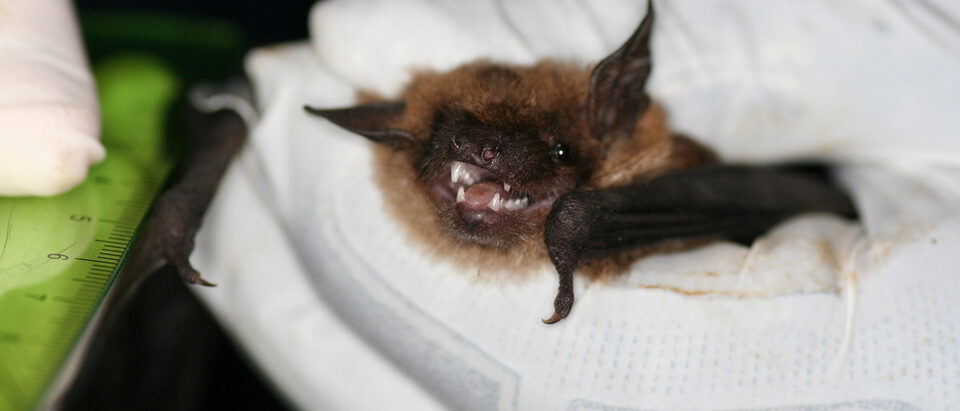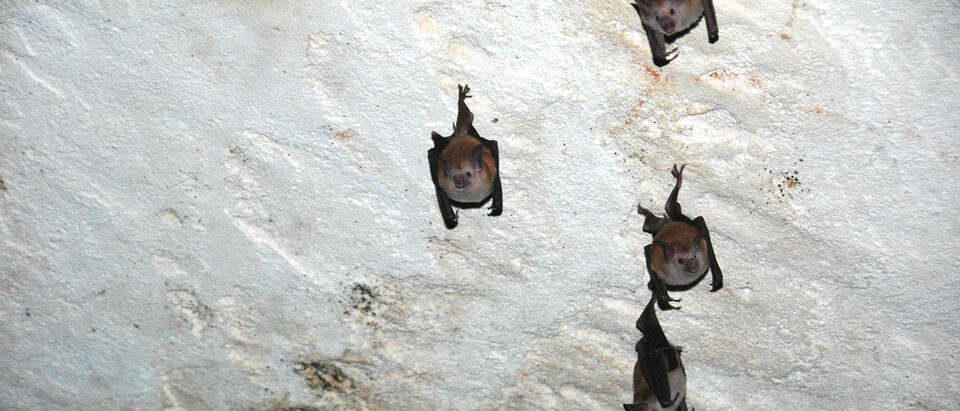

Bats don’t pick houses at random. They look for a few specific features, and if your house has them, you’re going to keep getting bats until you change them.
Here’s the thing most people get wrong: bats aren’t attracted to dirt or food scraps. They’re attracted to structure. Your attic and walls happen to mimic the caves and tree hollows they’d naturally roost in, if the conditions are right. Fix the conditions and you fix the problem.
Warmth and shelter
Bats are picky about temperature. They want a roost that stays warm and stable, which is exactly what a south-facing attic provides. Dark roofing soaks up heat during the day and holds it into the night.
Chimneys are the second favorite. The dark brick absorbs heat and the flue keeps a steady microclimate, which is why older homes with uncapped flues get chimney roosts.
Easy entry points
Bats don’t make holes, they use the ones your house already has. The features most likely to invite them in:
- Loose or damaged soffit panels.
- Gable vents with no mesh.
- Ridge vents with broken seals.
- Uncapped chimneys.
- Missing or damaged roof flashing.
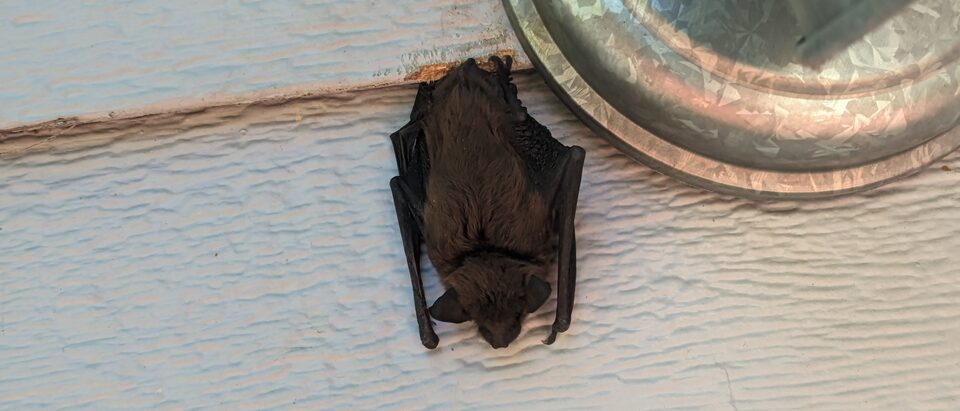
- Gaps where siding meets the roofline.
- Loose fascia boards and corner trim.
- Unsealed gaps around cable, satellite, and electrical lines.
A bat can fit through a gap barely wider than a pencil, so even small openings matter.
Water nearby
Bats need a reliable water source within their foraging range. If you live near a pond, lake, stream, or even a big pool, you’ll see more bat activity overhead.
Living near water doesn’t guarantee attic bats, but it raises the odds. Covering a pool at night can cut down on bats skimming it.
Lots of insects
Bats eat insects, and they go where the food is. A property with a big bug population draws more bats, and more bats means a better chance one finds your soffit gap. What draws the insects:
- Outdoor lights on at night, which attract flying bugs.
- Standing water in bird baths, gutters, and ponds.
- Compost piles and unsealed trash.
- Dense vegetation right up against the house.
cut outdoor lighting during the hours bats feed, roughly dusk to midnight, or switch to motion-activated or yellow bug lights. Fewer bugs means fewer bats hanging around.
A previous colony
This is the one people miss. Bats leave behind scent markers, guano, urine, and gland secretions that signal “good roost here” to other bats. If you exclude a colony but don’t clean the guano, a new colony often moves in. Cleanup is part of exclusion, not an optional extra.
The season
Bat interest in your house changes through the year:
- Spring: bats come out of hibernation looking for warm roosts. Peak time for new problems.
- Summer: maternity colonies settle in. Existing colonies are most active.
- Fall: bats prep for hibernation and some look for new roosts. A good time to inspect.
- Winter: in cold regions bats hibernate or migrate. A winter sighting can mean a warm roost or a sick bat.
If you’d rather attract bats on purpose
Some people search this topic hoping to bring bats in, for insect control. If that’s you, the right move is a bat house, not your attic. A properly placed bat house gives bats the warm, dark, secure roost they want, and it keeps them out of your walls. That’s the win-win version of “attracting bats.”
Frequently Asked Questions
No. Bats flying over your yard to feed doesn’t mean they’ll roost in your attic. But if your house has entry points and a warm attic, the risk goes up. Bat-proofing is worth doing regardless.
No. A bat house is an alternative roost, not bait. If anything, giving bats a good option outside your house makes them less likely to move into your attic.
Not necessarily. New homes still have gaps around utility lines, vents, and soffits. Age of the house matters less than whether the entry points are sealed.
It can. Loose, fluffy insulation holds heat and gives bats nesting material, while tightly sealed foam leaves fewer gaps. But the entry points matter more than the insulation.
Watch the roofline at dusk and look for bats leaving a specific gap, and check for rub marks and guano below openings. A bat inspection walks you through finding every one.