
A snake hole isn’t something a snake dug itself. Snakes can’t dig, so they move into a burrow a rodent or turtle left behind. That’s actually the first clue: a snake hole looks used but not freshly excavated. For more, see How to Identify Venomous Vs Non-Venomous Snakes.
What a snake hole looks like
- A round or slightly oval opening, usually an inch or two across.
- Smooth, worn edges from the snake sliding in and out.
- No dirt mound at the entrance. A fresh pile of dirt means a rodent dug it.
- Often tucked near a foundation, rock, log, wall, or thick plant cover.
- Cobwebs across the opening usually mean nothing’s been in or out lately.
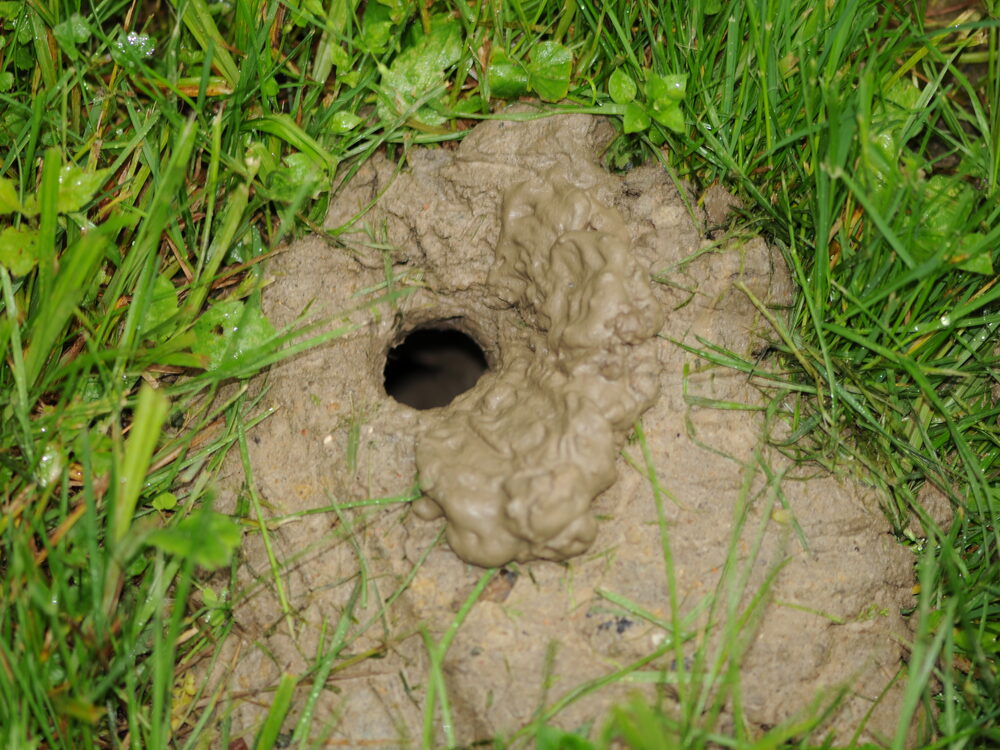
Snake hole in packed soil. Photo: Serge Melki, CC BY 2.0
Signs the hole is active
- Shed skin near or inside the opening.
- Fresh S-shaped tracks in mud or dust nearby.
- The hole gets used more in spring and fall, and at dawn and dusk in summer.
- A musky smell near the entrance, some snakes give off a scent when disturbed.
The plug test
The easiest way to check without putting your hand anywhere near the hole is to loosely stuff the opening with a few leaves or a bit of tissue and check back in a day. If it’s pushed aside, something’s using it.
Snake hole vs. rodent hole
| Feature | Snake hole | Rodent hole |
|---|---|---|
| Opening | Smooth and round | Irregular, may have dirt |
| Dirt mound | None | Usually present |
| Shed skin | Common nearby | Rare |
| Tracks | S-shaped trail | Footprints and tail drag |
| Droppings | Liquid, white-tipped | Solid pellets |
Don’t reach in
Never put your hand in a hole to check for snakes. You can’t tell what’s in there from the opening, and if it’s a venomous snake you’ve made a bad mistake. If you suspect a copperhead, rattlesnake, or cottonmouth, call someone who handles them.
Frequently Asked Questions
Plug it loosely with leaves or tissue and check it in a day. If the plug’s been moved, it’s active. Shed skin, fresh tracks, and droppings nearby are other signs.
Spring and fall, when snakes are out hunting. In the heat of summer they may only move at dawn and dusk, and in winter they brumate in deeper dens.
Only after you’re sure it’s empty. If it’s near the house, seal it with hardware cloth or gravel. Sealing a snake in means it dies and smells.
It depends on the burrow the snake took over. Rodent burrows can run a foot or more down and several feet across. In winter, snakes use deeper dens below the frost line.