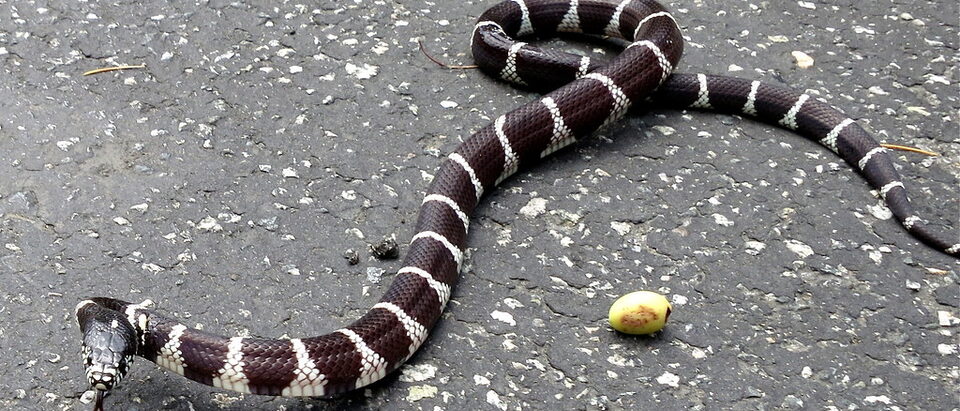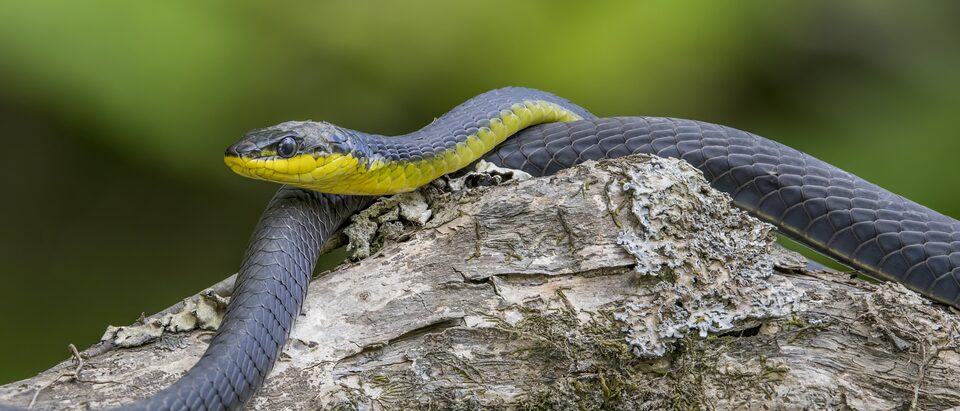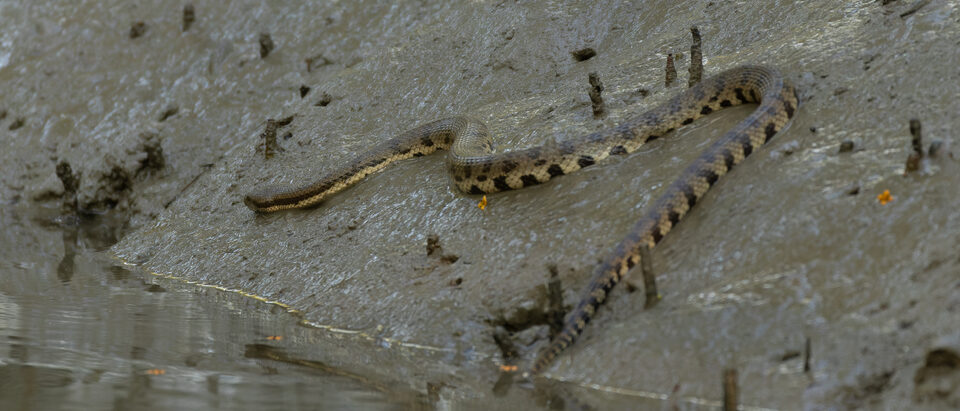

Identifying venomous vs non-venomous snakes requires looking at head shape, pupil shape, and body characteristics. In North America, most venomous snakes (copperheads, rattlesnakes, cottonmouths, coral snakes) share common features that distinguish them from non-venomous species. This guide covers the key identification points. For removal, see my snake traps guide.
- Do not judge by the head shape. Herpetologists warn against it for a simple reason: harmless species such as rat snakes and hognose snakes flatten their heads when they feel threatened, which makes them look triangular. The reliable markers are the heat-sensing pit between the eye and the nostril, the vertical pupil, and a single row of scales under the tail.
- Pit vipers have vertical slit pupils, non-venomous have round pupils.
- Rattlesnakes have rattles on their tails, a unique identification feature.
- When in doubt, treat the snake as venomous and keep a safe distance.
Venomous Snake Features
- Triangular or arrow-shaped head wider than the neck (due to venom glands)
- Vertical slit pupils (like a cat’s eye) in pit vipers
- Heat-sensing pits between the eyes and nostrils (pit vipers only)
- Thick, heavy body compared to non-venomous snakes
- Rattle on the tail (rattlesnakes only)
- Bright color bands (coral snakes): red touches yellow, kills a fellow
Non-Venomous Snake Features
- Rounded or slightly oval head that is not wider than the neck
- Round pupils (not slit-shaped)
- Slender body compared to venomous snakes
- No heat-sensing pits between eyes and nostrils
- No rattle on the tail
- Long, thin tail that tapers gradually
| Feature | Venomous | Non-Venomous |
|---|---|---|
| Head shape | Triangular | Rounded |
| Pupils | Vertical slits | Round |
| Body shape | Thick, heavy | Slender |
| Heat pits | Present (pit vipers) | Absent |
| Tail | May have rattle | Tapers gradually |
| Neck | Narrower than head | Smooth transition |
Common Species Quick Reference
- Copperhead: Hourglass bands, heat pits, vertical pupils. Venomous.
- Rattlesnake: Rattle on the tail, heat pits, vertical pupils. Venomous.
- Cottonmouth (Water Moccasin): Dark body, white mouth lining, heat pits. Venomous.
- Coral Snake: Red, yellow, black bands. “Red touches yellow, kills a fellow.” Venomous.
- Garter Snake: Striped, slender, round head. Non-venomous.
- Rat Snake: Large, black or gray, round head. Non-venomous.
- Black Racer: Solid black, slender, round head. Non-venomous.
- Water Snake: Thick but round head, round pupils. Non-venomous (often confused with cottonmouth).
For the species level detail, take a look at my snake identification chart, and for the harmless ones around the house, read my garden snake ID guide.
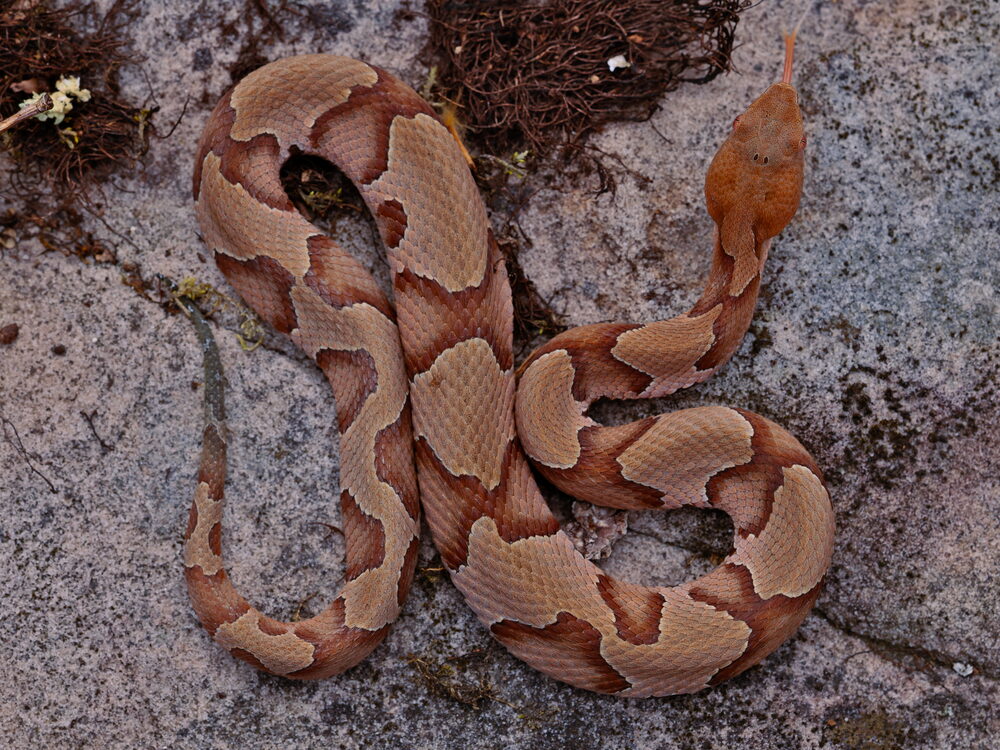
Copperhead. Photo: Peter Paplanus, CC BY 4.0
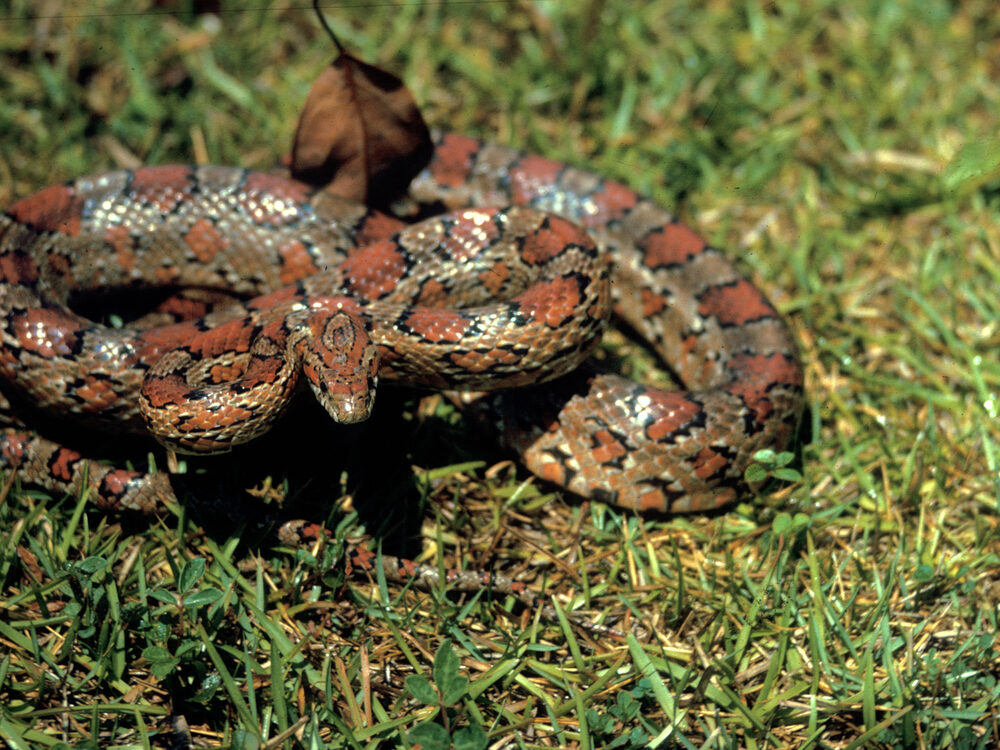
Corn snake
Frequently Asked Questions
Head shape is a helpful clue, but it is not reliable on its own. Some non-venomous snakes can flatten their heads to appear triangular when threatened. Always use multiple identification features and keep a safe distance.
“Red touches yellow, kills a fellow. Red touches black, venom lack.” This rhyme helps distinguish the venomous coral snake from non-venomous mimics like the scarlet king snake. In coral snakes, the red bands touch the yellow bands.
Baby venomous snakes can control their venom delivery from birth and can deliver a full defensive bite. However, their venom is not more potent than adults. They are more dangerous because they are harder to see and may be less predictable.
Keep a safe distance. Do not try to kill or move the snake. For a permanent barrier, see my snake fence guide. Call a professional wildlife control operator. Most venomous snakes will leave on their own if given space. If the snake is near your home, keep pets and children inside until it is removed.
The Bottom Line
Identifying venomous vs non-venomous snakes requires looking at multiple features: head shape, pupil shape, body shape, and tail characteristics.
Vertical slit pupils, heat-sensing pits and a single row of scales under the tail indicate a venomous pit viper. Head shape does not. When in doubt, treat any snake you cannot identify as venomous and keep a safe distance. The rhyme “red touches yellow, kills a fellow” helps identify coral snakes from their non-venomous mimics.