
A skunk under your deck is a common problem, and the trick is getting it to leave without scaring it into spraying. Skunks dig under decks and porches for shelter and can go unnoticed for weeks since they’re nocturnal. Here’s how to confirm one’s there, move it along, and seal the deck so it can’t come back.
Why Skunks Like the Space Under a Deck
The area under a deck is dry, enclosed, and hard for predators to reach, everything a skunk wants in a den. A small entrance that’s easy to defend, plus nearby food in your yard, and your deck checks every box. Skunks aren’t destructive the way groundhogs are, but they bring odor, fleas and ticks, and a small rabies risk.
How to Tell If a Skunk Is Under Your Deck
- Cone-shaped holes a few inches wide near the deck.
- Droppings near the entrance.
- The musky smell that skunks are known for, which carries a surprising distance.
- Tracks in mud or snow.
- Activity at dusk and dawn.
The cleanest way to confirm one is there, and to know when it’s left, is the newspaper test. Loosely stuff the entrance with newspaper. If it’s pushed out the next morning, the skunk is inside. When the newspaper stays put for two nights in a row, it’s gone.
How to Get a Skunk Out From Under Your Deck
- Confirm it’s active with the newspaper test, checking in the morning after it’s gone out to feed.
- Block every entrance but one during the day while it’s sleeping, using hardware cloth or boards.
- Set a bright light near the remaining opening. Skunks don’t like light near their den.
- Put ammonia-soaked rags in a container near the opening to make the space unpleasant.
- Wait a few days. The skunk will leave on its own at night to find quieter digs. Don’t seal the entrance yet.
- Once the newspaper stays put for two straight nights, permanently seal the entrance with 1/2 inch galvanized hardware cloth, buried about a foot deep with a few inches bent outward.
Never seal a skunk under your deck. Trapped, it will spray in panic and may die from stress or dehydration, and the odor can linger for months. Always encourage it to leave first, then seal.
How to Keep Them From Coming Back
Use 1/2 inch galvanized hardware cloth. Dig a trench about a foot deep around the deck and bury the cloth, bending the bottom few inches outward at a right angle so the skunk can’t dig under. Fasten the top to the deck frame with corrosion-resistant screws and washers. Skunks don’t climb well, so a barrier from the ground to the deck frame is enough.
If you suspect a mother with kits, wait until all of them have left before sealing. Watch for skunk activity at dusk for several days. If you see multiple skunks, wait until the young are old enough to follow her out, usually a couple of months after they’re born, before closing things up.
Frequently Asked Questions
With lights and ammonia, most leave within a few days, though some take up to a week. Be patient and don’t seal the entrance until you’ve confirmed it’s gone.
Only if it’s startled or cornered. Move slowly, avoid surprising it, and use the light and ammonia method, which encourages it to leave calmly rather than spraying.
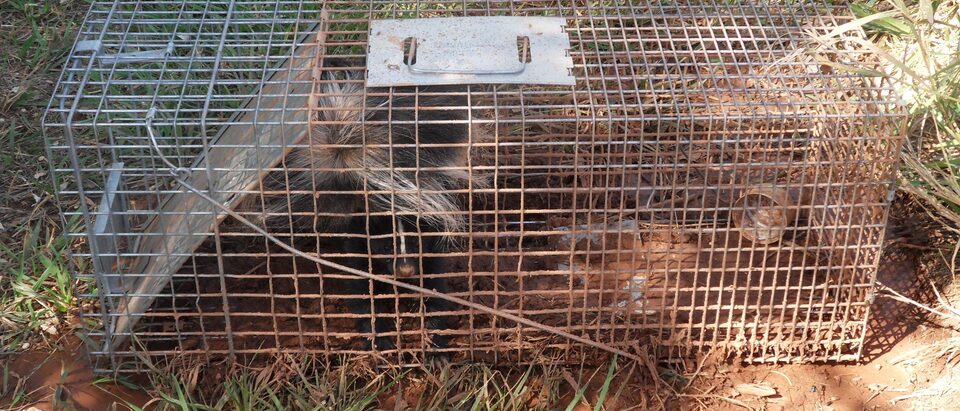
Yes, but use a covered trap at the entrance, baited with sardines or cat food. Check it every few hours and drape it with a towel before approaching to avoid a spray. See my best skunk traps guide for recommendations. Check your local rules before trapping.
Reopen the entrance right away and let it leave on its own. Don’t try to remove it while it’s trapped. The skunk will spray, and the odor will be brutal. Open it up and wait.