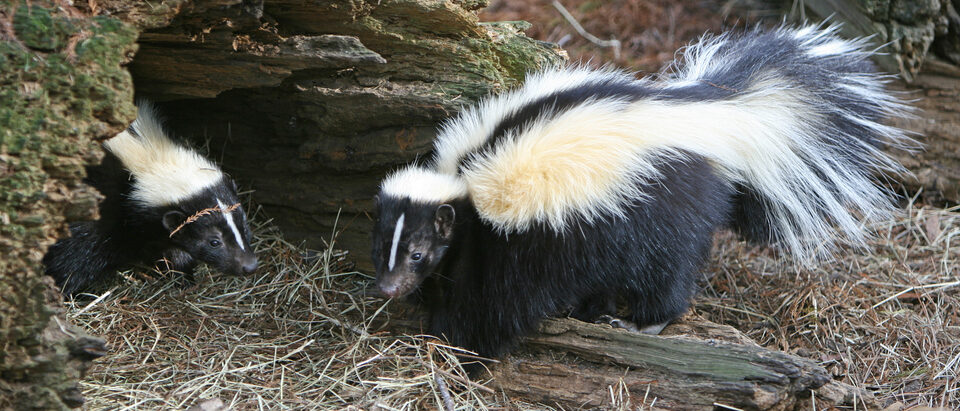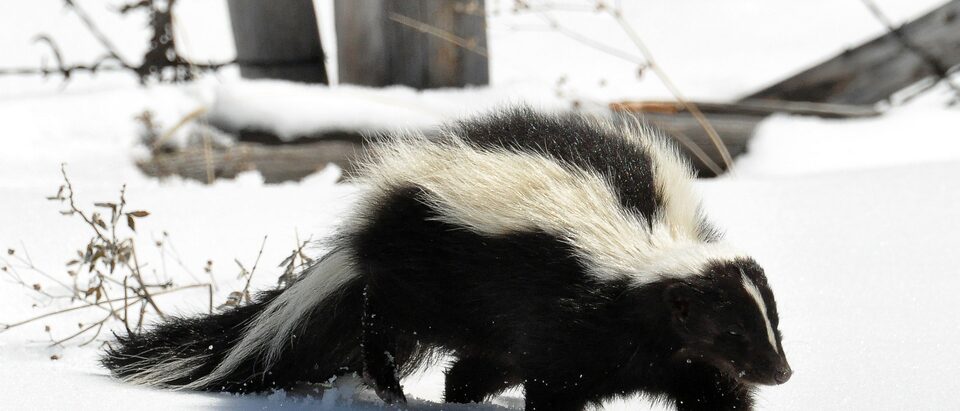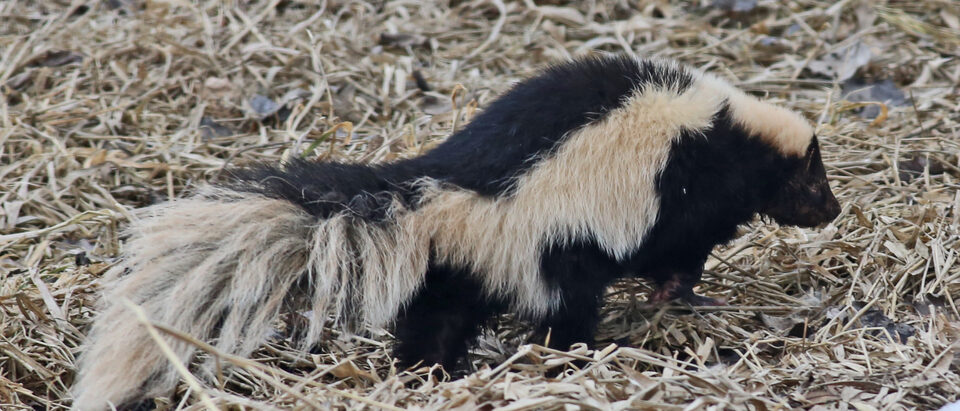

A skunk under your porch or shed is a spray waiting to happen, usually right when your dog or your kid gets too close. The fix is to get the skunk out first, then seal the den so nothing moves back in.
The order matters, and most people get it backwards. They seal the hole, trap the skunk inside, and end up with a worse problem. Here’s how to do it without getting sprayed.
How to tell if a den is active
Skunks aren’t tunnel experts like groundhogs. They usually enlarge an existing gap or dig a shallow burrow in soft soil. A den entrance is typically a single hole a few inches across, often shaped like a half-moon, with fresh dirt pushed out around it.
They pick dry, dark, enclosed spots: under concrete slabs, decks, porch steps, rock piles, wood piles, and sheds, plus crawl spaces with damaged skirting.
Signs the den is in use:
- A musky smell near the entrance or vents.
- Small conical holes in the lawn where the skunk has been digging for grubs.
- Droppings that look like cat poop but with insect parts and seeds in them.
- Tracks showing five toes and visible claw marks on each foot.
Get the skunk out before you seal anything
Never seal a den that might still be occupied. A trapped skunk will dig frantically, damage supports, and may die in there, which leaves you a smell that lingers for a long time.
The biggest timing rule: never seal during baby season, roughly April through August in most regions. A mother skunk may have a litter of kits inside, and sealing the family in is cruel and creates a serious odor problem as they die. Wait until fall, or confirm the den has been empty for a couple of weeks.
To nudge a skunk out humanely, make the den uncomfortable:
- Aim a motion-activated sprinkler at the entrance.
- Put bright lights on the area at night, since skunks like it dark.
- Soak rags in ammonia or use predator urine granules near the entrance.
Keep this up for several nights in a row. A one-way door is the most reliable tool: a mesh panel over the entrance with a flap that lets the skunk leave but not get back in. Install it in the late afternoon when the skunk is likely out foraging, check it daily, and after a few quiet days the den is probably empty.
Two ways to confirm it’s empty:
- The newspaper test: loosely stuff the entrance with crumpled newspaper. If it’s still in place after a few days, nothing has come or gone. If it’s been pushed out, something’s still using the den.
- The powder test: dust the entrance with flour or talc, then check for tracks in the morning.
What to seal it with
Skunks are strong diggers, so flimsy material won’t hold. You want heavy-gauge galvanized hardware cloth with half-inch mesh, plus:
- Wire cutters and tin snips.
- Galvanized staples or concrete screws with washers.
- Exterior plywood for larger gaps.
- Backfill soil or crushed stone.
Skip chicken wire and standard welded fence, skunks chew and bend both. Foam sealant alone won’t cut it at ground level, they’ll just dig around it. You need a rigid barrier plus buried hardware cloth.
How to seal the den
- Confirm it’s empty with the newspaper or powder test, or a camera on the entrance for several days.
- Clear the entrance. Dig out the loose soil so you can reach the gap underneath the structure.
- Cut and bend the hardware cloth. Make the piece bigger than the gap on all sides, and bend the bottom edge outward to form an underground apron. That apron is what stops them digging under.
- Fasten it tight to the structure with staples into wood or screws with washers into masonry. No gaps or wrinkles.
- Bury the apron and backfill. Cover it with soil, slope the ground away from the foundation, and check the area weekly for the first month.
When to do the work
Timing matters for safety and for the skunk’s life cycle. Kits are born in spring and stay in the den for a couple of months before they follow the mother out. The best window for sealing is late summer through early winter, once the young have dispersed.
In many states skunks are classified as furbearers with their own seasons and rules, and some areas ban exclusion during the birthing season entirely. Check with your state wildlife agency before you seal a den.
When to call a pro
Some jobs are beyond a weekend project:
- The den is under a concrete slab or part of the foundation.
- There are multiple entrances you can’t all find.
- A skunk has already sprayed inside a crawl space. That odor gets into ducts and needs professional enzyme treatment.
- Your eviction efforts failed and you need trapping and removal.
Frequently Asked Questions
No. If the skunk is still around, it’ll dig the hole back open within a day. Remove the animal first, then put up a physical barrier.
Shallow, usually well under a couple of feet. They prefer to use existing gaps under structures rather than dig long tunnels, which is why they target the loose soil under sheds and porches.
They might annoy it into leaving for a bit, but it’ll be back once the smell fades. A buried hardware cloth barrier is the only permanent fix.
Yes. They remember good den sites and come back year after year if the spot stays open. That’s why the seal has to be thorough.
In mild weather, maybe a week or a few. In winter they can stay for months. A mother with young stays in the maternal den for the whole time she’s raising the kits.