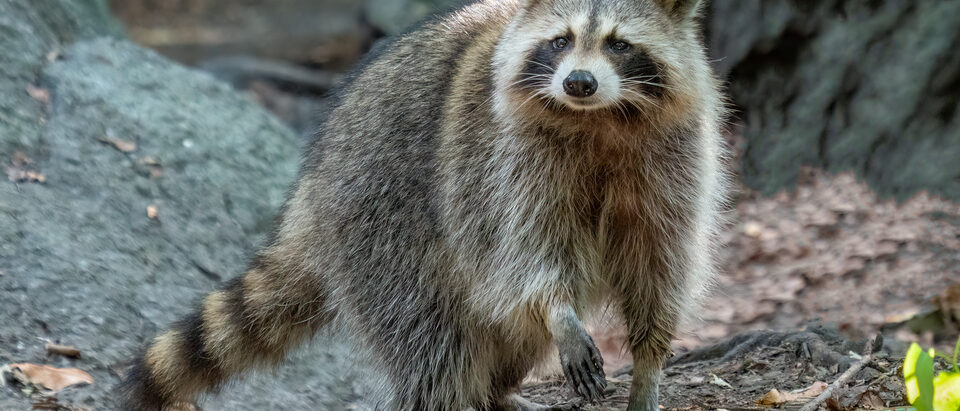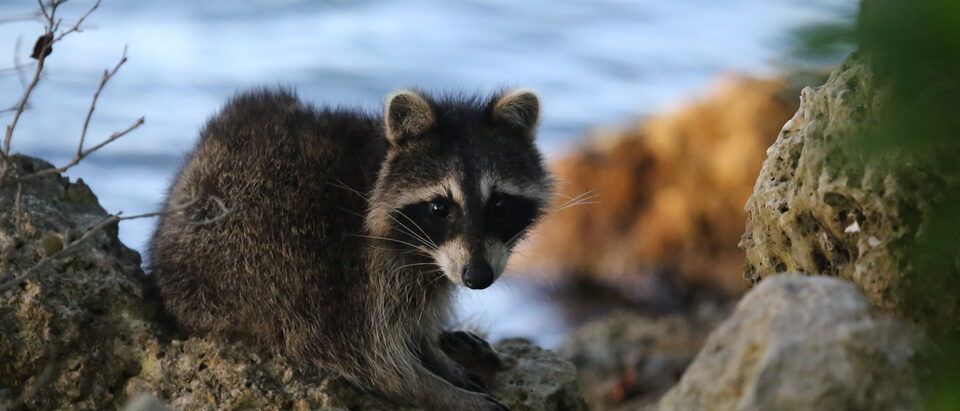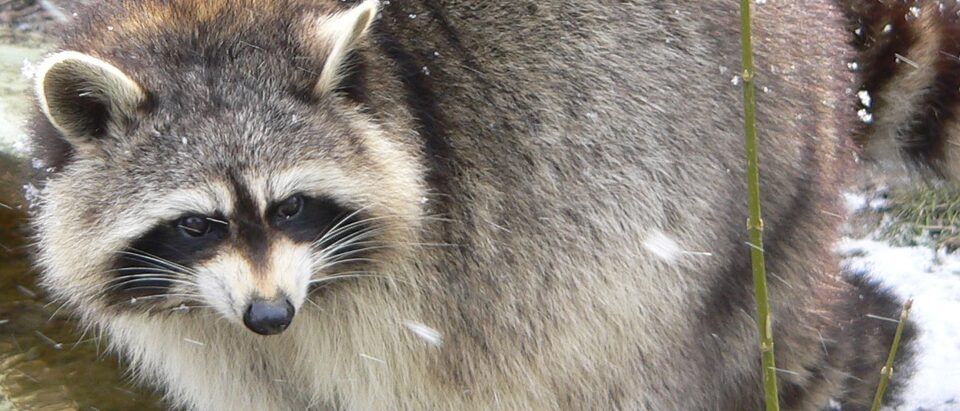

Raccoon droppings are easy to recognize once you know the look: dark, tubular, a few inches long, with rounded ends and bits of undigested food. And identifying them matters more than with most animals, because raccoon waste can carry a roundworm that’s dangerous to people and pets, so wear protection and see my raccoon cleanup guide.. Here’s how to spot it and tell it apart from everything else in the yard.
What Raccoon Droppings Look Like
- Size: About 3 to 5 inches long and half to three-quarters of an inch thick.
- Shape: Tubular and cylindrical, with blunt, rounded ends, sometimes slightly segmented.
- Color: Dark brown to black when fresh, fading to gray as it ages.
- Contents: Visible undigested food like seeds, berry skins, nuts, fur, and insect parts.
- Smell: Strong and musky, stronger when fresh.
- Where you find it: Piled up at latrine sites, not scattered like dog droppings.
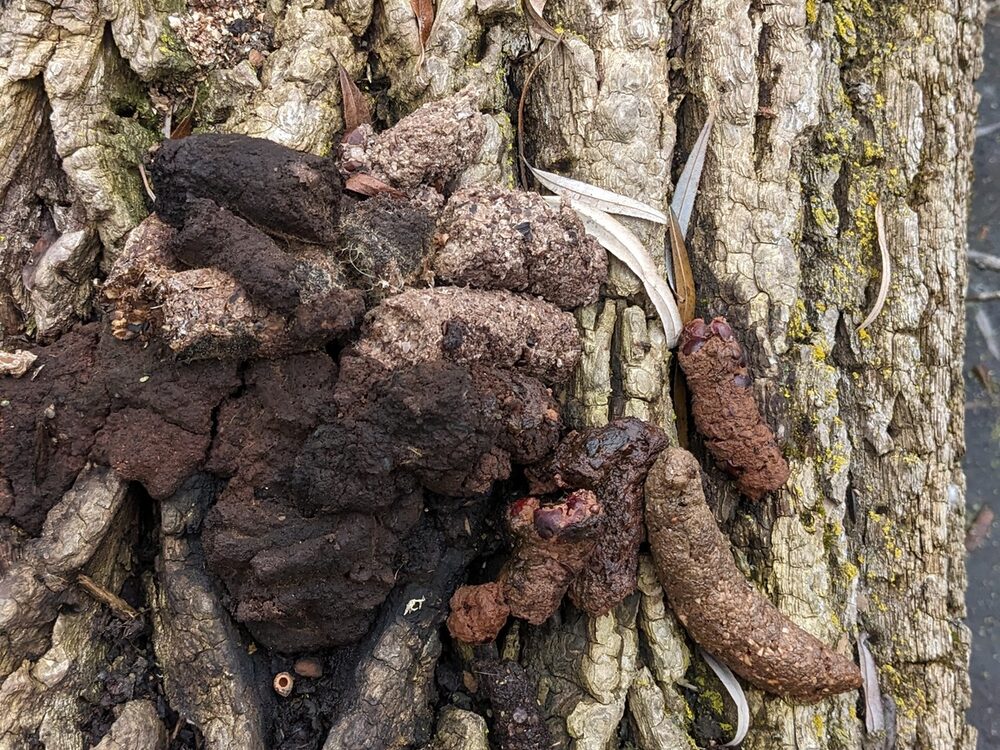
Raccoon droppings. Photo: eric-schmitty, CC BY 4.0
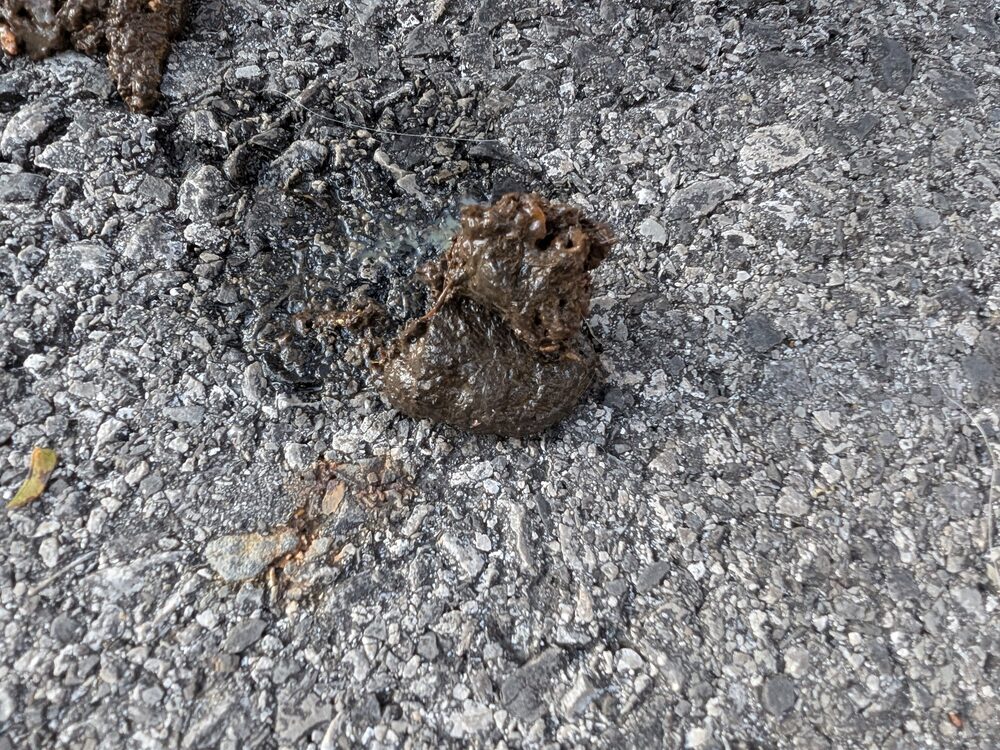
Opossum droppings
Raccoons Use the Same Spot Every Time
Raccoons are creatures of habit, and they create communal latrines they return to again and again. Look for them:
- At the base of large trees.
- On flat roofs near chimneys.
- Under decks and porches.
- On top of woodpiles or fallen logs.
- In attics and crawlspaces.
- Near bird feeders and garbage cans, both of which you can raccoon-proof.
Raccoon vs. Other Animal Droppings
| Feature | Raccoon | Dog | Cat | Opossum | Skunk |
|---|---|---|---|---|---|
| Length | 3 to 5 inches | 2 to 4 inches | 1 to 2 inches | 1 to 2 inches | 1 to 2 inches |
| Shape | Tubular, rounded ends | Varies by diet | Segmented, pointed | Pointed ends | Tapered ends |
| Contents | Visible seeds, berries | Uniform | Uniform | Variable | Insect parts |
| Location | Latrine piles | Scattered | Buried | Scattered | Scattered |
| Odor | Very strong, musky | Moderate | Strong | Mild | Strong |
How to Clean It Up Safely
Raccoon droppings can carry raccoon roundworm, and the eggs survive in soil for years. Take it seriously.
- Suit up. Respirator, heavy gloves, and eye protection.
- Mist the droppings with water so particles can’t go airborne.
- Scoop them into a sealed bag with a shovel or an inverted plastic bag, then double-bag it.
- Disinfect the spot with a bleach solution (about one part bleach to ten parts water) and let it sit for about 10 minutes before rinsing.
- Wash your hands with hot water and soap, even if you wore gloves.
When to call a pro: If you find a big latrine, or droppings in your attic or crawlspace, hire a wildlife control operator to clean and disinfect it. That’s not a job to DIY, especially with kids or pets in the house. Keep children away from any area where raccoons have been, since they’re the highest risk for roundworm.
For more, read my raccoon track guide and attic removal guide.
Frequently Asked Questions
Raccoon poop is bigger and darker, with visible seeds and berries in it. Dog poop is more uniform and varies by diet. Raccoon poop also shows up in piles at latrine sites, while dog poop is scattered.
Yes. Dogs can pick up raccoon roundworm eggs by sniffing or eating droppings, and it can cause serious neurological problems. Keep your dog away from latrines, clean up droppings promptly, and talk to your vet about roundworm prevention.
Wear protection, mist the droppings, scoop them into a sealed bag, and disinfect the area with a bleach solution. Don’t sweep or vacuum dry droppings, that just sends particles into the air. Dispose of everything in the trash.
No. Unlike cats, they leave it above ground at latrine sites and return to the same spots. That habit actually makes their droppings easier to find and identify.
The Bottom Line
Raccoon droppings are dark, tubular, a few inches long, with rounded ends and undigested food in them, and they pile up in latrine sites rather than scattering. Because they can carry roundworm, always suit up before cleaning, and call a pro for big jobs or anything in the attic. Find a latrine, clean it safely, and seal the area so the raccoons don’t come back.
For the rest of the yard, the animal droppings identification chart covers eleven kinds of droppings with photos, sizes, and what each one tells you to do next.