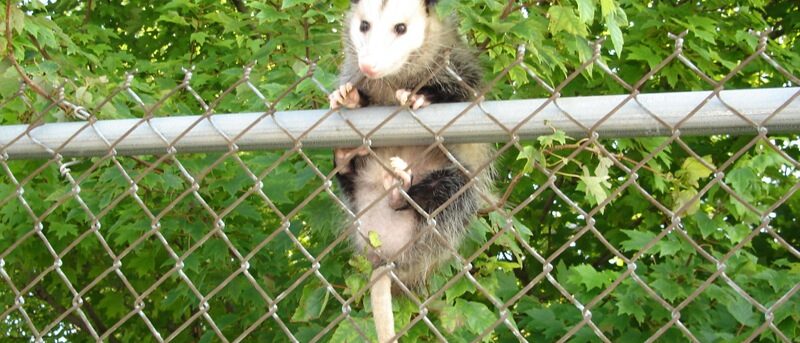

Finding an opossum paddling around your pool in the morning is not as rare as you would think. They fall in while looking for water or cutting across the yard, and once they are in, the smooth walls turn the pool into a trap. They can swim, but not forever, and a tired opossum drowns.
The good news is that getting one out is simple, and it does not involve you grabbing it. Here is the safe way to do it.
- Approach slowly and wear gloves. A scared opossum can bite or scratch.
- Give it a way out, a ramp, a float, or a board, and let it climb out on its own.
- Don’t grab it with your hands. It will leave once it has an exit.
- After it is out, shock the pool and run the filter before anyone swims.
- Add a wildlife ramp so the next animal that falls in can get out on its own.
How to get the opossum out
- Stay calm and take stock. If the animal is swimming, it can stay afloat for a while, so you have time to work carefully.
- Put on heavy gloves. Opossums have sharp claws and teeth, and a frightened one will use them.
- Offer a skimmer pole or long net for it to grab, but don’t try to lift it out with the net.
- Give it a ramp. A pool float, a wildlife ramp, or a sturdy board set at the shallow end gives it a way to climb out.
- Step back and wait. Once the ramp is in place, move away and give it ten minutes or so to climb out on its own.
- Leave it an exit route. Open a gate so it can run off instead of getting cornered.
If the opossum is already dead
If you find a dead animal in the pool, the approach changes. Close the pool to swimmers, put on disposable gloves, and remove the animal with a net or bucket without touching it. Then disinfect the water the same way you would after any contamination, and keep people out until the water is clean. Check with your local guidance on how to dispose of the carcass.
Clean the pool afterward
- Skim out any droppings or debris with a net.
- Shock the pool with chlorine and run the filter for a full day.
- Test the water before anyone gets back in. Chlorine should be back in the normal range, roughly 1 to 3 parts per million.
An opossum can leave bacteria and parasites behind, so don’t skip the shock or the filter cycle.
Keep it from happening again
- Install a wildlife escape ramp, like a FrogLog or similar, at the water’s edge. It floats and gives any animal a way out.
- Cover the pool when it is not in use.
- Trim branches that hang over the water.
- Remove food sources near the pool.
A cheap floating ramp is the single best thing you can buy for this, because it works on every animal that falls in, not just opossums.
Frequently Asked Questions
Yes. They can swim, but they tire and drown if they can’t find an exit. Without a ramp or a ledge, they paddle in circles until they wear out. A floating ramp is the fix.
It can. Droppings and fur carry bacteria and parasites. Shock the pool, run the filter for a day, and skim out all visible debris before you let anyone swim.
Not until the water has been sanitized. Opossum waste can carry disease, so shock the pool, run the filter for a full day, and retest the water first.
It is a floating ramp that sits at the water’s edge and gives animals an incline to climb out. They are cheap, they last for years, and they prevent drownings of all kinds of wildlife.
No. Even a docile opossum will bite when it is scared, and their teeth are sharp. Put on gloves, give it a ramp or a skimmer pole to grab, and let it climb out on its own.
The Bottom Line
Getting an opossum out of your pool is a patience job, not a strength job. Give it a ramp and wait, and it will climb out on its own. Wear gloves, don’t grab it, and shock the water afterward.
Then spend a few dollars on a floating wildlife ramp so the next animal that falls in has its own way out. It is the cheapest insurance your pool can have.