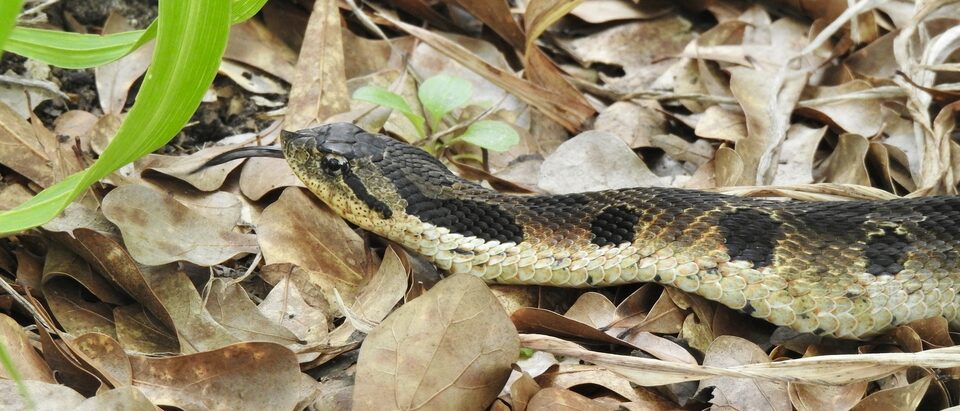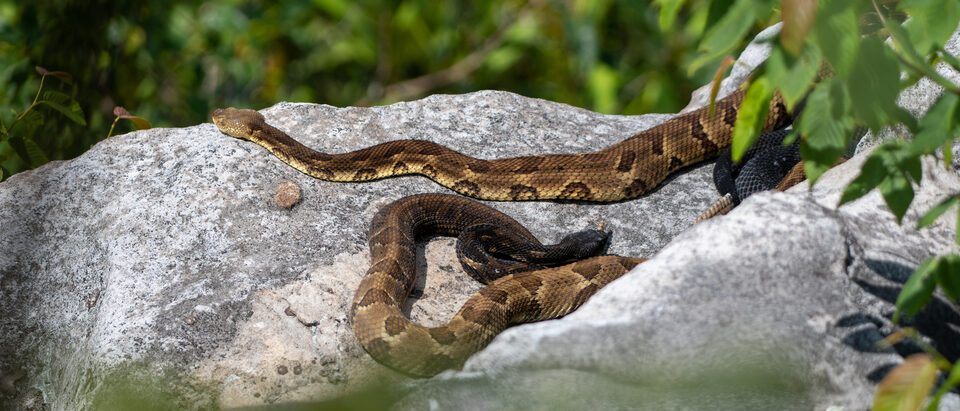

Snake traps work in two ways: adhesive traps hold a snake that slithers across them, and covered traps keep the catch sealed inside a box you can carry away. The right choice depends on the species and on how much of the catch you want to see and handle. I compared the best snake traps to find the most effective options.
- Covered traps hide the catch: The Cahaba Snake Trap is a plastic tunnel that folds flat, holds a replaceable insert, and keeps the snake inside so you never have to look at it. The listing names copperheads, cottonmouths and rattlesnakes.
- Glue boards are the most accessible option: Harris and Catchmaster offer adhesive traps that work on snakes, mice, and rats in indoor spaces.
- Placement matters more than brand: Traps placed along walls, near known entry points, and in dark corners catch significantly more snakes than random yard placement.
- Check traps daily: A captured snake left in a glue trap for more than 24 hours suffers needlessly, and a live snake in a cage trap will need water and shade.
Quick Comparison
| Product | Type | Reusable | Best For | Buy |
|---|---|---|---|---|
| Cahaba Snake Trap | Physical cage | Yes | Best Overall | Check price |
| Harris Snake Glue Trap | Glue board | No | Best Glue Trap | Check price |
| Catchmaster 12-Pack | Glue board | No | Best Value Pack | Check price |
| LULUCATCH 14-Pack | Glue board | No | Best Multi-Pack | Check price |
| LULUCATCH Heavy 12-Pack | Heavy glue | No | Best Heavy Duty | Check price |
| Tomcat Rat Size 2-Pack | Glue board | No | Best for Rat Snakes | Check price |
| Tomcat 72 Traps | Glue board | No | Best Bulk | Check price |
Detailed breakdown of each trap type, placement recommendations, and what you need to know before setting them follows below.
Best Overall: Cahaba Snake Trap Large Foldable
 Best Overall
- Type
- Reusable rigid plastic tunnel with replaceable adhesive insert
- Reusable
- The housing yes, the insert no
- Target species
- Copperheads, cottonmouths, rattlesnakes
- Size
- 32 x 10 x 3 inches, 180 square inches of catch surface
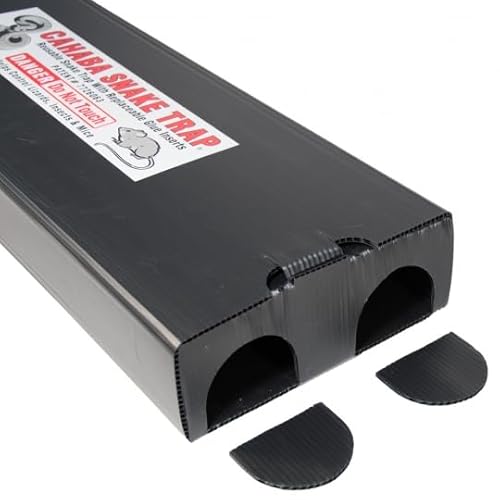
The Cahaba Snake Trap is the only reusable physical trap on this list. It is a rigid plastic tunnel 32 by 10 by 3 inches that folds flat for storage and takes a replaceable adhesive insert. A snake reads the dark tube as cover and goes in; the insert holds it inside the closed housing, out of reach of children and pets.
The listing names the snakes it is built for: copperheads, cottonmouths and rattlesnakes, the venomous species you do not want to handle yourself. Because the catch stays inside a sealed box you can carry the whole trap away without seeing or touching the animal.
One point to be clear about: this is not a live-release trap. The insert is a glue board, so a caught snake stays caught and has to be dealt with. What you get for the price is the housing, which lasts, and inserts you swap after a catch. Replacement inserts come in packs.
Set the trap tight against a wall or foundation edge, in the shade. Snakes travel along vertical surfaces rather than across open ground, so an insert laid along their path catches far more than one in the middle of a lawn.
Best Glue Trap: Harris Snake Glue Trap
 Best Glue Trap
- Type
- Single-use glue board, supersized, folds open
- Reusable
- No
- Target species
- Snakes, rats, mice, insects
- Best placement
- Along walls, behind appliances, in crawl spaces
Harris is a well known name in pest control, and their snake glue trap is the most straightforward option here. The supersized board folds open into an extra large surface and the adhesive holds snakes on contact. It lies flat against walls and baseboards, which is where snakes travel.
The trap is single use, but the glue keeps its holding power over time, so you can leave it in place until something triggers it. This makes it the right pick for crawlspaces, basements and garages where you suspect snake activity but do not know the entry point.
The listing is clear that there are no pesticides, poisons or chemicals involved, and that the same board catches rats, mice and insects alongside snakes. Sold as a single pack, so buy more than one if you are covering several rooms.
Best Value Pack: Catchmaster Rat, Snake and Mouse Traps (12 Pack)
 Best Value Pack
- Type
- Single-use adhesive adhesive glue board with non-toxic eugenol based attractants, 12-pack
- Reusable
- No
- Board size
- 9 x 4 inches
- Best placement
- Multiple locations, indoor perimeter coverage
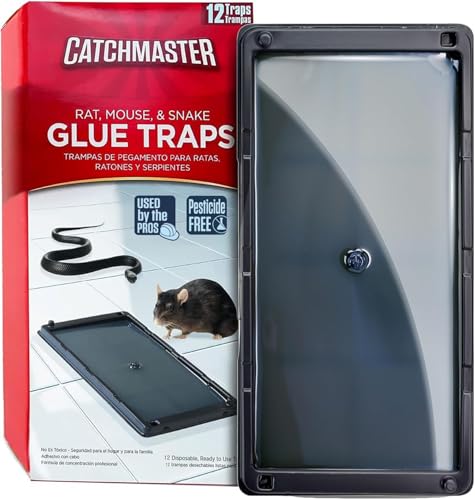
Catchmaster packs twelve large adhesive glue board with non-toxic eugenol based attractants into one box at a price that works out to roughly half the cost per board of smaller packs.
Each board is 9 by 4 inches, large enough to hold a medium snake or rat, and the adhesive is designed to remain effective in dusty environments like garages and attics.
The value here is in the coverage. Twelve boards let you place traps along multiple walls, in several rooms, or across a large basement without buying additional packs. For an initial snake investigation where you need to figure out where the snake is coming from, this is the most cost effective approach.
Best Multi-Pack: LULUCATCH Mouse Glue Traps (14 Pack)
 Best Multi-Pack
- Type
- Heavy plastic adhesive glue board with non-toxic eugenol based attractants, 14-pack
- Reusable
- No
- Material
- Plastic base with raised edges
- Best placement
- Humid basements, crawlspaces, garages
LULUCATCH offers a fourteen pack of heavier plastic glue traps that are sturdier than standard cardboard boards. The plastic base prevents the adhesive from seeping through, and the raised edges create a small well that catches debris without reducing the sticky surface.
The traps are designed for both mice and snakes, with a larger surface area than standard mouse traps.
The heavier plastic construction means the boards do not curl or warp in humid environments, a common problem with cardboard based traps in basements and crawlspaces. This makes them a reliable choice for long term monitoring in areas where moisture is a concern.
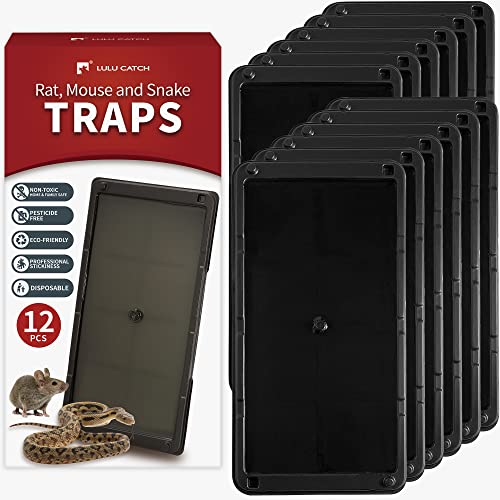
Best Heavy Duty: LULUCATCH Super Heavier Mouse and Snake Traps (12 Pack), Best for Large Snakes
 Best Heavy Duty
- Type
- Heavy duty plastic adhesive glue board with non-toxic eugenol based attractants, 12-pack
- Reusable
- No
- Material
- Thick plastic with reinforced adhesive
- Best placement
- Areas with known larger snake activity
This heavier variant from LULUCATCH uses a thicker gauge plastic and a more aggressive adhesive formula. The traps are noticeably sturdier than the standard version, with a larger glue surface that can hold bigger snakes. The packaging lists snakes alongside mice and rats as target pests, unlike many glue traps that only mention rodents.
The extra thickness helps the trap keep its shape under the weight of a struggling snake, which is a common failure point for thinner cardboard traps. If you are targeting larger species like rat snakes or bull snakes, this is a worthwhile upgrade over standard mouse adhesive glue board with non-toxic eugenol based attractants.
Best for Rat Snakes: Tomcat Super Hold Glue Traps Rat Size (2 Pack)
 Best for Rat Snakes
- Type
- Rat sized adhesive glue board with non-toxic eugenol based attractants, 2-pack
- Reusable
- No
- Attractant
- Eugenol enhanced adhesive
- Best placement
- Known entry points, single problem areas
Tomcat rat sized glue traps are designed for larger rodents but work equally well for snakes of similar size. The extra large adhesive surface provides more contact area, making it harder for a snake to escape once it crosses the board. The traps include a eugenol based attractant that enhances stickiness and draws pests toward the trap.
The two pack format is convenient for targeted placement. Put one in the garage near the door gap and one in the basement corner, then check both the next morning. For homeowners dealing with a single known snake entry point, this is the most direct approach.
Best Bulk: Tomcat Glue Traps Mouse Size (72 Traps)
 Best Bulk
- Type
- Mouse sized adhesive glue board with non-toxic eugenol based attractants, 72-pack
- Reusable
- No
- Quantity
- 72 traps per box
- Best placement
- Large properties, barns, multi-room monitoring
For large properties, barns, or multi-bay garages, the Tomcat 72 count bulk box provides the lowest per trap cost available. The mouse sized traps are smaller than rat or snake specific boards, but they are effective for garter snakes, ringneck snakes, and other small species that are common around homes.
The bulk format is also useful for monitoring. Placing a dozen traps along a long wall or around a workshop perimeter lets you identify exactly where snakes are entering without committing to expensive single traps. Once you identify the active zone, you can deploy a larger trap in that specific location.
How to Choose the Right Snake Trap
Physical Cage vs Glue Board
The main decision is how the catch is contained. Adhesive boards lie flat and are the simplest thing to set indoors, but the snake is stuck in the open and will die unless you free it with vegetable oil. A covered trap with a replaceable insert hides the animal inside a sealed housing, which is what you want around pets, children or venomous species. Neither is a live-release device. If you want the snake taken away alive, that is a job for a wildlife professional with a hook and a bucket.
Size and Species
Match the trap size to the snake species you are dealing with. A small mouse sized glue board will catch a ringneck or young garter snake, but a rat snake or bull snake needs a larger surface. The Cahaba tunnel is 32 inches long, which is the widest opening on this list.
Placement Strategy
Snakes travel along edges. For ongoing prevention, consider combining traps with repellents covered in my snake repellent guide.
Place traps against walls, along baseboards, near foundation cracks, and beside door thresholds. Avoid placing traps in the center of a room or in open yard areas. For best results, position the trap so the snake has to cross it to reach a hiding spot or exit.
Tips for Using Snake Traps Effectively
- Check traps every morning: A captured snake left in a glue trap for more than 24 hours is unlikely to survive. Check daily and release or remove as needed.
- Use vegetable oil for glue trap release: Pour vegetable oil around the edges of the adhesive where the snake is stuck. The oil breaks down the glue and allows the snake to slide free without injury.
- For venomous species like copperheads and rattlesnakes, never attempt to handle a glue trap with a captured snake. Combine cage traps with exclusion: Once you catch a snake, seal the entry point it was using. Otherwise a new snake will move into the same territory within days.
- Wear gloves when handling traps: Even non-venomous snakes can bite, and handling a glue trap with a live snake requires a steady hand and protective gloves.
- Bait cage traps with warmth: A small container of warm water or a heat pack placed near the back of a cage trap attracts snakes seeking warmth, especially in cooler months.
Glue traps are considered inhumane in some regions and banned in certain states. Check local wildlife regulations before setting adhesive traps. Live capture cage traps are legal in all states.
When to Call a Professional
If you suspect the snake in your yard or home is venomous, do not attempt to trap it yourself. Copperheads, rattlesnakes, and cottonmouths can strike through standard glue boards and may bite if you try to handle the trap.
Professional wildlife removal services have the training and equipment to safely remove venomous snakes. Contact a professional if you are unsure of the species, if the snake is in a hard to reach location like inside a wall, or if you have a persistent snake problem that traps alone are not solving.
Frequently Asked Questions
Snakes are predators, so they do not respond to traditional baits like cheese or peanut butter. The most effective attractants are warm hiding spots, mouse scent, and the presence of prey.
For cage traps, placing the trap along a known travel path is more effective than any bait. Some users report success with rodent bedding or crushed mice as a scent lure.
If the trap is placed along an active snake route, captures can happen within hours. In low traffic areas or when dealing with a single snake, it may take several days. The key is mobility: move the trap to a new location every 48 hours if no capture occurs.
Yes. Glue traps are not selective and will catch cats, small dogs, and wildlife if placed in accessible areas. Always place glue traps inside covered enclosures, under appliances, or in areas where pets cannot reach. Cage traps with narrow entry tunnels are safer for households with pets.
Glue traps and cage traps can capture venomous species, but handling a venomous snake on a adhesive glue board with non-toxic eugenol based attractant is dangerous.
If you suspect copperheads, rattlesnakes, or cottonmouths, contact a professional wildlife removal service. Cage traps designed for venomous snakes use a closing door mechanism that prevents the snake from striking outward.
No. Glue traps are not humane for snakes, and they often catch non target animals like birds and small mammals. A snake stuck to glue cannot be freed without injury. A covered trap is easier to carry away without touching the animal, and for a venomous snake the right call is a wildlife professional.
Nonvenomous snakes can be relocated, but many states restrict relocating venomous snakes and some species are protected. Always identify the snake first, and check your state wildlife agency rules before moving any snake.