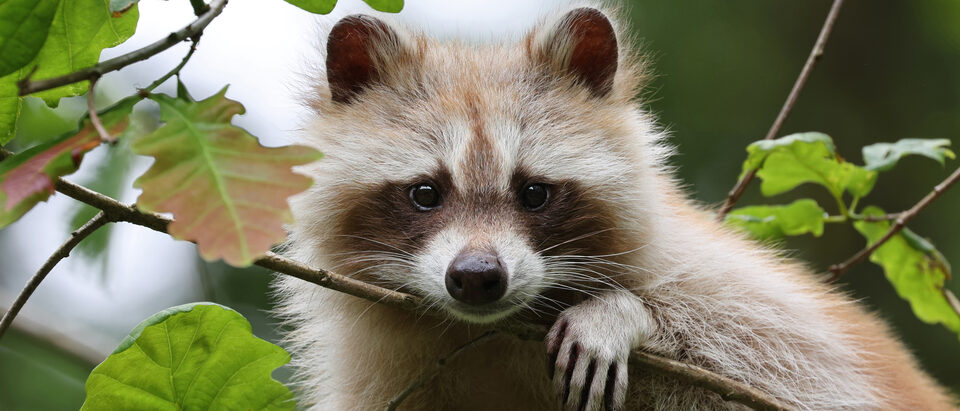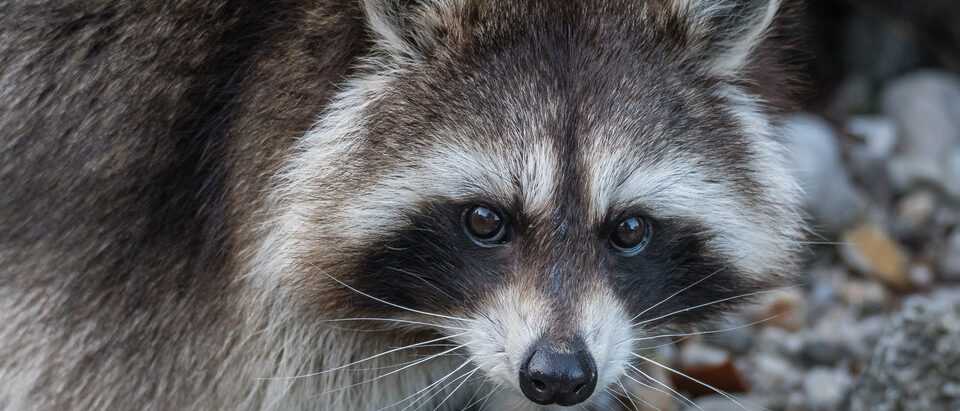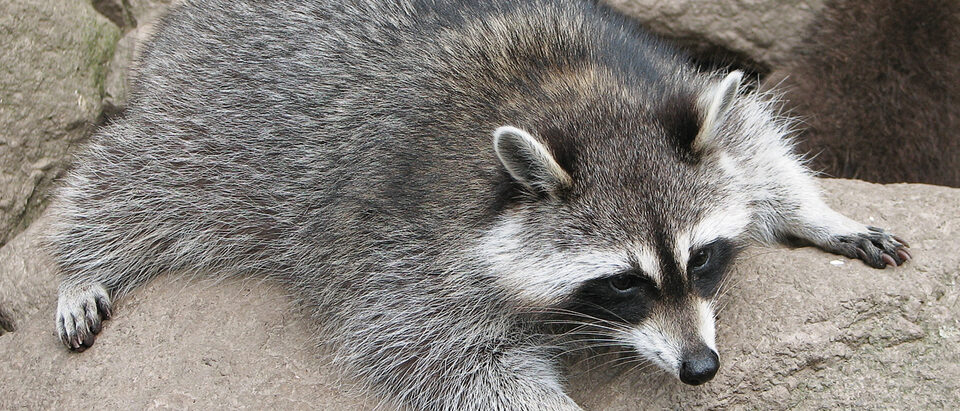

Raccoon tracks are some of the easiest to spot once you know what you’re looking at, because they look like tiny human handprints. Five long toes, a C-shaped palm pad, and little claw marks at the tips. Here’s how to pick them out and tell them apart from the other animals wandering your yard at night.
What Makes a Raccoon Paw Special
- Five toes on each foot, arranged almost like fingers on a hand.
- Long, thin toes with a claw mark at the tip of each print.
- A C-shaped or kidney-shaped palm pad that sits apart from the toe pads.
- Front paws that are wider and more hand-like, with longer, narrower hind paws.
- Visible claws because raccoons don’t retract their claws the way cats do.
How to Read a Raccoon Track
- Size: Front paw prints run about 2 to 3 inches wide, hind paws a touch larger.
- Shape: Five finger-like toes fanning out from a C-shaped palm.
- Gait: Raccoons walk with a pacing gait, the front and hind foot on the same side land nearly together, so you’ll see prints in pairs spaced 10 to 18 inches apart.
- Claw marks: Small dents at the tip of each toe.
- Overlap: Hind feet often land partly on top of the front prints, leaving a slightly messy look.
Raccoon vs. Other Animal Tracks
| Feature | Raccoon | Opossum | Skunk | Dog |
|---|---|---|---|---|
| Toes | 5 long, finger-like | 5, splayed | 5 with claws | 4, rounded |
| Palm pad | C-shaped | Triangular | Kidney-shaped | Triangular |
| Claw marks | Visible | Often visible | Visible | Visible |
| Track size | 2 to 3 inches | 2 to 3 inches | 1.5 to 2 inches | 2 to 4 inches |
| Gait | Pairs (pacing) | Pairs (pacing) | Direct register | Diagonal walk |
| Opposable thumb | No | Yes (hind foot) | No | No |
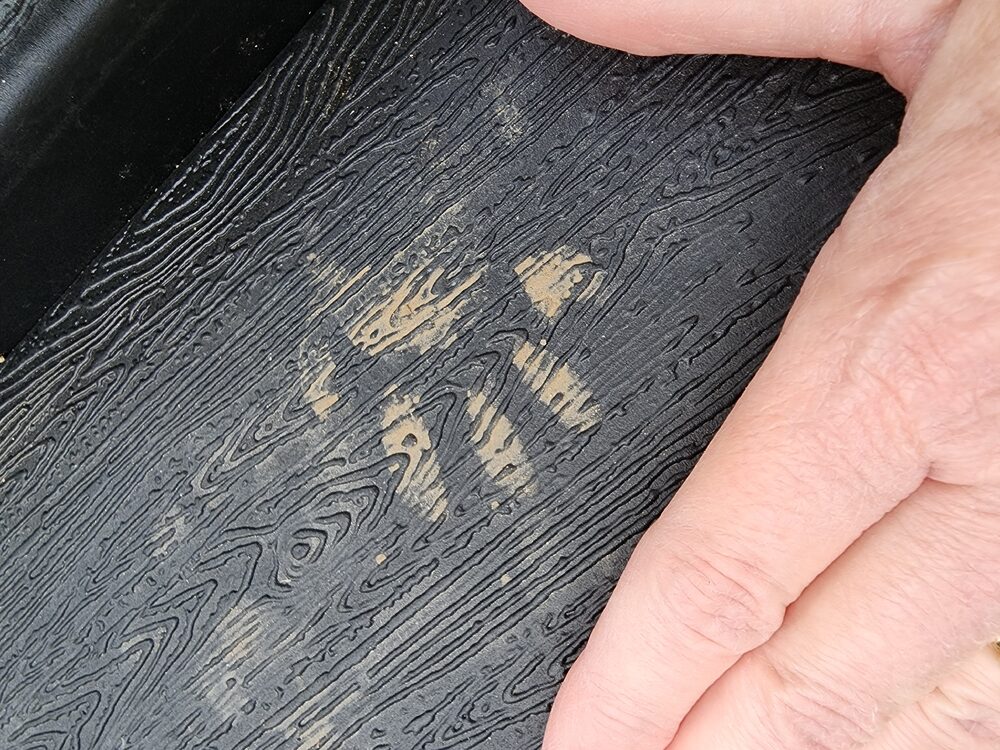
Raccoon front paw print in mud
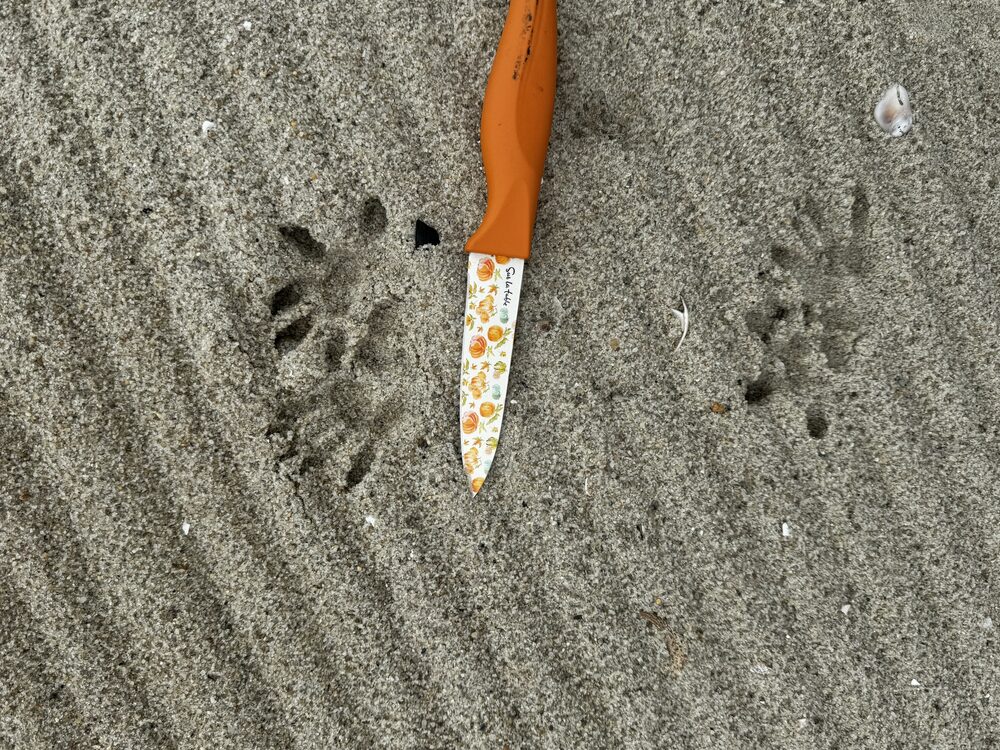
Opossum tracks
Where to Look for Raccoon Tracks
- Mud and sand near ponds, streams, and puddles.
- Under bird feeders where they pick up spilled seed.
- Around garbage cans.
- At the base of trees they climb.
- Under decks and porches where they den.
- On patios and decks near pet bowls or water.
For more raccoon identification, read my raccoon poop identification guide and raccoon behavior guide. For more, see 7 Best Raccoon-Proof Garbage Cans.
Frequently Asked Questions
Front paw prints are about 2 to 3 inches wide and a bit longer, roughly the size of a child’s hand. Hind paws are slightly larger but narrower.
No, but their paws are incredibly dexterous and sensitive, which is how they open latches and twist doorknobs. That’s why their tracks look so hand-like.
Both have five toes, but an opossum’s hind foot has an opposable thumb that sticks out at a right angle. Raccoons have a C-shaped palm pad, while an opossum’s is more triangular, and the toes splay more.
Early morning after rain is ideal, fresh mud holds the clearest detail. Snow works too, until it melts. Since raccoons are active at night, the freshest prints are usually there in the morning.
The Bottom Line
Look for a hand-shaped print with five long toes, a C-shaped palm pad, and claw marks at the tips, and you’ve almost certainly got a raccoon. They show up in pairs along the paths raccoons walk, in mud near water, around trash, and under trees. Nailing down the track tells you what’s on your property, which is the first step in dealing with it.
If you want the same treatment for the other animals that cross a yard, I keep a full animal tracks identification chart with fourteen species, real measurements in inches, and the marks that separate the look-alikes.