
There are more than 40 bat species in the US, but only a few of them regularly move into houses. Figuring out which one is in your attic matters for two reasons: some are federally protected, and the identification can change what you are legally allowed to do and when.
Here is how I tell the common attic bats apart, and which ones to call a pro about.
The Short Version
- The usual suspects are big brown bats and little brown bats. They account for most attic roosts.
- Size is the quickest tell. Big brown bats are larger, little brown bats are smaller.
- Droppings help too. Bigger bats leave bigger, more segmented guano.
- Check the law before you exclude. Some species are protected, and that changes your options.
Big Brown Bat
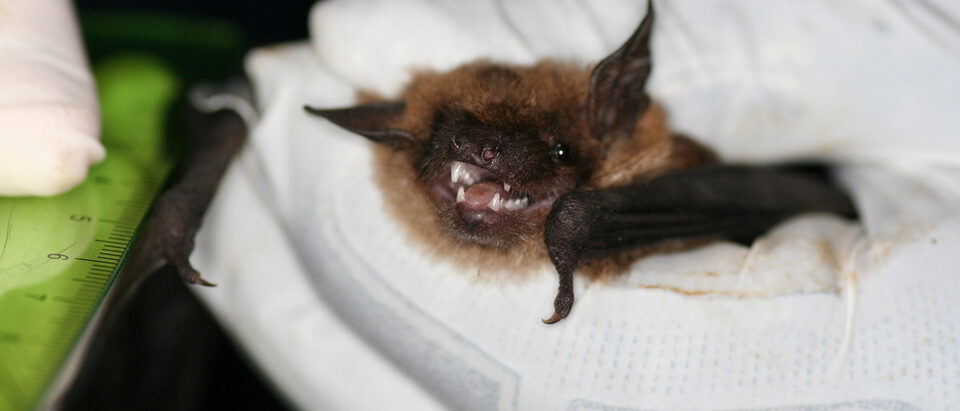
This is the bat I see most often in houses. It is medium to large, about 4 to 5 inches long with a wingspan of roughly 12 to 13 inches. The fur is brown, lighter on the belly, with dark wings, ears, and face.
Big brown bats adapt well and roost in attics, barns, and under eaves, and they show up across most of the country. If a bat colony keeps coming back to your attic year after year, it is probably these.
Little Brown Bat
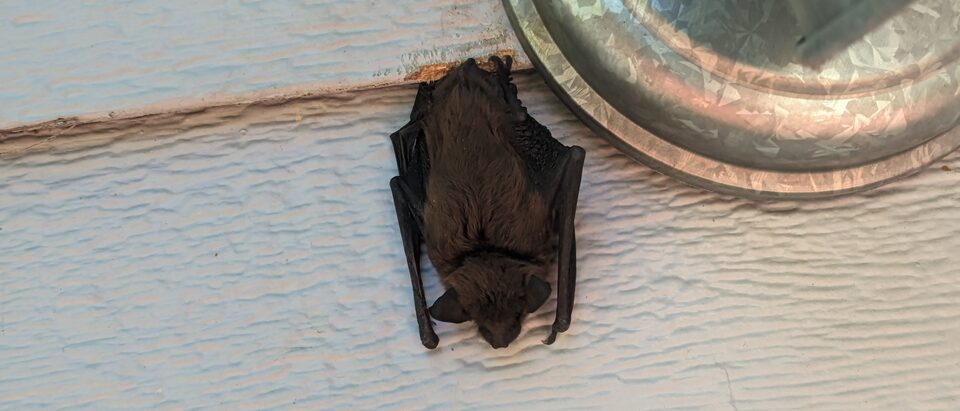
The little brown bat used to be everywhere, but white-nose syndrome has hammered its population in the eastern US. It is smaller, about 3 to 3.5 inches long with a wingspan around 8 to 10 inches, with glossy brown fur and a lighter belly.
Little brown bats roost in attics, barns, and bat houses, and hibernate in caves and mines. If you suspect these are in your attic, check with a professional before excluding, since their protected status can affect when and how you can act.
Mexican Free-Tailed Bat
This one gets its name from a tail that sticks out past the tail membrane. It is medium-sized, about 3.5 to 4.5 inches long with an 11 to 13 inch wingspan, and the fur runs dark brown to gray-brown.
Mexican free-tailed bats are common in the southern US, especially Texas and the Southwest, where they form huge colonies in caves and under bridges. They do roost in buildings too, and they are fast fliers.
Tricolored Bat
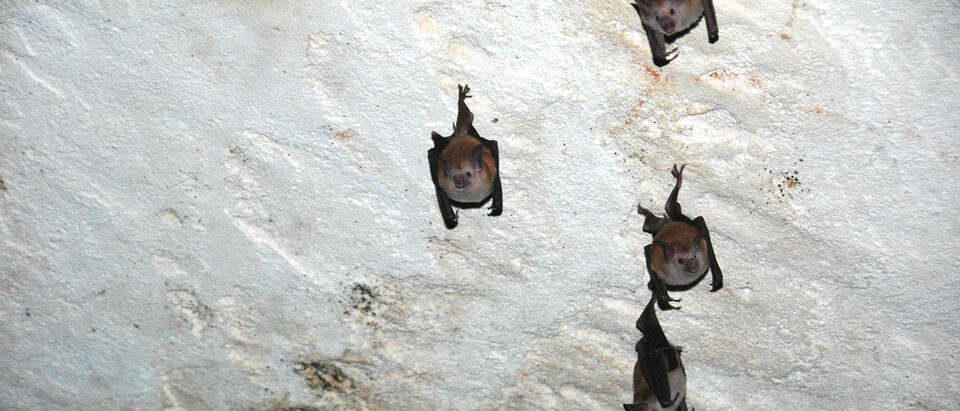
This is one of the smallest bats around, roughly 3 inches long with an 8 to 9 inch wingspan. Its fur has three color bands on each hair, dark at the base, lighter in the middle, dark at the tip, which gives it a tricolored look, and its face is pinkish.
Tricolored bats have also been hit hard by white-nose syndrome. They mostly use caves and mines for hibernation and trees for summer roosts, so finding one in a building usually means a small, temporary roost.
Identifying Bats From Droppings
Guano size can narrow things down, though it is less reliable than seeing the bat itself.
| Species | Guano length | Shape | Typical pile |
|---|---|---|---|
| Big brown bat | About 1/3 inch | Thick, segmented, rounded ends | Large piles under the roost |
| Little brown bat | About 1/4 inch | Slender, segmented, pointed ends | Moderate piles |
| Mexican free-tailed bat | 1/4 to 1/3 inch | Variable, less segmented | Large piles from big colonies |
| Tricolored bat | About 1/8 inch | Very small, thin, barely segmented | Small scattered piles |
The best way to identify a bat is to photograph it at dusk as it leaves the roost. Get a clear shot of its size, ears, fur color, and tail. A wildlife biologist or exclusion pro can usually name it from a good photo. See my bat guano vs mouse droppings guide for more on the droppings side.
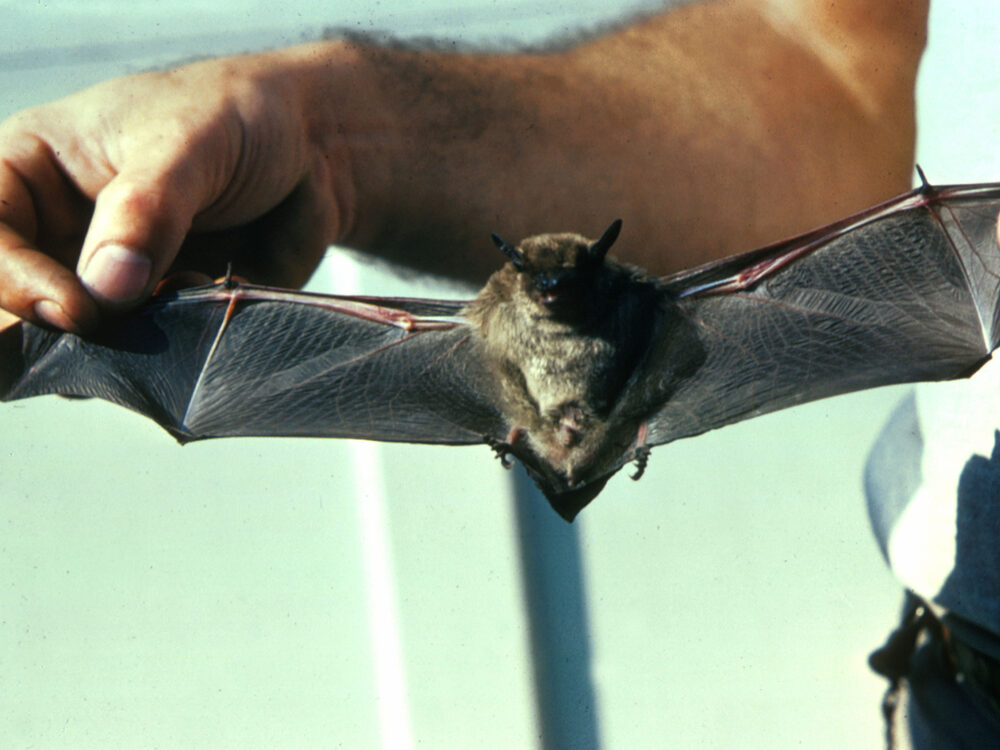
Little brown bat
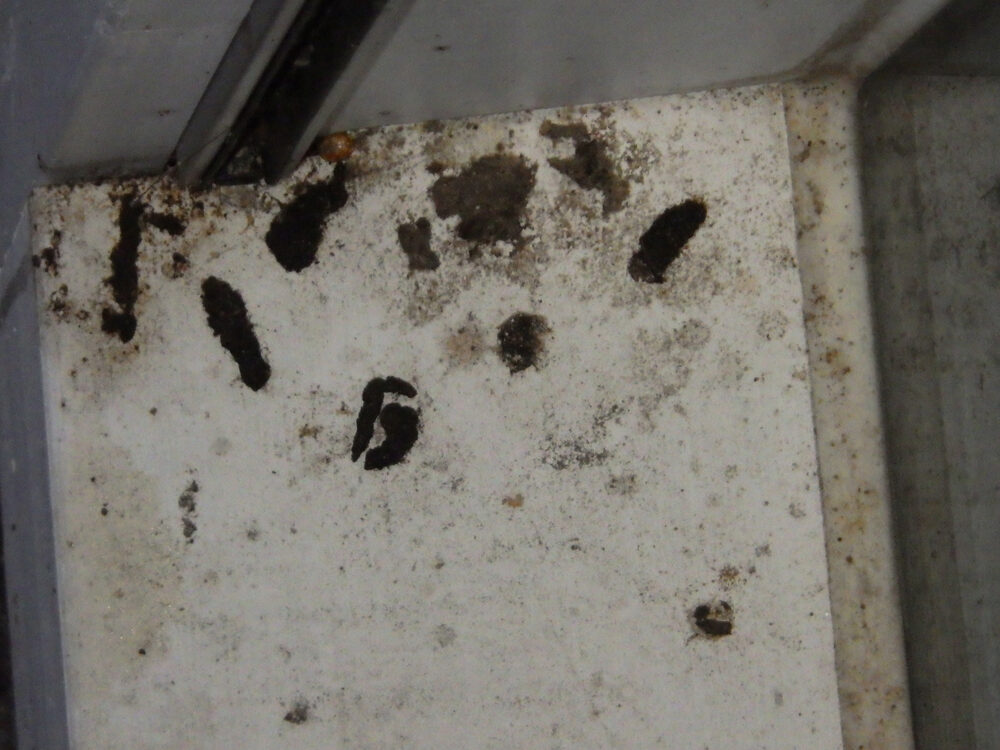
Bat guano
Bats That Are Federally Protected
A few bats that could turn up in your attic are protected under the Endangered Species Act, and that changes everything about how you handle them.
- Indiana bat, federally endangered, found in the eastern and midwestern US, hibernates in caves.
- Gray bat, federally endangered, found in southeastern cave country.
- Northern long-eared bat, reclassified as endangered in recent years after white-nose syndrome devastated it, found across much of the eastern US.
- Tricolored bat, proposed for listing.
This list changes, so before you do anything, check the current US Fish and Wildlife Service status for your state. If a listed species might be roosting in your attic, stop work and contact your state wildlife agency. The fine for harming a protected bat is far worse than the cost of waiting and doing it right.
Frequently Asked Questions
Size is the main clue. Big brown bats are about 4 to 5 inches long with a 12 to 13 inch wingspan, while little brown bats run 3 to 3.5 inches with an 8 to 10 inch wingspan. Big brown bat guano is also thicker and more segmented.
Unlikely, but possible if you live in the range of a protected species. Most attic roosts are big brown bats, which are not endangered. If you have a large colony and live where listed species occur, call a pro before acting.
The basic method, one-way valves followed by sealing, works for all of them. What changes is the timing, since some states restrict exclusion during maternity season for certain species.
Bat echolocation calls are species-specific, but they are ultrasonic, above what I can hear. Specialized acoustic detectors can identify species from the calls, but that is professional equipment and usually a job for an expert.
Bottom Line
Most attic bats are big brown bats or little brown bats, and size plus guano will usually tell you which. The important thing is checking the current protected status for your area before you exclude anything, because getting that wrong is expensive. If you are unsure, photograph the bat and ask a wildlife professional.