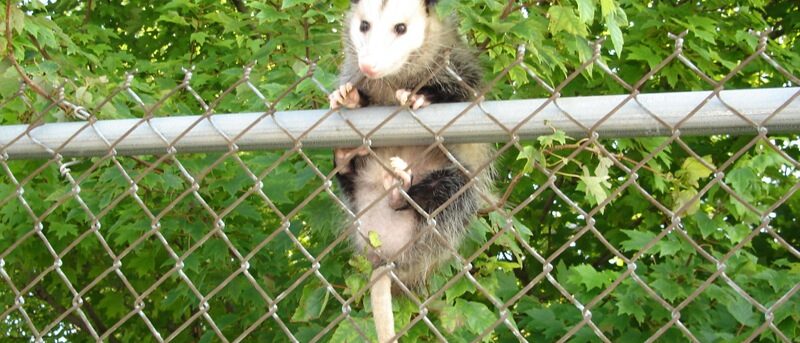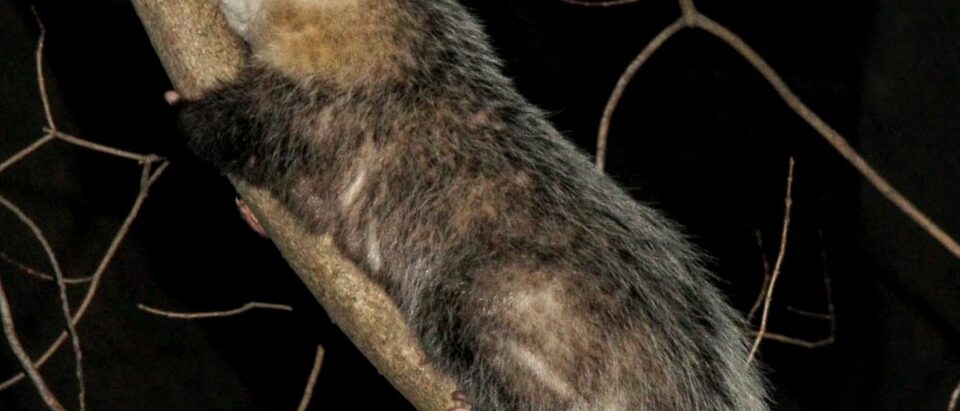

Once possum babies outgrow the pouch, they climb onto their mother’s back and ride around, hanging on with their claws and teeth.
If you’ve ever seen a possum that looks like it’s carrying a furry saddle, that’s what’s happening: it’s a mother with a full litter riding along. Here’s how the whole thing works, from the pouch to the moment they head out on their own.
Opossums are North America’s only marsupials, which means the babies finish growing outside the womb, in the pouch. If one becomes a nuisance, see my possum control guide. Everything about how they ride starts there.
Life in the pouch
It begins fast. After a pregnancy of only about two weeks, the babies are born blind, hairless, and tiny, roughly the size of a honeybee. They crawl on their own from the birth canal to the pouch and each one latches onto a nipple.
The mother has 13 nipples, and that number matters. A litter can start bigger than 13, but only the first 13 to reach a nipple survive. The rest don’t.
From there the babies stay latched in the pouch for about two months, growing fur and opening their eyes along the way.
The piggyback stage
At around two months old, the babies are too big for the pouch, so they climb onto the mother’s back. They hang on with their claws and teeth, which is why you should never separate a mother from her young, and sometimes wrap their tails around hers for extra stability. A mother carrying a full litter looks like she’s wearing a furry, wriggling blanket.
This stage isn’t just transportation. It’s how the babies learn:
- Foraging, by watching the mother find food and starting to eat solid food beside her.
- Climbing, by scrambling on and off her back and building up coordination.
- How to act around other possums, by interacting with their siblings.
- How to stay alive, by learning to freeze, hiss, and play dead from the mother’s example.
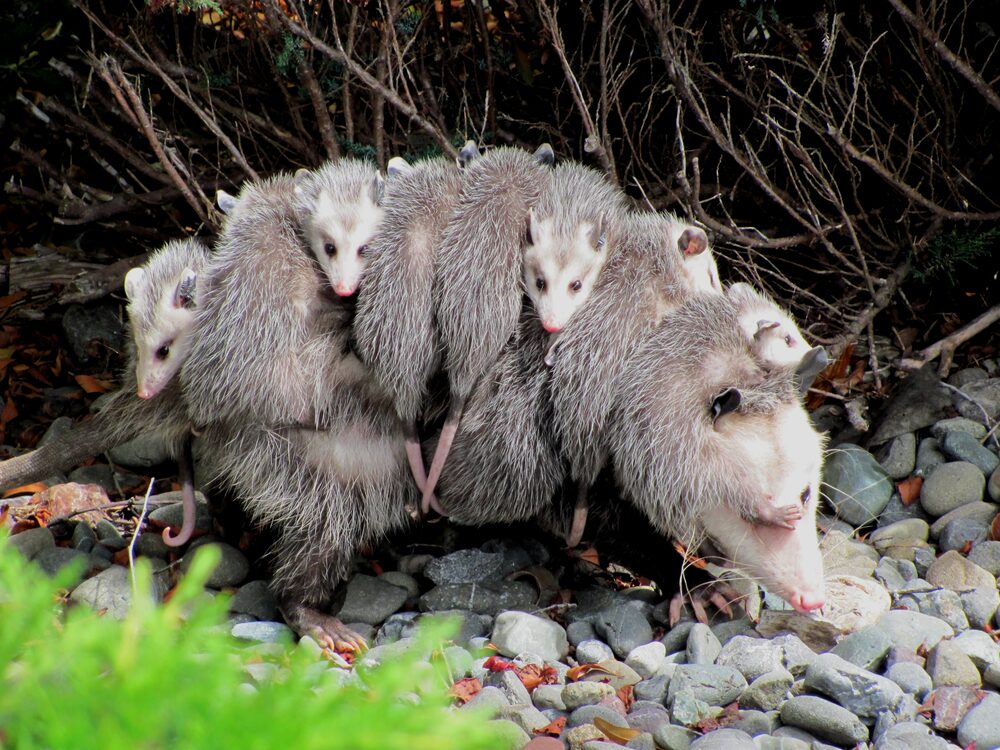
Young opossums riding on their mother’s back. Photo: Specialjake, CC BY-SA 3.0
When they strike out alone
The piggyback stage lasts a couple more months. As the babies grow, they spend less time riding and more time walking alongside. By around four or five months old they’re independent and leave to find their own territory.
Frequently Asked Questions
A mother can carry a litter of up to ten or so babies at once, though the pouch only holds 13 nipples, so that’s the hard ceiling. A possum with a big lump on her back is probably carrying a litter.
For about two to three months after they leave the pouch, starting around two months old. They’re fully independent by about four or five months.
Yes, especially while climbing or running. The mother stops and waits for a fallen baby to climb back on, and she’ll search for one that’s lost. A baby that can’t be found usually won’t survive on its own.
It depends on size. If it’s smaller than a mouse, it needs help. Warm it in a box with a towel and call a wildlife rehabilitator. If it’s bigger than that, it may already be independent, so watch from a distance for a few hours before you intervene.
No. Nursing happens in the pouch. Once they’re riding on the back, they’re transitioning to solid food and learning to forage alongside the mother.