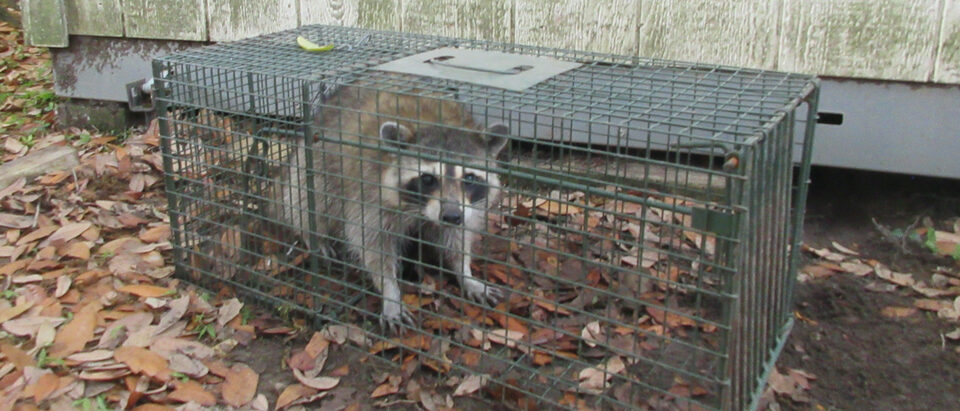

Wildlife cameras let you monitor animal activity around your property without being there in person. They are essential for identifying which pests are visiting your yard, tracking raccoon and possum movement patterns, and confirming that exclusion efforts are working.
I compared trail cameras across three categories: cellular cameras that send photos to your phone, standard cameras for local monitoring, and security cameras for home perimeter surveillance. The best option depends on whether you need remote alerts or on site image review. For the removal itself, see my wildlife removal company guide..
- Cellular cameras send real time alerts: Models like the Tactacam Reveal Pro 3.0 transmit photos directly to your phone via 4G LTE, allowing you to monitor traps and wildlife activity remotely without checking memory cards.
- Trigger speed determines capture success: A camera with 0.2 to 0.4 second trigger time captures fast moving animals like raccoons and coyotes. Slower cameras may miss key activity.
- Night vision is essential for nocturnal pests: Most wildlife activity happens at night. Look for cameras with no glow infrared LEDs that provide clear images without alerting animals.
- Standard cameras are sufficient for most property monitoring: If you can walk to your camera locations, a standard non cellular camera offers better value and longer battery life than a cellular model.
Quick Comparison
| Product | Type | Key Feature | Best For | Buy |
|---|---|---|---|---|
| Tactacam Reveal Pro 3.0 | Cellular | 4G LTE, GPS, 8GB internal | Best Overall | Check price |
| Stealth Cam Revolver 360 | Cellular | 360 degree 6 PIR sensors | Best 360 Coverage | Check price |
| Stealth Cam Deceptor Max | Cellular | No-glow night vision | Best Night Vision | Check price |
| SPYPOINT Flex-M + SD card | Cellular | Free photo plan, card included | Best Value Cellular | Check price |
| WOSPORTS 48MP 4K | Standard | 0.2s trigger, 32GB card included | Best Standard | Check price |
| WOSPORTS 56MP 4K | Standard | Highest resolution, LCD screen | Best Resolution | Check price |
| Punvoe 2 Pack 36MP | Standard | Two cameras, cards and batteries | Best 2 Pack | Check price |
Detailed reviews of each camera organized by category follow below.
Cellular Trail Cameras
Cellular cameras transmit images over 4G LTE networks directly to your phone. They are ideal for remote monitoring, trap surveillance, and properties you visit infrequently. Most require a monthly data plan starting at $5 to $15 per month.
Best Overall: Tactacam Reveal Pro 3.0
 Best Overall
- Type
- Cellular trail camera with GPS
- Trigger speed
- 0.2 second
- Memory
- 8GB internal, no SD card needed
- Network
- 4G LTE, all major carriers
The Tactacam Reveal Pro 3.0 is the top rated cellular trail camera on the market. It features 4G LTE connectivity with automatic network selection, GPS tagging for location tracking, and 8GB of internal memory that eliminates the need for an SD card.
The camera delivers excellent photo quality with fast 0.2 second trigger speed and works on all major carrier networks.
The integrated GPS is a standout feature for wildlife monitoring. Each photo is tagged with GPS coordinates, allowing you to track animal movement patterns across your property. The on demand photo feature lets you check a specific location in real time from your phone. The pre installed SIM card works out of the box with no activation required.
Best 360 Coverage: Stealth Cam Revolver 360
 Best 360 Coverage
- Type
- Cellular 360 degree rotating camera
- Sensors
- 6 PIR sensors for full coverage
- Trigger speed
- 0.4 second
- Detection range
- 100 feet advertised
The Stealth Cam Revolver 360 uses six separate PIR motion sensors arranged in a ring to detect movement in all directions simultaneously.
This design eliminates the blind spots that single sensor cameras leave behind. When any sensor triggers, the camera rotates to face the direction of movement and captures the image. It is ideal for open areas where animals may approach from any angle.
The 360 degree coverage is a significant advantage for wildlife monitoring. A single Revolver 360 can cover what would normally require three or four standard cameras. The selectable detection zones let you ignore areas like roads while monitoring trap locations.
Best Night Vision: Stealth Cam Deceptor Max
 Best Night Vision
- Type
- Cellular trail camera
- Night vision
- 36 piece 940nm no glow LEDs, rated to 80 feet
- Still and video
- 40MP photos, 1440P QHD video with audio
- Trigger speed
- 0.4 second
- Setup
- QR code pairing, two pre-installed SIM cards, COMMAND Pro app
If you need to identify an animal after dark, this is the camera to start with. The Deceptor Max uses a 36 piece 940nm no glow LED array, which means the flash is invisible rather than merely dim, and the listing rates the detection and flash range at 80 feet. That matters for the wary species: a raccoon that sees a red glow learns to walk around the camera within a night or two.
The rest of the package is current rather than three generations old. Photos go up to 40 megapixels and video to 1440P with audio, the trigger is listed at 0.4 seconds, and the two pre-installed SIM cards mean the camera picks a carrier itself instead of you choosing one at checkout. Setup is a QR code scan, and the COMMAND Pro app handles viewing and sharing from a phone.
The honest caveat is the one that applies to every cellular camera: none of this works without a data plan, and the plan is a monthly cost you keep paying after the hardware is paid for.
Best Value Cellular: SPYPOINT Flex-M with SD Card
 Best Value Cellular
- Type
- Cellular trail camera, value pick
- Plan
- Free transmission of up to 100 photos per month, upgrade available
- Connectivity
- Cross carrier, no SIM selection needed
- Modes
- Photo, video, time lapse, time lapse plus
- Included
- SD card
This is the cheapest way into a cellular camera that I would actually recommend, and it comes with the one thing that usually catches people out: an SD card in the box. The Flex-M does the cellular basics competently, and the kit means you can be running it the same day rather than ordering a card separately.
The reason it earns the value slot is the plan rather than the hardware. SPYPOINT runs a free photo transmission plan that sends up to 100 photos a month with no fee and no commitment, which is enough to watch a trap line or a single entry point, and you can upgrade only if the traffic justifies it. The camera also handles carrier selection itself, so there is no swapping SIMs or choosing a network.
Capture modes go beyond photo and video: time lapse and time lapse plus are included, which is how people monitor a den or a burrow where nothing moves until something finally does.
Standard Trail Cameras
Standard non cellular cameras store images on an SD card for manual retrieval. They are more affordable than cellular models and have longer battery life, making them a practical choice for monitoring areas you can visit regularly.
Best Standard: WOSPORTS 48MP 4K Trail Camera
 Best Standard
- Type
- Standard trail camera, non cellular and non WiFi
- Resolution
- 48MP photos, 4K video
- Night vision
- 32 low glow 850nm IR LEDs, about 80 feet
- Trigger speed
- 0.2 second
- Included
- 32GB SD card, 2 inch color screen for field review
Not everyone wants a camera that phones home, and this is the pick for the person who would rather walk out with a card. It is a non cellular, non WiFi camera, which means every photo stays on the SD card until you go and get it, and there is no subscription of any kind. For a property owner monitoring a shed or a garden, that is a feature rather than a limitation.
The specification is strong for the money: 48 megapixel stills, 4K video, and a 32GB SD card included, plus a 2 inch color screen so you can check what you caught on the spot instead of carrying a laptop to the tree. Thirty two 850nm low glow infrared LEDs reach about 80 feet after dark, and the trigger is listed at 0.2 seconds.
Two things to know before buying. The trigger is 0.2 seconds, which is fast but not the fastest, so a running animal may cross the frame. And there is no app or cloud storage, so the card is the only copy: back it up before you reformat it.
Best Resolution: WOSPORTS 56MP 4K Trail Camera
 Best Resolution
- Type
- Standard non cellular
- Resolution
- 56MP photos, 4K video
- Trigger speed
- 0.2 second
- Screen
- 2 inch LCD for field review
The WOSPORTS camera delivers the highest resolution on my list at 56 megapixels with 4K video recording. The 0.2 second trigger time is competitive and the built in 2 inch LCD screen allows you to review images in the field without a computer. The infrared night vision covers up to 65 feet.
The LCD screen is a practical feature for wildlife monitoring. You can review images on site to confirm what animals are visiting and adjust the camera angle without removing the SD card.
Best 2 Pack: Punvoe Trail Camera 36MP (2 Pack)
 Best 2 Pack
- Type
- Standard non cellular, 2 pack
- Resolution
- 36MP photos, 2.7K video
- Trigger speed
- Under 0.2 second, 1 to 3 shot burst
- Coverage
- 130 degree wide angle
- Included
- Memory card and four batteries, IP66 weather rating
Two cameras for less than the price of one premium cellular unit is the entire argument here, and the pack arrives ready to hang: each camera comes with a memory card, and the kit includes four batteries. Two cameras let you watch a trap line and an entry point at the same time, which is what most real problems actually require.
The specification is honest for the price: 36 megapixel stills, 2.7K video, a trigger under 0.2 seconds with a choice of one to three shots per activation, and a 130 degree wide angle that covers more ground per camera. There is no WiFi, no SIM and no app, so setup is a 2 inch color screen and remote style buttons rather than a phone pairing dance. The body is rated IP66, which is the part that matters for a camera that lives outdoors through a rainy month.
What you give up is image quality at the top end and remote access, so this is a monitoring kit rather than a trophy photo kit.
How to Choose a Wildlife Camera
Cellular vs Standard Camera
Choose a cellular camera if you need real time alerts and cannot visit the camera location regularly. Cellular cameras require a monthly data plan but provide instant image delivery. Choose a standard camera if you can check the SD card periodically and want longer battery life with no ongoing costs.
Trigger Speed and Detection Range
For pest monitoring, a trigger speed of 0.3 seconds or faster is recommended. Slower cameras may miss fast moving animals. The detection range should match your monitoring area, with wider angles covering more ground. Look for at least 80 feet of night vision range for nighttime monitoring.
Battery Life and Power Options
Battery life varies significantly between models. Standard cameras can last 6 to 12 months on a set of lithium batteries. Cellular cameras consume more power and may need batteries every 2 to 3 months. Some models support external solar panels, which eliminate battery changes for permanent installations.
Frequently Asked Questions
Yes. Wildlife cameras are an effective tool for identifying which pests are visiting your property, tracking their movement patterns, and confirming that exclusion or trapping efforts are working. Place cameras near suspected entry points, along fence lines, and near traps to monitor activity.
Data plans for cellular trail cameras typically cost $5 to $15 per month depending on the number of photos and features. Some brands offer annual plans that reduce the monthly cost. Tactacam and SpyPoint offer competitive plans starting at around $8 per month for basic service.
Yes. All trail cameras include infrared night vision that captures black and white images in complete darkness. The night vision range varies by model, typically 60 to 80 feet. Look for cameras with no glow infrared LEDs that are invisible to animals and do not alert them to the camera presence.
Night vision, a fast trigger speed, and a long battery are the essentials for catching nocturnal activity. A cellular connection lets you check remotely, but a standard SD card camera works fine if you can retrieve it easily.
Aim it at suspected entry points, along rooflines, and at the base of trees near the house. Set it at animal height and angle slightly downward so motion covers the walkway. Check footage after a few nights, not one.
Yes, modern cameras use low glow or no glow infrared flash that is invisible or nearly invisible to wildlife. This lets you capture night activity without a visible white flash that would scare the animal away.