
Bats in your walls are harder to catch than bats in the attic, and the signs are easier to miss. They usually get into the wall from the attic or the roofline, then climb down between the studs and roost where you cannot see them. If you are hearing scratching in the walls at dusk and dawn, this is probably what you have.
How bats get inside walls
Bats do not chew their way in like rodents. They use gaps that already exist. The spots I check first:
- The gap where the top of the wall meets the attic floor. This is the most common one.
- Loose siding or trim.
- Gaps around windows, doors, and where pipes or wires come through the wall.
- Gaps where the eaves, soffits, or fascia meet the wall.
Once inside, bats use their claws to climb down the rough inside surface of the wall. Big brown bats are the ones I find in wall cavities most often, because they climb well.
Signs of bats in walls
- Scratching and rustling at dusk and dawn. It is louder and slower than mouse noise.
- Droppings collecting along the baseboards, falling from inside the wall.
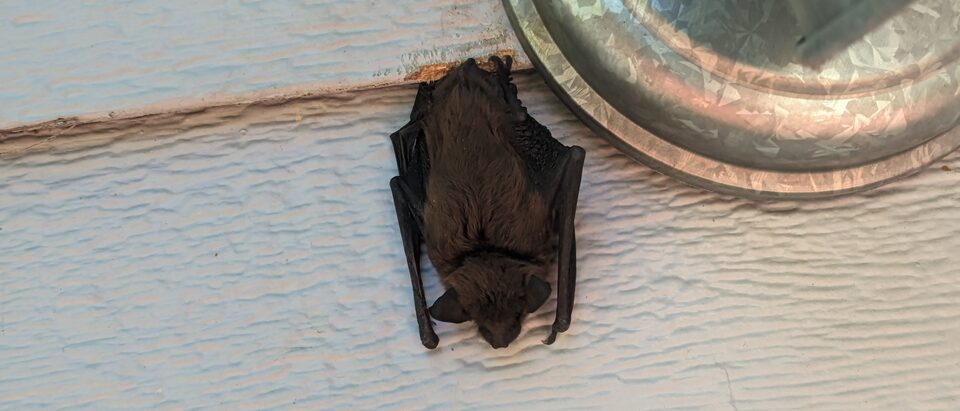
- Bats slipping out from under siding or trim at dusk. Stand outside and watch.
- A musty, ammonia smell near the wall.
- Urine staining on the wall, usually higher up or near windows.
A quick trick to confirm it: tape a sheet of clear plastic over the spot where you think they come and go. If bats push through it, you will see the disturbance.
How to get bats out of the wall
The idea is the same as an attic exclusion, but the access is worse.
- Find every entry and exit point. Watch at dusk and mark where they come out. Check the top plate in the attic too.
- Put a one-way exclusion valve at the top of the wall cavity, where you can reach it from the attic. Bats naturally climb up to leave, so that is the right spot.
- Seal every other gap with mesh, caulk, or foam, leaving only the valve open.
- Wait several days and watch for activity. When it is quiet and you see no bats leaving at dusk, the wall is empty.
- Take the valve off and seal that opening for good.
Do not try to smoke them out or chase them with noise or chemicals. That is inhumane, and in a lot of states it is illegal. A bat that gets trapped in a wall dies in there, and then you have a dead animal in the wall to deal with.
Safety notes
Bats are rarely aggressive, but any wild animal will bite if you try to handle it, and bats can carry rabies. Never pick one up with bare hands. If a bat ends up in your living room, close off the room, open a window, and let it leave on its own, or call someone who handles bats.
Because bats are protected in many places, wall exclusion is one of the few jobs where I actually recommend calling a licensed wildlife operator. The access is awkward, the entry points are easy to miss, and getting it wrong means doing the whole job over.
Frequently Asked Questions
Indefinitely, if they can get in and out. They leave at dusk to feed and come back to roost. A wall colony can hang around for years if nobody does anything.
Bat urine can stain and soak drywall and wood over time, especially with a big colony. Droppings attract other pests too. It is worth dealing with rather than ignoring.
Yes. They can slip through gaps around outlets, light switches, and baseboards. That is usually how a bat ends up in a bedroom.
It depends on how many entry points there are and how hard the wall is to reach. Expect it to run more than a simple attic job. Get a couple of quotes before you decide.