
A bat flying around your bedroom is a rabies concern, and the sooner you act the better. Bats are the main source of rabies exposure in the U.S., and their bites can be so small you never feel them. Panic is the enemy here, not the bat itself. Here’s exactly what to do, step by step.
Health note: Rabies is almost always fatal once symptoms appear. The information below is educational, not medical advice. If you think anyone may have been exposed, see a doctor right away, and lean toward caution. Rabies shots given in time are safe and work.
What to Do Right Now
Follow these in order. Speed matters, because if the bat needs testing, it has to be captured, not released.
1. Get people and pets out of the room
Leave the room quietly and shut the door behind you. Stuff a towel under the gap at the bottom. Keep kids and pets in another part of the house, and don’t swat at the bat or chase it. That raises the chance of a bite and can drive it deeper into the house.
2. Check everyone who was in the room
Ask every person who was in there whether they felt a bite or scratch, and check exposed skin. Bat bites often look like a tiny pinprick and can be invisible by morning. If the room held a sleeping person, a baby, a toddler, someone who’d been drinking, or anyone who can’t reliably say they weren’t bitten, treat it as an exposure.
3. Contain the bat in one room
Close the interior doors and, if it’s safe, open a window in that room. Turn off the lights and leave the ceiling fan and AC off, since moving air confuses the bat. A flying bat will usually land once it gets tired, which makes catching it easier.
4. Capture the bat, but don’t release it yet
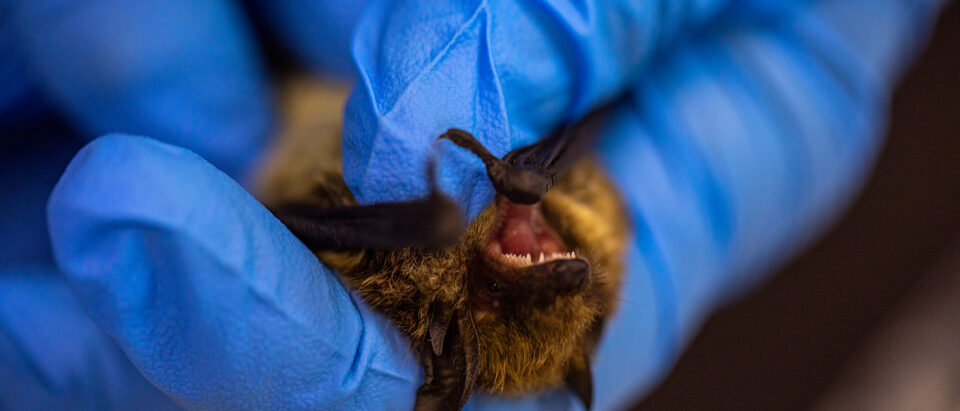
Put on thick leather or rubber gloves. Never touch a bat with bare hands. Use the jar method below to trap it against a wall, floor, or curtain, then keep it somewhere cool and quiet. Don’t let it go until animal control or your health department confirms testing isn’t needed.
5. Call animal control and your doctor
Tell animal control exactly what happened: who was in the room, whether anyone was asleep, whether pets were present. They’ll tell you if the bat needs testing. At the same time, call your doctor or an urgent care clinic to ask about rabies shots.
When the Bat Needs Testing
Not every bat needs a rabies test. It comes down to whether a bite or scratch might have gone unnoticed, and bat teeth are so small a bite can look like nothing.
Test the bat if:
- It was in a room with a sleeping person.
- It was in a room with a child or baby who can’t report a bite.
- It was in a room with someone intoxicated, elderly, or cognitively impaired.
- Anyone had direct contact with the bat.
- A pet or livestock animal was found holding it.
Testing is usually not needed if:
- The bat was in an empty room or attic with no one present.
- You only touched droppings, urine, or blood (rabies spreads through saliva and nerve tissue, not waste).
- You saw the bat outside at dusk.
Your local health department makes the final call. When in doubt, hold onto the bat. Once it’s released, testing is off the table.
Never handle a bat with bare hands, even one that looks dead or injured. If you do touch one by accident, wash the area with soap and water for 15 minutes and go to the ER.
How to Catch a Bat Safely
The jar method is the cleanest way to grab a bat that has landed.
Find a wide-mouth jar or plastic container (16 ounces or more) and a stiff piece of cardboard or a thin plastic lid. With gloves on, place the container over the bat, then slide the cardboard between the container rim and the wall or floor to trap it inside. Flip it upright and secure the lid. Poke a few small air holes first, and keep the container cool and quiet until animal control tells you what’s next.
If the bat is still flying and won’t land, turn off the lights and leave one window open with the screen removed. It will often find its way out within an hour. If not, wait until it lands, then use the jar. Don’t swing a broom or vacuum at it, you’ll injure it and ruin any chance of testing.
If the bat is dead, don’t touch it directly. Use a doubled plastic bag like a glove, pick it up, invert and seal the bag, and refrigerate it (don’t freeze) if testing might happen. Call animal control to arrange pickup.
Frequently Asked Questions
No. Rabies spreads through saliva and nerve tissue, not waste. Bat droppings can carry a fungal lung infection though, so wear a mask when cleaning up a big pile.
Treatment starts with a dose of rabies immune globulin injected near the wound, followed by a series of rabies vaccine doses over about two weeks. Given before symptoms appear, it’s highly effective.
Start as soon as possible, ideally within 24 hours. The shots can still work weeks later as long as symptoms haven’t started, but don’t wait. Call your doctor or the ER.
Only if you’re completely certain no person or pet was in the same room and there was no contact. If a sleeping person, a child, or a pet was in the room, or there’s any doubt, keep the bat for testing. Once released, testing is impossible.
Check your pet’s rabies vaccination status. A vaccinated pet needs a booster, usually within a few days. An unvaccinated pet may need to be quarantined or worse, depending on local rules. Call your vet immediately and don’t handle the bat without gloves.