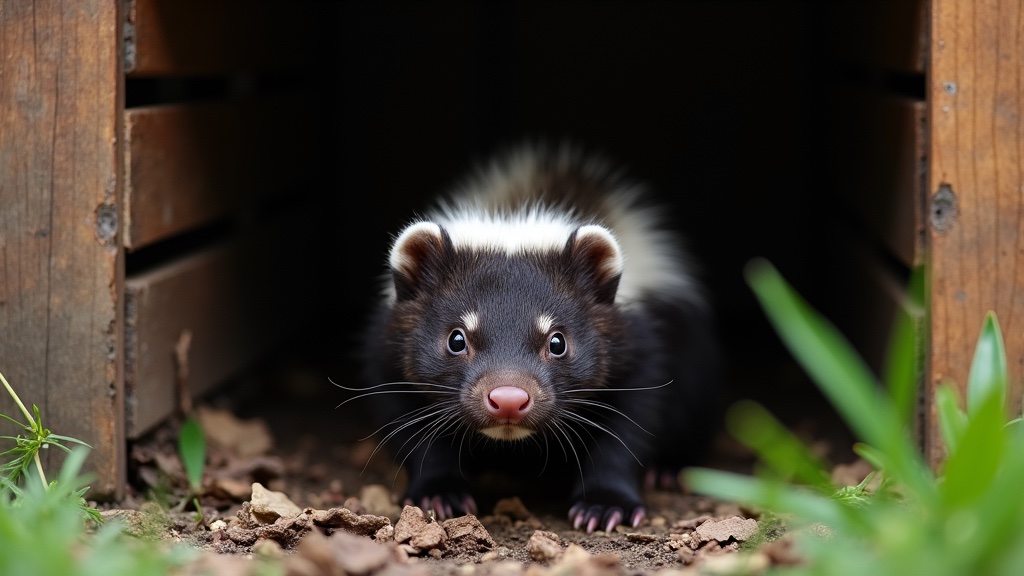

Skunks in your yard can damage lawns, gardens, and foundations. Their digging for grubs leaves cone-shaped holes, and their presence near the house increases the risk of spraying. Striped skunks (Mephitis mephitis) are the most common species found in North American yards. A comprehensive approach using repellents, exclusion, and trapping is the most effective way to get rid of skunks.
Key Takeaways
- Remove food sources: Secure garbage, pet food, bird seed, and compost. Skunks visit yards for food, especially grubs and insects.
- Eliminate shelter: Seal gaps under decks, porches, and sheds. Remove brush piles and wood stacks.
- Treat grubs: Grubs are the primary reason skunks dig lawns. Milky spore or beneficial nematodes eliminate the food source.
- Use repellents: Granular and spray repellents create an unpleasant environment. Motion-activated sprinklers are the most humane option.
- Exclusion fencing: Install 1/2 inch galvanized hardware cloth buried 12 inches deep and angled outward to prevent digging under.
In This Guide
Why Skunks Visit Your Yard
Skunks are attracted to yards that provide food, water, and shelter. The most common attractants include pet food left outside, bird seed spilled from feeders, garbage in unsecured bins, compost piles containing food scraps, and grubs in the lawn. Removing these attractants is the first step in skunk control. Skunks have an excellent olfactory system and can detect grubs several inches underground, leading them to dig distinctive cone-shaped holes in lawns.
Signs of Skunk Activity
Look for these signs to confirm skunk activity in your yard: cone-shaped holes 3 to 4 inches wide in lawns and gardens, a musky odor lingering near the ground, skunk droppings containing visible insect parts and seeds, and tracks showing five toes with visible claw marks. Skunks are most active at dusk and dawn, so a sighting at these times confirms their presence.
Step-by-Step Skunk Removal Plan
- Remove all food sources: secure garbage bins, bring in pet food at night, clean up spilled bird seed, and cover compost piles.
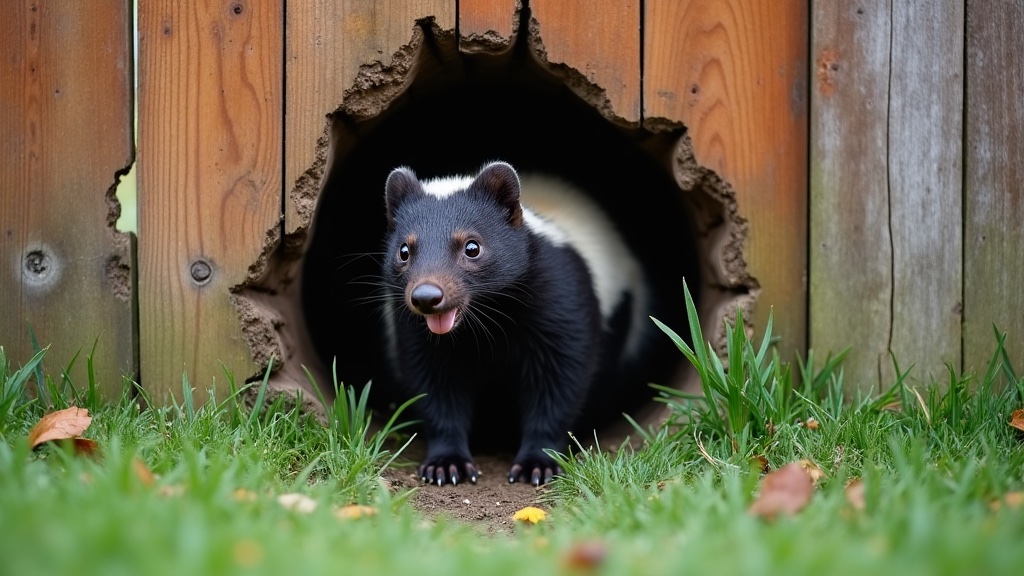
- Eliminate shelter: seal gaps under decks and sheds, remove brush piles, and stack firewood at least 18 inches off the ground.
- Apply repellents around the perimeter of your yard and near skunk activity areas. Use granular repellents containing castor oil or putrescent egg solids.
- Install motion-activated sprinklers in gardens and near known skunk travel routes. The sudden water spray startles skunks and conditions them to avoid the area.
- If skunks persist, use a live cage trap baited with sardines or cat food. Cover the trap before approaching to prevent spraying.
- After removal, install exclusion fencing to prevent re-entry. See our best skunk traps guide for product recommendations.
Treating Lawn Grubs
Grubs are the primary reason skunks dig up lawns. If you have a skunk digging problem, you almost certainly have a grub infestation. Treating the lawn for grubs eliminates the skunk’s food source and stops the digging. Milky spore (Paenibacillus popilliae) is a natural, long-lasting grub control that targets Japanese beetle larvae. Beneficial nematodes (Heterorhabditis bacteriophora) are another natural option that works faster, killing grubs within 48 hours of application. Apply nematodes in late summer or early fall when grubs are most active near the soil surface.
Exclusion Fencing
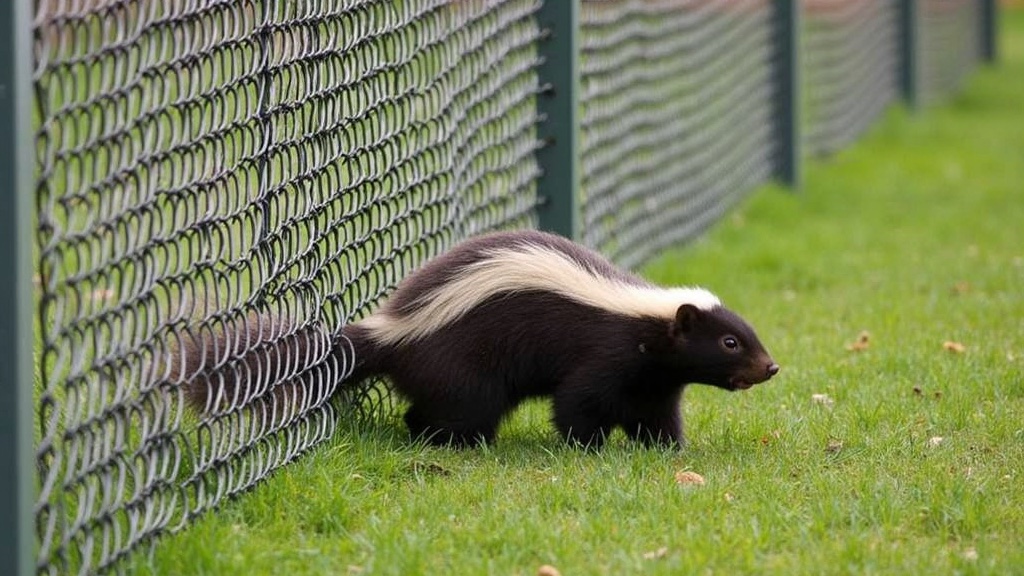
For persistent skunk problems, exclusion fencing is the most reliable long-term solution. Use 1/2 inch galvanized hardware cloth. Install the fence at least 3 feet above ground and bury the bottom 12 inches deep, with the bottom 6 inches bent outward at a 90-degree angle. This outward bend prevents skunks from digging under the fence. Skunks are not strong climbers, so a smooth fence 3 feet tall is sufficient to keep them out.
Frequently Asked Questions
How do I know if I have a skunk problem?
Cone-shaped holes in the lawn, a musky smell, skunk sightings at dusk, and droppings near the house are the most common signs. See our signs guide for more detail.
Will skunks leave on their own?
Skunks will leave if there is no food or shelter. Removing attractants is the most effective strategy. However, if they have an established den under a deck or shed, they may need to be actively encouraged to leave.
How long does it take to get rid of skunks?
With repellents and exclusion, most skunks leave within 1 to 2 weeks. Trapping may resolve the problem in 2 to 3 days.
Do skunks come back after being removed?
Yes, if the attractants are not addressed. Grubs, unsecured garbage, and accessible shelter will attract new skunks. Exclusion fencing is the only permanent solution.
Related Resources
For skunk product recommendations, see best skunk repellents guide and best skunk traps guide. For skunks under structures, read skunk under deck guide. For property protection, see skunk proofing guide. Compare costs in our wildlife removal cost guide.
Why Trust Us
WildAnimalsCentral.com provides skunk control information based on Integrated Pest Management (IPM) principles and best practices from licensed wildlife control operators. Our grub treatment recommendations are reviewed by lawn care specialists.