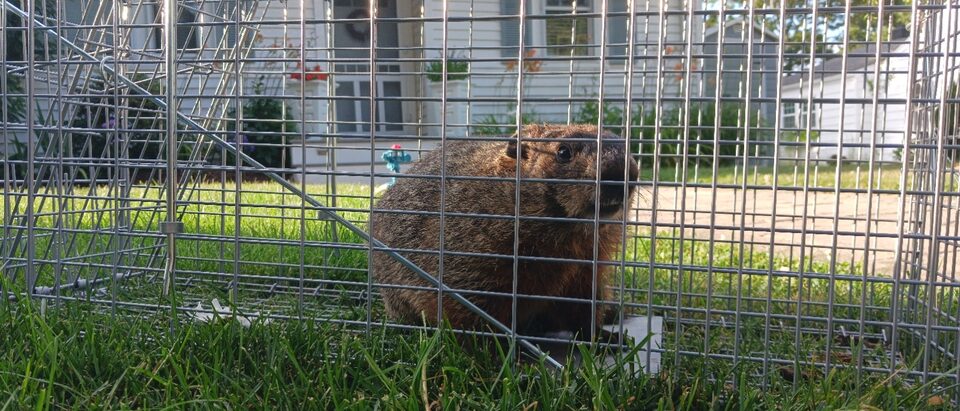

A woodchuck burrowing near the foundation is a structural concern, and the fix is trapping or exclusion, not repellent. Woodchuck burrows can undermine foundations and patios, so you want the animal out and the burrow filled. Here is what to do.
- Woodchuck burrows can undermine foundations and patios.
- Trapping is the reliable removal method.
- Fill the burrow after the woodchuck is out.
- Woodchucks hibernate, so act before they settle in for winter.
Why It Matters
Woodchuck burrows extend underground with multiple entrances, and a burrow under a foundation or patio can cause settling and cracks over time. The damage is structural, so this is a problem worth fixing promptly. For more, see Groundhog Removal Cost Guide: What to Expect.
Remove the Woodchuck
Trapping is the reliable method. A live trap baited with fresh vegetables or fruit, placed near the burrow entrance, works. Check state rules before trapping and relocating.
Place the trap near the main entrance. Woodchucks use the same entrances, so trap where they travel.
Fill the Burrow
Once the woodchuck is out, fill the burrow with soil, then pack it down. For burrows under structures, filling prevents another animal from moving in.
Exclude the Area
A buried fence around the foundation or garden can keep woodchucks from digging, but it is hard to fence a whole yard. The durable fix is removing the animal and filling the burrow.
Frequently Asked Questions
Trap it near the burrow entrance, then fill the burrow. A woodchuck burrow can undermine foundations, so address it promptly.
Yes, woodchuck burrows can cause settling and cracks over time. A burrow under a foundation or patio is a structural concern.
They are most active in spring, summer, and early fall. Woodchucks hibernate in winter, so act before they settle in.
They have limited effect. Trapping is the reliable removal method for a woodchuck near the foundation. For more, see The 7 Best Groundhog Baits and Lures for Trapping.