
Raccoon droppings are not just gross, they can carry raccoon roundworm, a parasite whose eggs can make a person seriously sick if they are swallowed. The eggs are microscopic, they survive for years in soil and insulation, and the worst thing you can do is sweep or vacuum the droppings dry and send those eggs into the air.
I am going to walk you through how to clean it up safely, step by step. And I will say up front: if the mess is in an attic, in insulation, or spread over a big area, this is a job for a professional cleanup crew, not a weekend project.
Health note: this is not medical advice. If you or a family member has been around raccoon droppings and gets sick, see a doctor.
How to recognize raccoon droppings
Raccoon scat is tubular with blunt ends, usually dark, and it often has undigested bits of berries or seeds in it. Raccoons are creatures of habit and go in the same spots over and over, creating what people call latrines. Common spots are the base of trees, woodpiles, flat roof sections, decks, and attics. Finding a pile in the same place repeatedly is a strong sign raccoons are around.
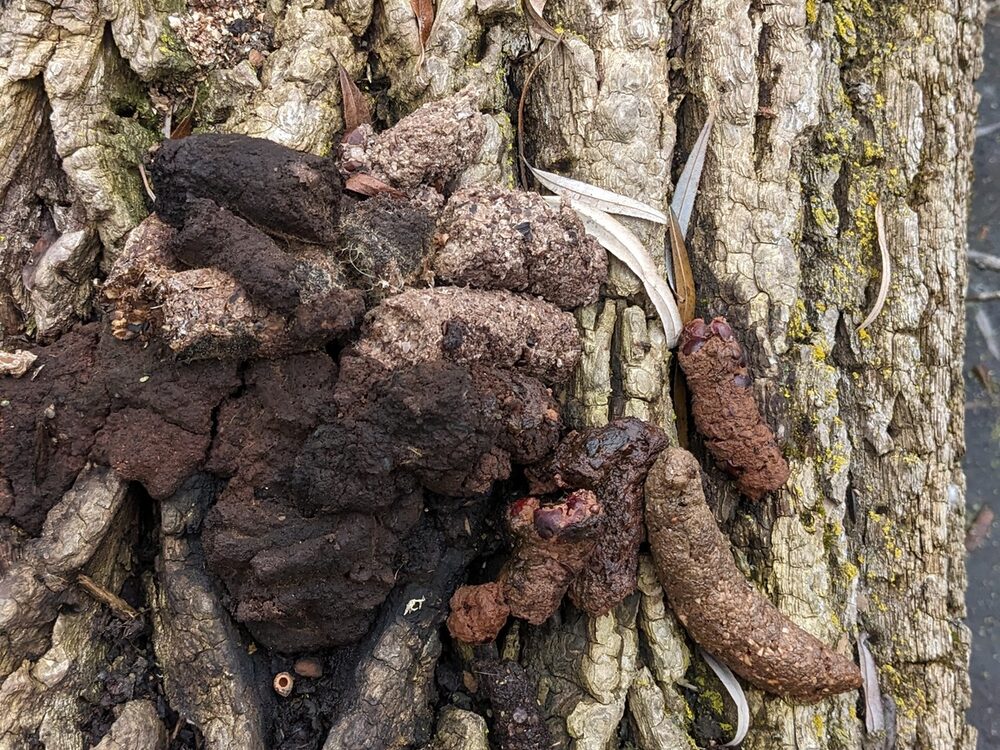
Raccoon droppings. Photo: eric-schmitty, CC BY 4.0
Why the roundworm is dangerous
The raccoon roundworm lives in a raccoon’s gut, and an infected animal sheds eggs in its droppings. Those eggs are not dangerous right away, they need a few weeks in the environment to become infectious. Once they are, they last for years and shrug off most weather and disinfectants.
If a person or pet swallows the eggs, by touching something contaminated and then their mouth, or breathing in dust, the larvae can travel through the body and reach the brain or eyes. Kids and dogs are the highest risk.
Gear up before you touch anything
Wear an N95 respirator, not a cloth or surgical mask. Put on heavy rubber gloves that go past your wrists, and disposable coveralls if you are working in an attic. Goggles are a good idea in enclosed spaces.
Step by step cleanup
Wet everything down first
Mix a bleach solution, roughly one part bleach to nine parts water, in a spray bottle. The bleach helps disinfect surfaces, but the more important job here is dampening the droppings so the eggs cannot go airborne. Spray the droppings and the surrounding area thoroughly before you touch anything.
A word on bleach: it does not reliably kill roundworm eggs. What kills the eggs is heat, boiling water or steam. Use the bleach to settle the dust and clean the surface, and use heat where you can.
Remove and bag the droppings
Let the area soak for several minutes, then scoop the material into a heavy duty trash bag with a plastic scraper or scoop. Move slowly so you do not splash. Double bag it, seal both bags tight, and put them straight in an outdoor trash bin with a lid.
Disinfect and finish the job
Respray the area and let it sit for about ten minutes. On hard surfaces like concrete or decking, scrub with a disposable brush and rinse. For attics or crawlspaces, use a HEPA vacuum after the bleach treatment, never a standard shop vac, which just blows the eggs back into the air. Soiled insulation or cardboard cannot be fully cleaned, bag it and remove it.
Frequently Asked Questions
Years. They are tough against weather and most disinfectants, which is why the cleanup method matters so much. Heat, boiling water or steam, is the most reliable way to kill them.
Yes, if you disturb dried droppings without wetting them first and breathe in the dust. That is why you wet everything down, wear an N95, and never dry sweep or use a regular vacuum.
It varies a lot depending on how much there is and whether insulation is contaminated. Most companies will give you a free inspection and estimate. If the mess is in an attic or in insulation, get a professional.
Seal entry points with galvanized hardware cloth or metal flashing, trim branches that overhang the roof, secure trash bins, and remove pet food. Once the latrine is cleaned and the raccoons are locked out, they move on.
For droppings from something other than a raccoon, the animal droppings identification chart covers the other ten candidates with photos and sizes.