
You can trap a hundred mice and still lose, because the next ones just walk in through the same hole. Finding and sealing the entry points is the only fix that sticks.
Mice are smaller than most people think. A mouse can squeeze through a gap about the width of a pencil, and it will. My how to get rid of mice guide covers the full removal. The goal of this guide is to teach you how to find every one of those gaps so you can seal them for good.
The most common entry points
Before you go hunting, know where to look. Mice almost always get in through the same handful of spots:
- Gaps where pipes and wires pass through walls or the foundation.
- Cracks in the foundation or where the siding meets it.
- The gap under exterior doors, especially garage and basement doors.
- Worn weather stripping around doors and windows.
- Soffits, fascia, gable vents, and ridge vents along the roofline.
- Uncapped chimneys and gaps in chimney flashing.
- Utility penetrations for cable, electrical, and HVAC lines.
Work that list and you’ll find most of them. Mice climb better than people expect, so don’t skip the roofline just because it’s high.
Inspect the inside first
Start in the house. Check kitchens, pantries, basements, attics, and garages. Look behind appliances, under sinks, and inside cabinets.
Mice leave three kinds of evidence:
- Droppings, small, dark, and rice-shaped.
- Grease marks, dark smudges along walls where the oil in their fur rubs off as they travel.
- Gnaw marks, on wood, drywall, and around gaps they’re widening.
Pay the most attention to where pipes and wires enter walls. Those penetrations are the number one entry point in most homes.
Then walk the outside
Do a full lap around the house. Look for cracks in the foundation, gaps around utility lines, and openings where siding meets the foundation.
Then get a ladder and check the roofline: soffits, fascia boards, gable vents, ridge vents, and chimney flashing. A bright flashlight helps you see gaps that look fine from the ground.
Use the powder test
If you’re not sure which gaps are actually being used, sprinkle flour or talcum powder along walls and near suspected entry points. Check the next morning for tracks. The powder shows you exactly which routes the mice are using and which gaps they’re passing through.
This works especially well in basements, garages, and crawl spaces, where you can’t just sit and watch.
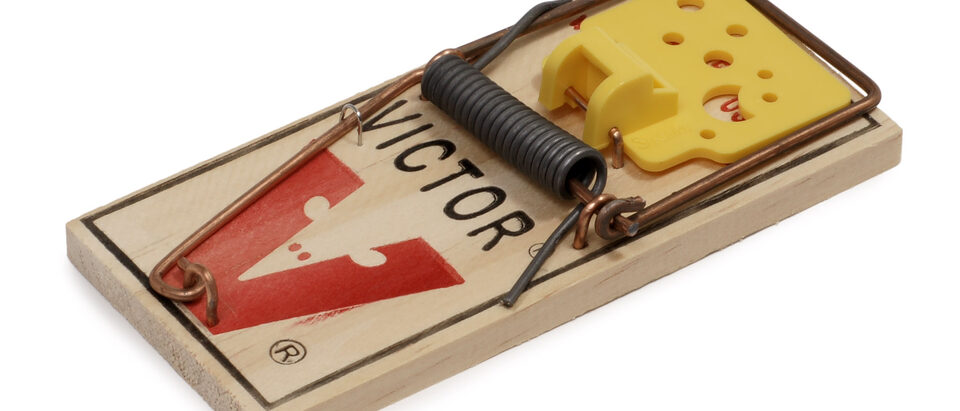
once the powder shows you a travel route, set your traps along that same wall, not out in the middle of the room. Mice hug walls, so traps placed there catch far more.
How to seal what you find
The right filler matters. Steel wool works for a while but rusts and comes apart in damp areas, and mice can pull at it. Copper mesh doesn’t rust and is harder for them to gnaw through, so it’s the better long-term fill.
Pack the gap tight with copper mesh, then seal it in place with caulk or expanding foam. For bigger openings, back the mesh with quarter-inch hardware cloth. For the gap under a door, a door sweep does the job.
Frequently Asked Questions
For an average home, a thorough walk-through takes an hour or two. A bigger house with multiple rooflines or a crawl space takes longer, and it’s worth doing right the first time.
Yes. Most pest control companies offer inspections, and many credit the inspection cost toward the exclusion work if you hire them for the full job.
Some gaps are hidden behind siding or trim where you can’t see them. A pro with experience spots the ones you miss. This is the time to call one.
They can pull apart and push through steel wool over time, especially once it rusts. Copper mesh is harder for them to gnaw and doesn’t rust, so it holds up. Pack it tight and seal it with caulk or foam.
Anything a pencil can fit through, a mouse can fit through. Seal every gap, even the ones that look too small to matter.