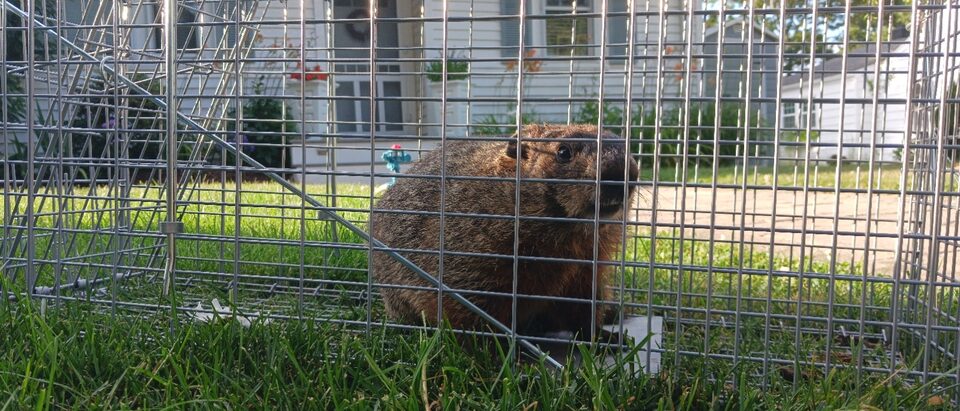

A groundhog burrowing under your house is a structural problem, not just a yard nuisance. One animal can move hundreds of pounds of soil, undermining foundations and footings. The reliable fix is a one-way eviction door followed by permanent exclusion.
- A groundhog burrow under the foundation is a genuine structural risk.
- One-way exclusion doors are the most reliable eviction method, paired with sealing secondary exits.
- Never seal a burrow while the animal is inside. It will dig out through your floors or walls.
- Avoid eviction during spring breeding season, when young may be trapped inside.
Confirm It Is a Groundhog
Groundhog burrow entrances are distinctive: a 10 to 12 inch hole with a mound of excavated dirt piled beside it. A burrow system usually has one main entrance plus two to four smaller escape holes. Look for crescent-shaped dirt mounds, chewed vegetation nearby, and claw marks on low wood surfaces.
Groundhog tunnels can run 25 to 65 feet and reach 5 feet deep, which is why a den under the house is more serious than a hole in the garden.
Check the Season First
This step is critical. Groundhogs give birth in spring, and the young stay in the burrow through early summer. If you install a one-way door during that window, the mother gets locked out while her blind, dependent young stay trapped inside and starve.
The safe window for eviction is roughly July through September, after the young have left the den. In winter, groundhogs hibernate and will not leave through a one-way door, so you must wait until spring.
The Eviction Sequence
First, locate every burrow entrance. Plug all secondary exits with heavy rocks and soil, leaving only the main entrance open.
Second, mount a one-way exclusion door over the main entrance. The groundhog pushes out to forage but cannot get back in. Leave the door in place for three to seven days.
Third, confirm the burrow is empty before sealing. Stuff a loose ball of newspaper into the entrance behind the door. If it is undisturbed for 48 hours, the burrow is vacant.
Seal the Burrow and Exclude
Once the groundhog is confirmed out, remove the door and seal the entrance. Fill the burrow with gravel, crushed stone, or a sand-cement grout rather than loose soil, which a groundhog can simply dig through again.
For long-term protection, install an L-footer barrier: bury 1/2-inch galvanized hardware cloth 12 inches deep, bent outward at a 90-degree angle at the bottom. This stops a new groundhog from digging under the foundation line.
Use galvanized welded hardware cloth, not chicken wire. Groundhogs have powerful incisors and will snap thin poultry netting or push it aside in minutes.
When to Call a Professional
Call a professional when the burrow is directly under your foundation, when you see signs of settling or cracks, or when a litter is present. Professionals can safely remove the family, install proper exclusion, and assess whether the tunneling has caused structural damage that needs repair.
Professional groundhog removal typically runs $150 to $600 per animal, and it is the better call when structural damage is a risk.
Frequently Asked Questions
Yes. Tunneling removes soil from under footings and slabs, which can cause settling, cracks, and water intrusion. This is the main reason a groundhog under the house needs prompt attention.
Yes. In colder climates groundhogs enter true hibernation from late fall through early spring. They will not respond to traps or one-way doors during that period, so eviction must wait until spring.
It depends on the state. Several states restrict or prohibit relocating wildlife, and some require a permit. Check with your state wildlife agency before trapping, or hire a licensed operator who handles the legal side.
Cantaloupe is the classic choice, along with apples, carrots, and lettuce. Groundhogs are herbivores and are drawn to sweet, juicy fruits and vegetables.
Use gravel, crushed stone, or a flowable fill, not loose soil or mulch. Organic material is easy for a groundhog or another animal to dig out. Bury hardware cloth over the filled entrance for extra security.