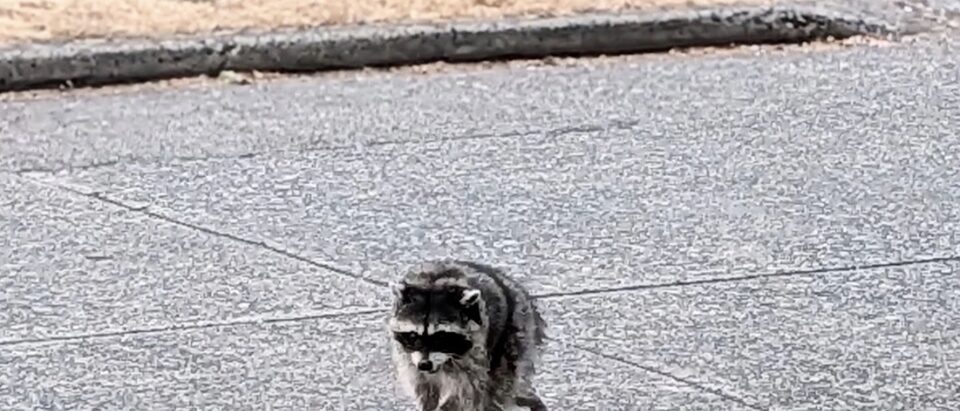

Raccoons den under decks because the space is dark, dry, and predator-proof, which makes it ideal for raising young. The reliable removal sequence is to confirm occupancy, evict with a one-way door, then seal the perimeter with buried hardware cloth.
- Check for babies first. Sealing a den with kits inside means they starve, and the mother tears the deck apart getting back in.
- One-way doors are the humane eviction method. Raccoons leave to feed but cannot return.
- Bury hardware cloth in an L-shape so raccoons cannot dig back under the skirting.
- Remove food attractants or a new raccoon moves in within weeks.
Confirm It Is Raccoons
Raccoon signs are distinctive. Look for tracks that resemble small human hands with five toes, dark tubular droppings in a communal latrine spot, and torn lattice or disturbed soil around the deck perimeter. At night you may hear heavy thumping, growling, chittering, or the high-pitched cries of babies.
Raccoons are nocturnal, so the activity is strongest after dark. If you see a raccoon during the day, especially acting disoriented, keep your distance and call animal control, since daytime activity can signal illness.
Check for Babies First
This is the single most important step. Raccoons give birth in spring, and the kits stay in the den for eight to twelve weeks before they are mobile. If you seal or exclude during that window, the mother gets locked out while her young die inside.
Listen for chirping or whining sounds under the deck. If you hear kits, wait until they are old enough to leave with the mother, typically by mid-summer. In some areas removing a denning raccoon during birthing season is restricted by law.
Evict With a One-Way Door
First, identify the entry point the raccoons use. A loose plug of newspaper or a rag works well: stuff it in the opening and check the next morning. If it is pushed out, the entrance is active.
Mount a one-way exclusion door over the main entrance, sealing every other gap. The raccoons push out to forage at night but cannot get back in. Leave the door in place for four to seven nights and watch for signs that the den is empty.
Do not reach under the deck to investigate or remove raccoons yourself. A cornered raccoon, especially a mother with kits, will bite. Use a flashlight from a safe distance and leave hands-off removal to a professional. Not sure if this is a DIY job? Take the DIY vs. pro quiz first.
Seal the Perimeter
Once the den is empty, remove the door and seal the deck with 1/2-inch galvanized hardware cloth, not chicken wire, which raccoons tear apart. Dig a trench about 12 inches deep around the deck edge, run the mesh down into it, and bend the bottom 6 to 12 inches outward into an L-shape. Secure the top edge to the deck frame with screws and washers, not just staples.
This buried L-shape is what stops a raccoon from simply digging under the skirting and moving back in.
Remove What Attracts Them
Secure trash cans with locking lids or bungee cords, bring pet food in at night, take down bird feeders, and pick up fallen fruit. Trim tree branches back from the deck and roof so raccoons do not have a climbing route. A deck with no food and no shelter is a deck raccoons skip.
When to Call a Professional
Call a professional if a litter is present, if the den is under a low deck you cannot safely inspect, or if you simply want the job done without the spray and bite risk. Professional raccoon removal with exclusion typically runs $300 to $600, and it is worth it when kits are involved.
Frequently Asked Questions
Look for hand-shaped tracks, a latrine of dark droppings, torn lattice, and disturbed soil. At night you will hear thumping and vocalizations. A loose plug of newspaper pushed out overnight confirms an active entrance.
The raccoons cannot get out to feed, and a mother will tear through the skirting or decking to reach her young. Any animal left sealed inside will die and rot. Always confirm the den is empty before sealing.
Yes, decks are a common den site for mothers raising kits in the spring. The kits stay in the den for eight to twelve weeks, which is why you must check for babies before any removal or sealing.
Not if the deck keeps providing shelter and food. Raccoons have no reason to leave a good den. You have to evict them with a one-way door and then seal the space so they cannot return.
Half-inch galvanized hardware cloth buried 12 inches deep and bent outward into an L-shape. Chicken wire and plastic netting are too weak and raccoons will tear through them in minutes.