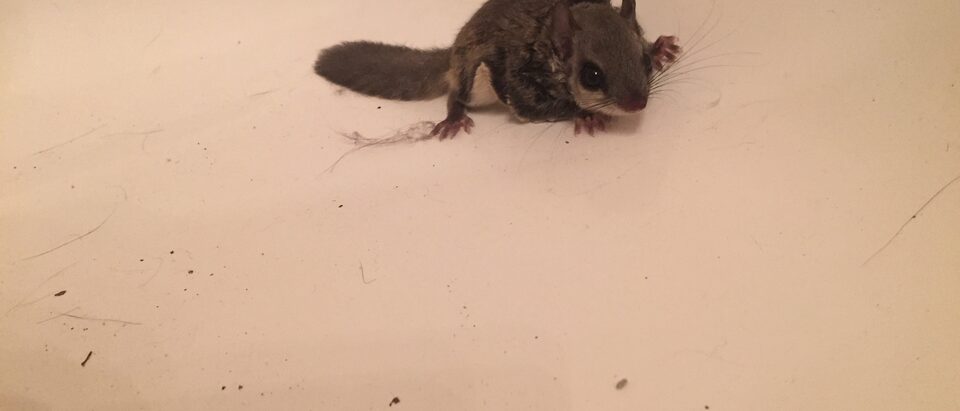

Flying squirrels in the attic are removed by trapping or one-way doors, then sealing every entry point, since they live in groups. Flying squirrels are nocturnal and enter through small gaps. Here is how to get them out.
- Flying squirrels live in groups, so expect several.
- Trapping or one-way doors remove them.
- Seal every gap in the roofline to end the problem.
- Avoid poison, which can kill a squirrel in the attic.
Confirm It Is Flying Squirrels
Flying squirrels are active at night, so you hear light scurrying in the attic after dark, unlike gray squirrels, which are active during the day. Look for small droppings and gaps in the roofline. If you only have the sound to go on, the attic noise identifier narrows it down in three questions.
Remove Them
Trapping. Live traps baited with nuts or peanut butter, placed near the entry point, work. Since they live in groups, be prepared to catch several.
One-way door. A one-way door over the entry point lets them leave but not return, the least stressful method.
Avoid poison. A poisoned flying squirrel can die in the attic and create an odor problem.
Seal Every Entry Point
Inspect the roofline, soffits, and vents for gaps, some as small as a quarter. Seal every opening with steel mesh or hardware cloth. Sealing is what ends the problem.
Clean Up
Remove droppings and nesting material, which carry disease and attract new squirrels. Wear gloves and a mask.
Frequently Asked Questions
Trap them or use a one-way door, then seal every entry point. They live in groups, so expect several.
Costs vary by location and the number of entry points. Check with local services for a quote.
They can chew wiring and leave droppings, but they are not aggressive. The main risk is damage and the odor from droppings.
Through gaps in the roofline, soffits, and vents, sometimes as small as a quarter. Sealing those gaps is the fix.