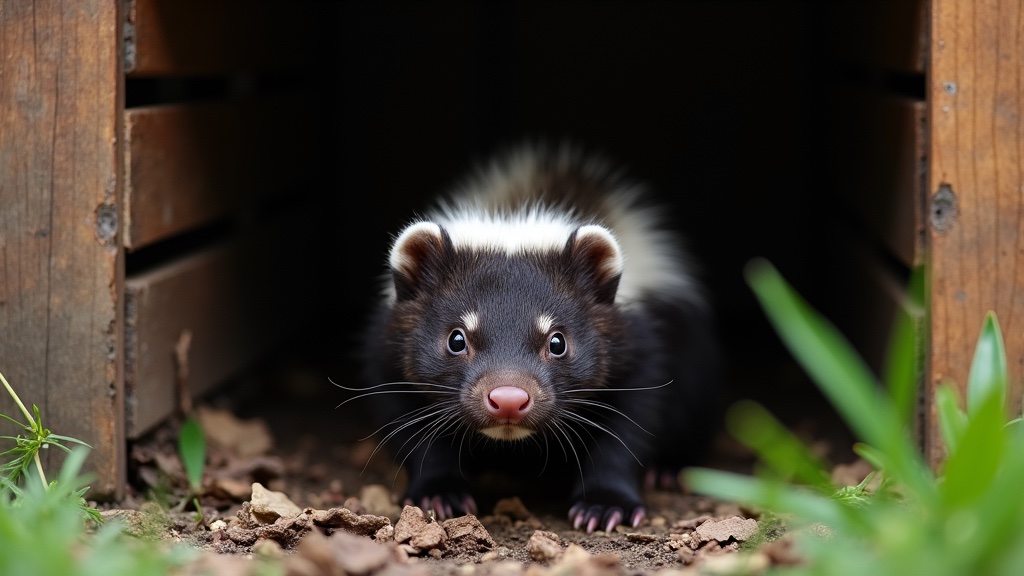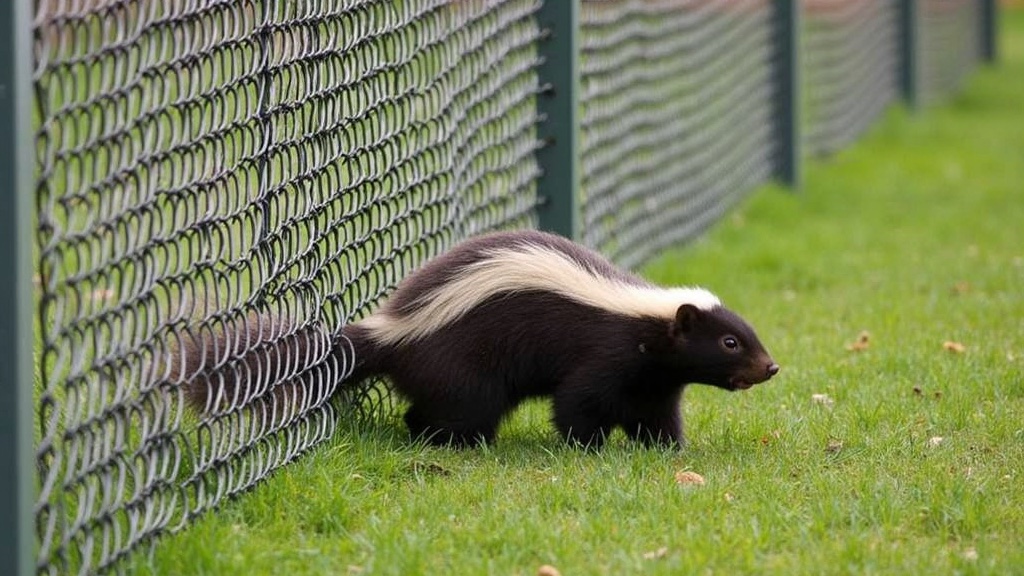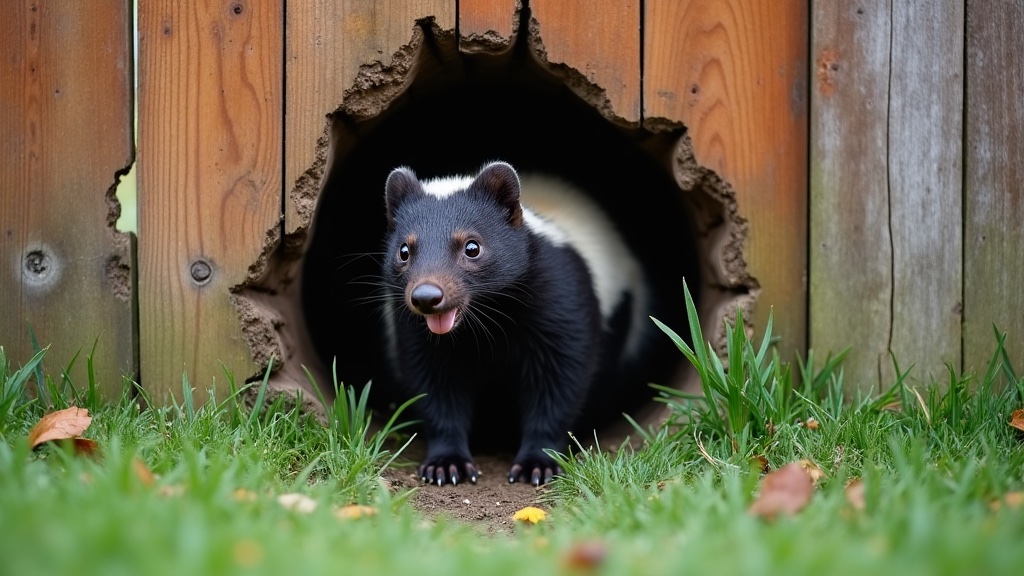

Skunk mating season begins in February and extends through March, with some activity starting as early as January in warmer regions. Understanding skunk reproductive behavior is essential for homeowners who want to avoid having a litter of skunk kits born under their deck or porch. This guide covers the timing of mating season, gestation periods, kit development, and denning behavior throughout the year.
Key Takeaways
- Mating season runs February to March: Male skunks travel up to 5 miles searching for mates during this period, increasing encounters with properties and pets.
- Gestation lasts 60 to 77 days: After delayed implantation, skunk kits are born in April through May. Most litters arrive in early May.
- Litters average 4 to 7 kits: A single female can produce one litter per year. Kits are born blind and helpless in a maternal den.
- Maternal denning is the highest-risk period: From April through August, females guard their young. Sealing an occupied den during this time is dangerous and inhumane.
- Kits disperse by late summer or early fall: Young skunks leave the maternal den between August and October to establish their own territories.
In This Guide
Skunk Mating Season Timing
The striped skunk (Mephitis mephitis) is the most common skunk species in North America, and its breeding cycle follows a predictable seasonal pattern. Mating season is triggered by increasing daylight length and warming temperatures. In northern states and Canada, mating typically begins in late February. In southern states, activity can start as early as January.
During mating season, male skunks become much more active and mobile. A male skunk may travel 3 to 5 miles per night searching for receptive females. This increased travel brings skunks into closer contact with homes, pets, and vehicles. Roadkill incidents spike during February and March for this reason.
Male skunks do not establish permanent territories during mating season. Instead they roam widely and compete with other males for access to females. Fighting between males is common and results in increased spraying activity. Homeowners often notice stronger skunk odor in their neighborhoods during these weeks.
Courtship and Mating Behavior
Skunk courtship is a brief and direct process. When a male locates a receptive female, he approaches cautiously. The female may initially reject the male with warning tail raises and stamping feet. If she is not ready to mate, she may spray. Males that persist despite warnings risk being sprayed.
Once the female accepts the male, mating occurs quickly. Skunks do not form pair bonds. After mating, the male leaves to seek other females. Males take no part in raising the young. A single male may mate with multiple females during the season, and a female may mate with more than one male before becoming pregnant.
Female skunks are seasonally polyestrous, meaning they can come into heat multiple times during the breeding season if they do not become pregnant. This ensures that most adult females produce a litter each year. After successful mating and fertilization, the female begins preparing a maternal den where she will give birth and raise her kits.
Gestation and Delayed Implantation
Skunk gestation is unusually long for a small mammal because of a reproductive strategy called delayed implantation. After mating and fertilization, the fertilized egg does not immediately attach to the uterine wall. Instead development pauses for a period before implantation occurs.
The total gestation period for striped skunks ranges from 60 to 77 days. Active fetal development takes approximately 31 to 32 days after implantation. The delayed implantation mechanism allows females to time the birth of their kits for late spring when food is abundant and temperatures are mild.
Most skunk kits are born in April and May. Females that mated early in the season (February) tend to give birth in mid to late April. Those that mated later (March) give birth in May. A second peak of births in June is possible but less common and usually results from late-season matings or first-time mothers.
Kit Development Timeline
Skunk kits are born altricial, meaning they are completely helpless at birth. A newborn skunk kit weighs about 1 ounce and is blind, deaf, and hairless. The mother skunk provides constant care during the first several weeks. Understanding kit development helps homeowners know when it is safe to exclude skunks from a property.
Weeks 1 to 3: Neonatal Period
Kits are entirely dependent on their mother for warmth and nutrition. Their eyes remain closed until around day 21. The mother leaves the den only briefly to forage for food. During this period, the kits cannot survive without their mother. If the mother is trapped or excluded, the kits will die in the den.
Weeks 4 to 6: Eyes Open and Early Mobility
Kit eyes open around 3 weeks of age. Fur begins to grow, and the characteristic black and white striped pattern becomes visible. Kits start moving around the den but remain close to the mother. They begin eating solid food brought by the mother around week 5 but continue nursing.
Weeks 7 to 10: Den Emergence
At about 7 to 8 weeks old, kits begin following their mother outside the den for short foraging trips. This is when homeowners first notice skunk activity around their property. The kits stay close to the mother and return to the den each night. Their spray glands become functional around week 8.
Weeks 11 to 16: Independence and Dispersal
By 10 to 12 weeks, kits are capable of hunting on their own but often remain with the mother through the summer. Dispersal typically occurs between August and October. Juvenile skunks leave the maternal den to find their own territories. Some may remain in the general area if food and shelter are abundant.
Denning Behavior Through the Year
Skunks use different types of dens depending on the season and the skunk’s reproductive status. Understanding seasonal denning helps you predict when and where skunks are likely to appear on your property.
Winter Dens (December to February)
During cold winter months, skunks seek shelter in underground burrows, woodpiles, brush piles, and under structures. Multiple skunks, including both males and females, may share a winter den for warmth. This communal denning is temporary and skunks disperse as mating season approaches.
Maternal Dens (April to August)
Pregnant and nursing females seek secure, dry spaces for their maternal dens. Common locations include space under decks, porches, sheds, concrete slabs, and crawl spaces. The maternal den must be protected from predators and weather. Females choose sites with a single, defendable entrance.
Summer and Fall Dens (August to November)
As kits disperse, skunks use a wider variety of temporary shelters. They may rest in tall grass, brush piles, abandoned rodent burrows, or under woodpiles during the day. In fall, skunks begin seeking more substantial winter den sites. This is the best time to complete exclusion work before winter denning begins.
What This Means for Homeowners
The skunk breeding cycle creates three critical periods for property owners. First, late winter (January to March) is when male skunks are most active and likely to investigate your property. This is the time to identify and seal gaps before females begin seeking maternal dens.
Second, spring (April to May) is the period when females give birth. Avoid any disturbance near potential den sites. If you suspect a skunk has already taken up residence, wait until late summer for exclusion. Trapping a nursing female separates her from her kits and leads to a slow death for the litter inside your structure.
Third, late summer through early fall (August to October) is the ideal window for exclusion work. Kits are mobile and leaving the den, and females are preparing for winter. Install one-way exclusion doors, seal entry points, and remove attractants during this period for the best results.
Frequently Asked Questions
How many litters do skunks have per year?
Striped skunks have one litter per year. If a first litter is lost early in the season due to predation or disturbance, a female may produce a second litter later in the summer, but this is uncommon. Most females successfully raise one litter annually.
Can skunks breed with other species?
No. Skunks cannot interbreed with other wildlife species. The striped skunk (Mephitis mephitis) is genetically distinct from other mustelids and from the spotted skunk (Spilogale putorius). Each species has its own unique breeding cycle and behavior.
Do male skunks help raise the kits?
No. Male skunks do not participate in raising young. After mating, the male leaves to find other females. The female alone selects the den site, gives birth, nurses, and teaches the kits to forage. Male skunks do not stay with the family group at any point.
When do skunk kits start spraying?
Skunk kits develop functional scent glands around 8 weeks of age. However their aim is poor and they have limited spray range until they reach full size at about 4 to 5 months. Young skunks may stamp their feet and lift their tails as a warning before they can actually spray effectively.
How long do skunks live in the wild?
Striped skunks have an average lifespan of 2 to 4 years in the wild. Mortality is highest during the first year of life due to predation, disease, vehicle strikes, and starvation. In captivity, skunks can live 10 years or longer.
Do skunks mate for life?
No. Skunks are not monogamous. Mating is seasonal and opportunistic. Males mate with multiple females during the breeding season, and females may mate with multiple males. After mating, there is no ongoing relationship between the male and female.
Related Resources
More Skunk Control Guides:
Why Trust Us
WildAnimalsCentral.com has provided research-based wildlife management information since 2018. Our content on skunk behavior and biology is reviewed by wildlife biologists and licensed pest control professionals. We rely on peer-reviewed studies and field observations to ensure our guidance is accurate and actionable for homeowners across North America.
We prioritize humane, legal, and effective solutions. Every recommendation on this site considers both the homeowner’s needs and the welfare of the animals involved. Our goal is to help you resolve wildlife conflicts with knowledge and confidence.