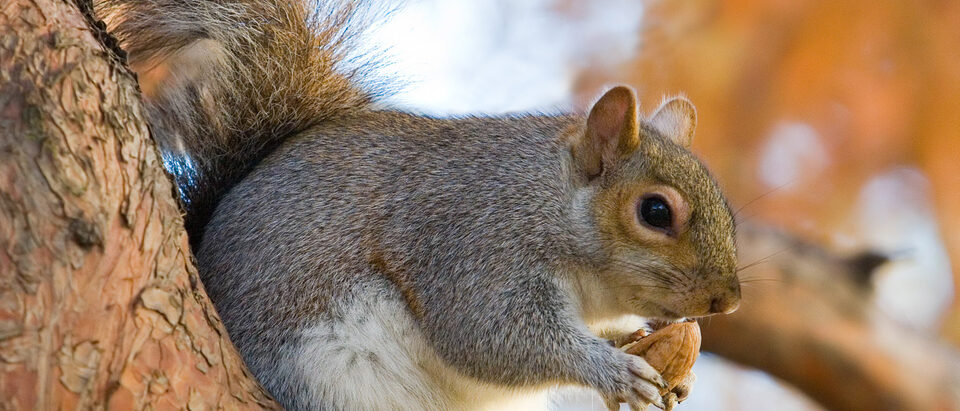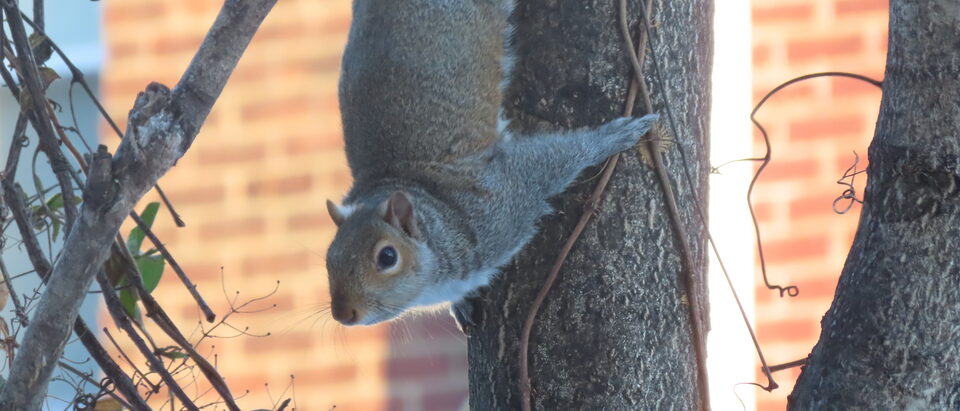

Scratching in the walls, droppings in the attic, chewed wires, and a strong musty smell are the clearest signs you have squirrels in your house.
These rodents cause structural damage, create fire hazards, and spread disease if left unchecked. Here is how to identify squirrel activity, confirm the infestation, and remove them. For a quick checklist, see 10 signs of squirrels in your house.
In this guide, I cover the six most common signs of a squirrel infestation, what to do when you spot them, and the best products to remove squirrels and prevent them from returning. I compared squirrel traps, repellents, and exclusion products to find the most effective solutions for every situation.
- Noise is the earliest sign: Scratching, scampering, and gnawing sounds in walls or attics, especially at dawn and dusk, indicate active squirrel activity.
- Droppings and urine stains confirm occupancy: Squirrel droppings are oblong, dark, and about 3/8 inch long. Urine leaves dark stains on wood and insulation.
- Entry points are as small as 1/2 inch: Squirrels can squeeze through surprising gaps. Check eaves, soffits, chimneys, and pipe entries.
- Do not seal squirrels inside: Always use one-way exclusion doors before permanently sealing entry points. Trapping squirrels inside causes worse damage.
Best Squirrel Control Products Compared
| Product | Type | Best For | Reusable | Pet Safe |
|---|---|---|---|---|
| Ouell Squirrel Trap | Live cage trap | Attic & Yard | Yes | Yes |
| Kensizer Humane Trap | Small cage trap | Garage & Shed | Yes | Yes |
| Large Squirrel Trap 2 Pack | Live cage trap | Multiple Entry Points | Yes | Yes |
| Shake Away Coyote Urine | Granular repellent | Garden & Yard | N/A | Yes |
| Squirrel Repellent for Attic | Scent repellent | Attic & Crawl Space | N/A | Yes |
Detailed reviews of each squirrel control product covering effectiveness, ease of use, and real world performance follow below.
1) Strange Noises
The first sign of a squirrel infestation in your home is often the strange noises they make. Squirrels are not quiet creatures. Their activities result in distinct sounds that alert homeowners to their presence. Scratching sounds come from their sharp claws as they climb and dig.
Scampering and running noises indicate rapid movement through walls and ceilings. Chewing sounds are a clear sign of squirrels gnawing on wood, wires, and pipes.
Squeaking is how squirrels communicate with each other, and thumping sounds happen when they jump or fall. If you hear these sounds at dawn and dusk, you likely have squirrels in your attic or walls.
2) Water Damage
Squirrels are notorious for gnawing on almost anything, including wooden beams, insulation, electrical wires, and pipes. When a squirrel chews through a pipe, it can lead to leaks inside walls and ceilings.
Water stains or damp patches on your walls or ceiling are often a telltale sign of a leak caused by squirrels. If you notice water damage combined with other signs of squirrels, you should inspect your attic immediately and consider setting traps to remove the animals before the damage worsens.
3) Droppings and Urine
Squirrel droppings are small, oblong pellets about 3/8 inch long, similar to rat droppings but slightly larger and more rounded. You will typically find them in attics, along baseboards, near entry points, and inside wall cavities.
Squirrel urine has a strong musky odor that becomes more noticeable as the infestation grows. The droppings and urine can carry diseases and should be handled with protective gear. After removing the squirrels, thoroughly clean and sanitize the affected areas.
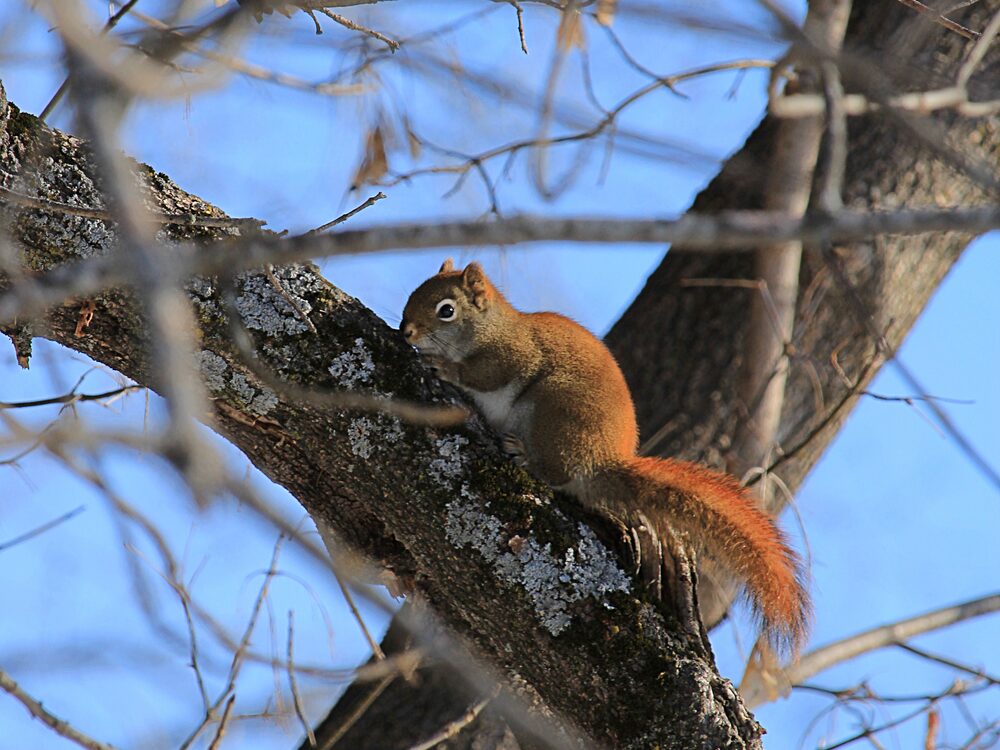
Squirrel in a tree
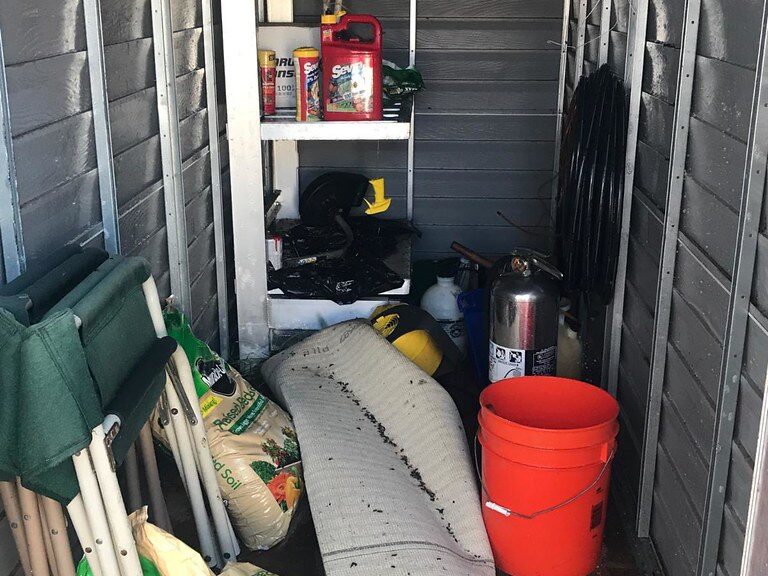
Droppings left in a shed. Photo: Eco Bear Biohazard Cleaning Co., CC BY 2.0
4) Visible Damage to Entry Points
Squirrels enter homes through gaps in the roofline, fascia boards, vents, and eaves. They gnaw through wood, plastic, and even aluminum soffits to create entry holes about 3 to 4 inches in diameter.
Check your roofline for chewed edges, bent vents, and gaps around utility lines. If you find gnawed entry points, the squirrels are likely already inside. Seal these openings with 1/4 inch galvanized steel mesh after removing the animals.
5) Nesting Material
Squirrels build nests using leaves, twigs, insulation, and other soft materials. They typically nest in attics, chimney flues, and wall cavities. If you find piles of leaves and shredded insulation in your attic, you have an active squirrel nest.
Nests are usually located near entry points and in warm, dark corners of the attic. Remove nesting material carefully while wearing gloves and a mask, as it may contain droppings, urine, and parasites.
6) Squirrel Sightings Near the House
If you see squirrels frequently entering and exiting the same spot on your roof, or if you notice them carrying nesting material, you have an active infestation.
Watch for squirrels running along power lines, jumping from trees to the roof, and disappearing under eaves or into vents. Activity is highest in early morning and late afternoon. Multiple squirrels entering the same area usually means a nest with babies inside.
Best Squirrel Traps and Repellents
Once you have confirmed a squirrel infestation, you need to remove the animals and prevent them from returning. Below are the best squirrel control products I compared, starting with live capture traps for humane removal.
Best Overall: Ouell Squirrel Trap
- Size
- 17 x 5 x 5 inches
- Material
- Heavy gauge galvanized steel
- Trigger
- Sensitive treadle plate
- Reusable
- Yes, folds flat for storage
The Ouell squirrel trap is my top pick for live capture removal. It is built with heavy gauge steel wire that resists bending and rust, and the treadle trigger mechanism is sensitive enough to catch even cautious squirrels.
The trap measures 17 inches long, which is the ideal size for eastern gray squirrels and fox squirrels. A rear door simplifies baiting and release, and the trap folds flat for storage.
Best for Garages: Kensizer Humane Trap
- Size
- 10.5 x 5.5 x 4.5 inches
- Material
- Galvanized steel wire
- Trigger
- Trip plate mechanism
- Reusable
- Yes
The Kensizer humane trap is a smaller, more affordable option that works well for garages, sheds, and crawl spaces. At 10.5 inches long, it is best suited for smaller squirrels and chipmunks, but it can also catch larger squirrels with the right bait placement.
The trap is lightweight and easy to carry, with a smooth trigger mechanism that closes the door quickly without harming the animal.
Best for Multiple Entry Points: Large Squirrel Trap 2 Pack
- Size
- Large, 2 pack
- Material
- Heavy duty wire
- Design
- Escape proof latch
- Reusable
- Yes, 2 traps included
If you have multiple squirrels or several entry points to cover, the 2 pack of large squirrel traps provides the best value. Each trap is built with heavy duty construction and an escape proof design that prevents captured squirrels from opening the door from inside.
The large size accommodates eastern gray squirrels, fox squirrels, and even small raccoons. Set one trap in the attic and one near the entry point for maximum coverage.
Best Repellent for Gardens: Shake Away Coyote Urine
 Best Repellent for Gardens
- Type
- Granular scent repellent
- Active Ingredient
- Coyote/fox urine
- Coverage
- 28.5 oz covers up to 2,500 sq ft
- Pet Safe
- Yes, natural formula
Shake Away uses coyote and fox urine granules to create a natural predator deterrent that makes squirrels feel unsafe. The granules are spread around gardens, bird feeders, and yard perimeters.
The scent of natural predator urine triggers a deep instinctive fear response in squirrels, causing them to flee the area. It is safe for use around pets, children, and plants, and one application lasts 2 to 4 weeks depending on weather conditions.
Best Repellent for Attics: Squirrel Repellent for Attic
 Best Repellent for Attics
- Type
- Scent pouch repellent
- Active Ingredient
- Natural essential oils
- Coverage
- 12 pouches per box
- Pet Safe
- Yes
This scent repellent is formulated specifically for enclosed spaces like attics and crawl spaces where squirrels nest. The pouches release a concentrated scent that squirrels find overwhelming, driving them out of the treated area.
The repellent is made with natural essential oils and is safe for use around pets, insulation, and stored items. Place 2 to 3 pouches per 200 square feet of attic space for best results. It is not a replacement for trapping but works well as a deterrent after removal to prevent re-entry.
How to Seal Entry Points After Removal
After removing squirrels from your home, sealing entry points is the most important step to prevent re-infestation. Use 1/4 inch galvanized steel hardware cloth to cover all gaps, vents, and openings.
Seal around pipes, cables, and utility lines entering the house with expanding foam or steel wool. Check the roofline for loose shingles, damaged fascia boards, and gaps around soffits. Inspect your attic monthly for signs of new activity, especially during spring and fall when squirrels are most active.
Frequently Asked Questions
The first signs are usually scratching and scampering sounds in the attic or walls, especially at dawn and dusk. You may also notice droppings near entry points, chewed wires or wood, and visible damage to soffits or vents.
Listen for scratching, gnawing, and running sounds inside walls. Squirrels in walls are most active during early morning and late afternoon. You may also notice a musky odor, droppings near baseboards, or visible damage to exterior entry points.
Yes, squirrels can cause significant damage by gnawing on electrical wires, wooden beams, insulation, and pipes. Chewed wires create a fire hazard, and damaged pipes can cause water leaks. Prompt removal is essential to prevent costly repairs.
Live capture cage traps are the most effective removal method. Bait traps with peanut butter, sunflower seeds, or nuts, and place them along known travel paths in the attic. Check traps twice daily and release captured squirrels at least 5 miles from your home.
No, poison should never be used for squirrels in homes. Poisoned squirrels may die inside walls, creating a severe odor and attracting flies and other pests. Poison also poses risks to pets, children, and non-target wildlife. Use live traps or one-way exclusion doors instead.
Final Verdict
Early detection is the key to minimizing squirrel damage and removal costs. Listen for scratching and scampering sounds in your attic, check for droppings and visible damage, and act quickly when you spot the signs.
The Ouell squirrel trap is my top recommendation for safe, effective removal, while Shake Away and the Squirrel Repellent pouches are excellent options for ongoing deterrence after the squirrels are gone.
Seal all entry points with steel mesh after removal to prevent future infestations. Use best squirrel exclusion products to keep them out permanently.
Squirrels are most active during early morning and late afternoon. Set up a wildlife camera or place flour on the attic floor near suspected entry points. Decide between DIY vs professional wildlife removal based on the severity of your infestation. The footprints will confirm exactly where they are entering and exiting.