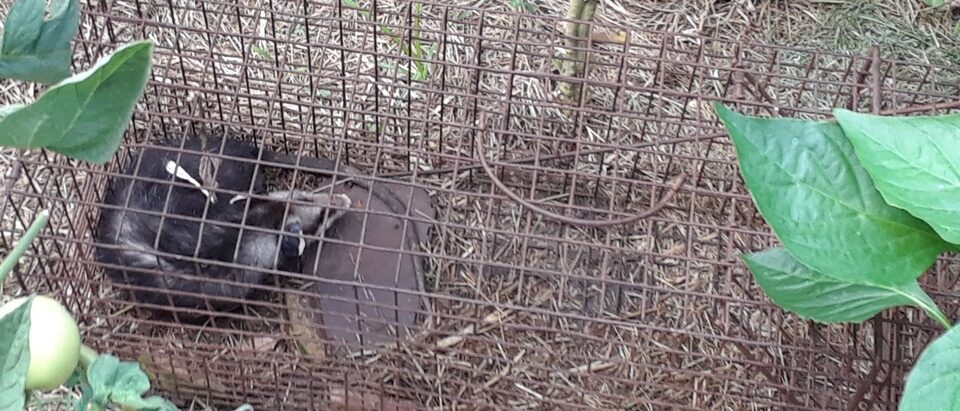

You can usually tell whether you have a possum or rats in the attic just by listening, and by what you find up there. Possums are big and heavy and make a slow thump. Rats are small and quick and make a light scurry. Once you know which one it is, the fix is different, so it is worth getting the ID right before you set traps. If you only have the sound to go on, the attic noise identifier narrows it down in three questions.
Sounds
- Possum: heavy, slow thumping, like a small dog moving around. When cornered it hisses and growls.
- Rat: light, fast scurrying and scratching, with high-pitched squeaks and chirping.
A possum is mostly quiet during the day. Rats are active at night but will move around any time they think it is safe.
Droppings
- Possum droppings are bigger, an inch or more, tubular, and usually dumped in one latrine spot rather than scattered.
- Rat droppings are small, about half an inch, with pointed ends, and they get scattered along runways and edges, not piled up.
Rats also leave a lot more of them, because there are a lot more rats.
Damage
Possums tear up insulation to make a nest and leave a musky smell, but they rarely chew wires or wood. Their teeth are not built for constant gnawing.
Rats chew constantly. They gnaw wires, which is a fire hazard, plus wood, plastic, and anything they can get their teeth on. Between the two, a rat infestation is the one that does the real structural and electrical damage.
Size and how they get in
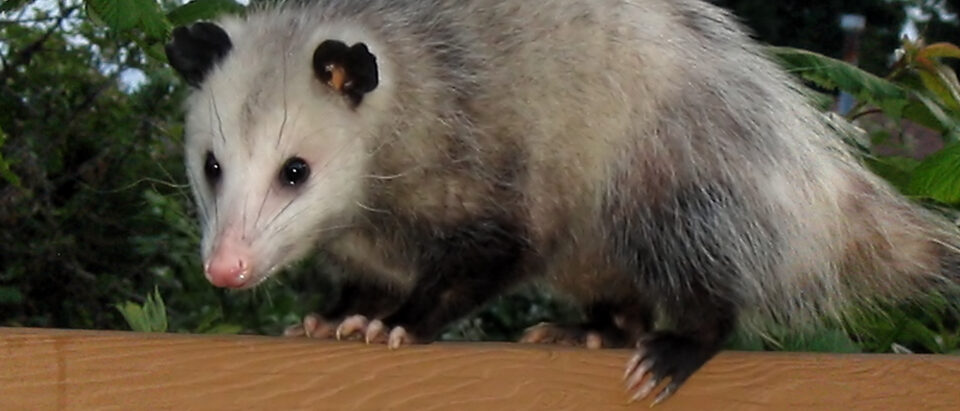
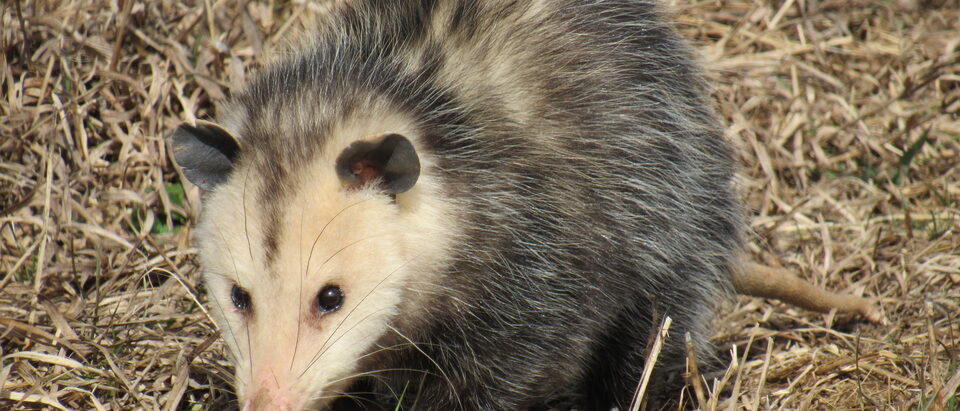
The quickest ID if you actually see the animal: a possum is the size of a house cat, gray with a bare, pinkish tail. A rat is small, with a long scaly tail and a pointed face.
Both climb. A possum can squeeze through an opening a few inches wide, so check the soffits, vents, and gaps in the roofline and seal them with hardware cloth once the animal is out.
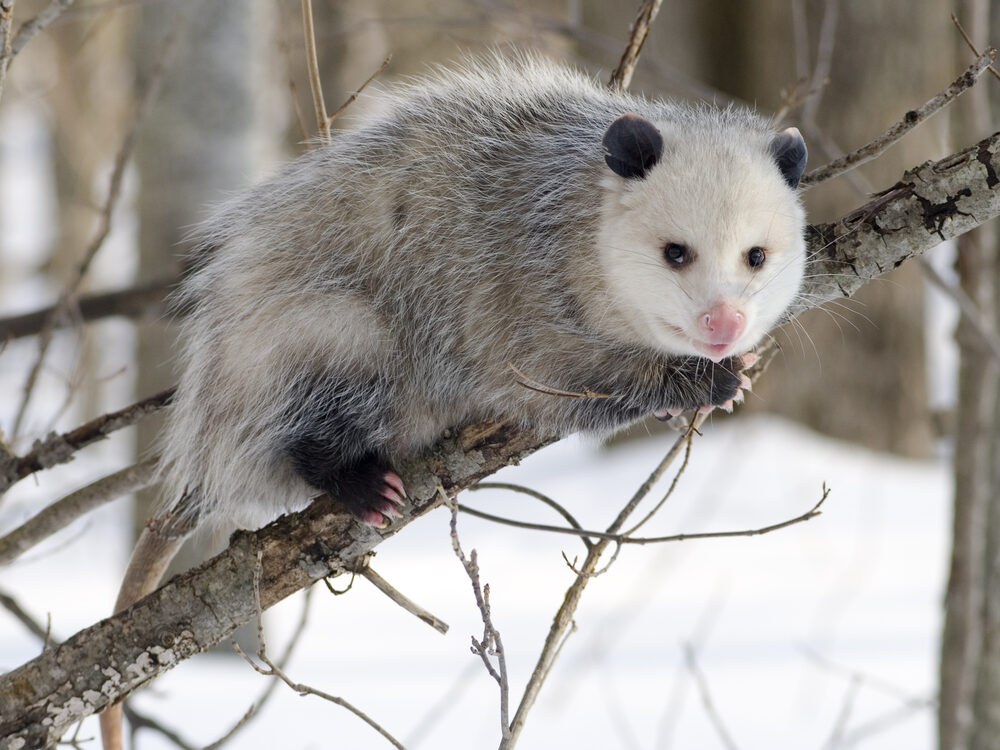
Virginia opossum. Photo: Cody Pope, CC BY-SA 2.5
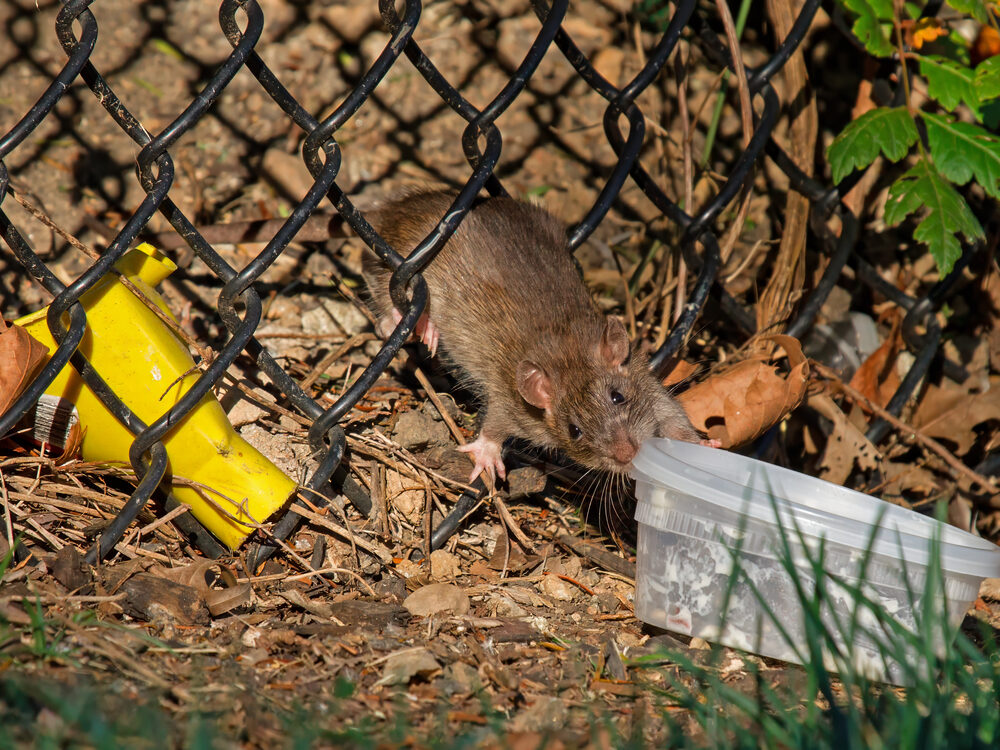
Norway rat. Photo: Chuck Homler, CC BY-SA 4.0
Which is harder to remove
Rats, by a lot. They breed fast, they are cautious around traps, and they squeeze through tiny gaps. A single possum is usually straightforward to trap and relocate. A rat infestation means traps, sealing, and staying on top of it until the colony is gone.
Frequently Asked Questions
They usually avoid each other, but they can end up in different parts of the same attic. If both are there, you have two separate jobs to do.
Rats. They reproduce quickly, are wary of traps, and fit through tiny openings. A single possum is easier to catch and remove.
Yes, they are strong climbers and get in through damaged soffits, vents, and roofline gaps. Seal everything with hardware cloth once they are out.
Rarely. If you find chewed wires, it is more likely rats or squirrels. Possums damage insulation and leave droppings, but they are not the wire-chewing fire hazard that rats are.