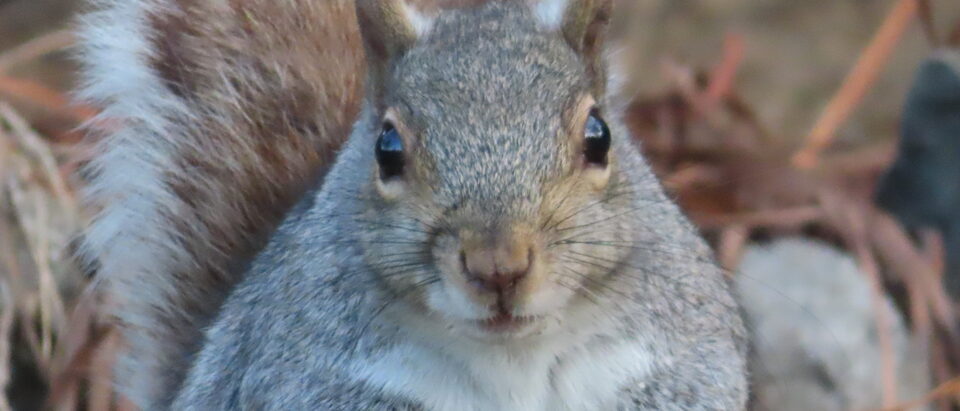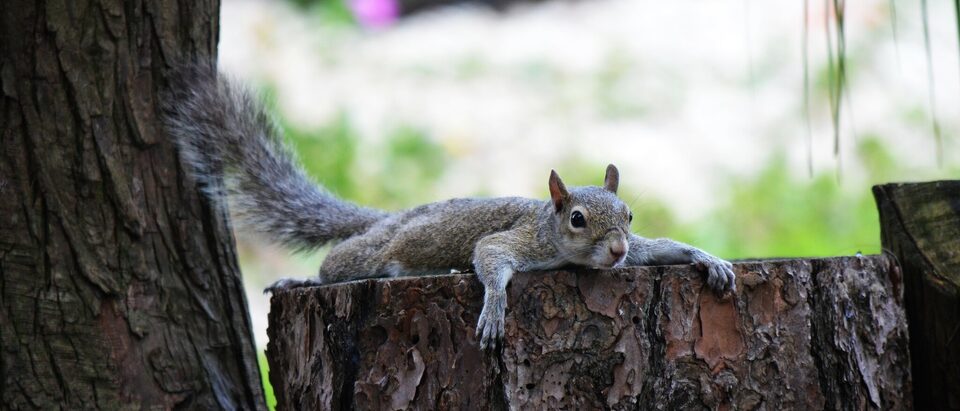

Squirrels want your chicken feed as badly as your hens do, and they are better at getting into things. A gray squirrel will empty a feeder, foul the feed with droppings, and scare your birds off their own food. They will also chew through a plastic feeder or a wooden coop to reach the grain.
The fix is not chasing them. It is making the feeder physically impossible for them to use. Here is what actually works.
Use a Feeder Only a Chicken Can Open
This is the single best answer, and it solves the problem at the source. A treadle or weight-activated feeder opens only when enough weight steps on the platform. A chicken weighs enough to trip it. A squirrel does not.
The trick is the tension. Set the door so it opens just under a chicken’s weight and well above a squirrel’s, then test it by hand before you let the flock near it. Too loose and the squirrels open it anyway. Too tight and your lighter birds go hungry.
Hang the feeder high and away from anything a squirrel can jump from. Squirrels can leap a surprising distance, so keep it clear of trees, fences, and the coop roof.
Treadle Feeders, Specifically
A treadle feeder has a platform the bird steps on, which opens a door over the feed. The weight does the work, and there is nothing for a squirrel to chew or flip open.
If you have bantam or smaller chickens, you will need to tune the spring carefully. A bantam weighs about what a large squirrel does, so you want the trigger light enough for your smallest bird but heavy enough to lock out a squirrel. That is a narrow window, and it takes some testing.
Capsaicin-Treated Feed as a Backup
Birds cannot taste the heat in peppers. Mammals can. So dusting the feed with cayenne or a capsaicin supplement makes it unpleasant for squirrels while your chickens eat it without noticing.
Start light and increase if the squirrels keep coming back. Reapply after rain if you feed outdoors. This is a backup, not a replacement for a treadle feeder, because it relies on the squirrel learning to avoid the food rather than being physically blocked.
Placement and Physical Barriers
- Put feeders in the middle of an open run, away from trees and fences.
- Trim branches that overhang the run so squirrels cannot drop in from above.
- Add metal baffles to any pole supporting a feeder.
- Store the bulk feed in a metal bin with a locking lid, not a plastic bag or a bin a squirrel can chew through.
- Cover the run with hardware cloth if squirrels are getting into the enclosure itself.
Frequently Asked Questions
No. Birds are not sensitive to capsaicin the way mammals are, so your chickens can eat cayenne-treated feed without discomfort. That difference is the whole reason it works as a selective deterrent.
Most galvanized steel feeders hold up fine. Cheap thin aluminum can be dented or worked open by a determined squirrel, so go with a sturdy galvanized feeder and check it now and then.
Start with a light dusting and increase it if the squirrels keep hitting the feeder. There is no exact ratio you have to hit; you are aiming for enough that the squirrel backs off. Commercial capsaicin supplements are more consistent than kitchen cayenne if you want predictable results.
Yes, but you have to tune the tension. Bantams are light, close to a big squirrel in weight, so set the trigger just light enough for your smallest bird and test it before trusting it.
Yes. A bold squirrel will chase smaller hens off the feeder and take it over, and that stress can cut into egg production. That is another reason a treadle feeder beats trying to shoo them away.
The Bottom Line
The real answer is a treadle or weight-activated feeder. It costs more up front, but it ends the problem instead of managing it, and it pays for itself in feed a squirrel is no longer stealing.
Add capsaicin as backup, keep the feeder out of jumping range, and store your feed in metal. Squirrels are persistent, but they cannot open a door that requires a chicken’s weight.