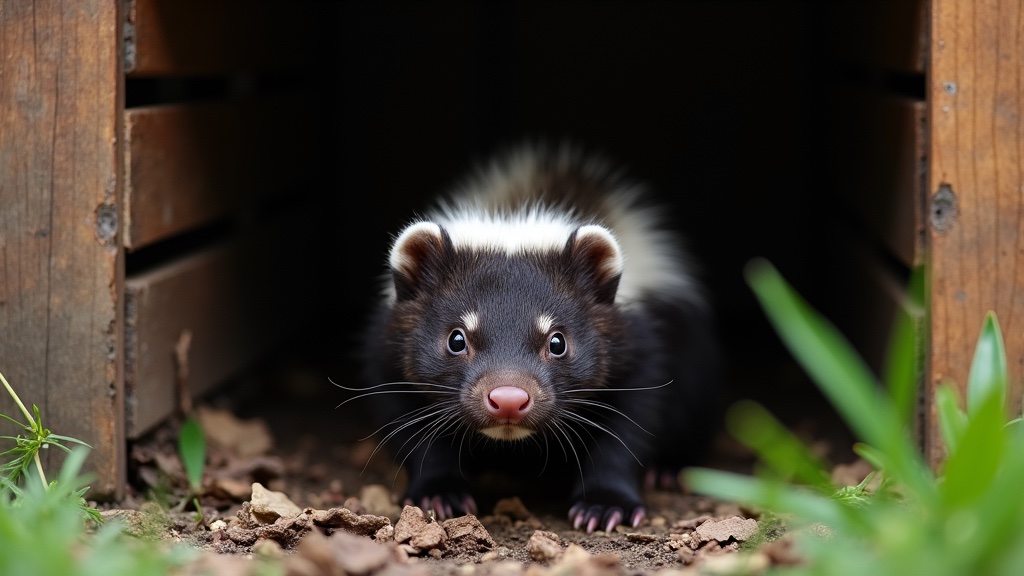
Trapping a skunk requires careful planning, the right equipment, and a strong understanding of skunk behavior to avoid getting sprayed. Skunks (Mephitis mephitis) are not aggressive animals, but they will spray when they feel threatened and a trapped skunk is a frightened skunk. The key to successful skunk trapping is making the animal feel safe enough to enter the trap calmly, then approaching the trap in a way that does not trigger a defensive response. This guide covers trap placement, bait selection, trap covering techniques, and safe handling procedures for do-it-yourself trapping.
Key Takeaways
- Cover the trap completely: A covered trap looks like a dark, safe shelter to a skunk. An uncovered trap looks like a cage, which a skunk will avoid or panic inside.
- Place traps along travel routes: Skunks (Mephitis mephitis) follow predictable routes along fences, foundations, and vegetation edges. Traps placed in their path are far more effective than random placement.
- Use the right bait: Strong-smelling, high-protein baits like canned fish, cat food, and peanut butter work best. Skunks (Mephitis mephitis) are more food-motivated than neophobic.
- Check traps early in the morning: Skunks (Mephitis mephitis) are nocturnal. Checking traps at first light minimizes the time the animal spends trapped and reduces the risk of exposure to heat or predators.
- Know your local laws: Many states require permits for skunk trapping, and relocation is often prohibited without specific authorization. Check with your state wildlife agency first.
Legal Considerations Before Trapping
Before setting a single trap, you must understand the regulations that apply to skunk trapping in your state. Skunks (Mephitis mephitis) are classified differently across jurisdictions. Some states classify them as furbearers with specific trapping seasons and license requirements. Others classify them as nuisance wildlife that can be trapped year-round under a general nuisance permit. A few states prohibit live trapping and relocation of skunks (Mephitis mephitis) entirely due to rabies vector concerns.
Relocation is heavily regulated in most areas because moving a skunk to a new territory stresses the animal and can introduce diseases into new populations. Many states require that trapped skunks (Mephitis mephitis) be euthanized rather than relocated, and some require the use of a licensed wildlife control operator to perform the euthanasia. Euthanasia methods are also regulated, and drowning or other inhumane methods are illegal in every state.
Choosing the Right Trap
The standard live trap for skunks (Mephitis mephitis) is a wire mesh cage trap measuring 10 x 12 x 32 inches or larger. This size gives the skunk enough room to stand, turn around, and lie down without feeling cramped. Smaller traps designed for squirrels or rats will not accommodate a full-grown skunk, which measures 20 to 30 inches from nose to tail tip. The trap must be large enough for the skunk to enter fully before the trigger plate engages.
Look for traps made from 12-gauge or 14-gauge galvanized wire. Thinner wire can be bent or damaged by a struggling skunk. The mesh size should be 1 x 2 inches or smaller to prevent the skunk from reaching its nose or paws through the openings. The trap should have a rear door or a rear release mechanism for safe release. Single-door traps are acceptable, but double-door traps give you more placement flexibility.
The trigger mechanism is critical. Adjust the treadle plate (the floor trigger) to release with 1 to 2 pounds of pressure. Skunks (Mephitis mephitis) are lighter than raccoons, typically weighing 4 to 10 pounds depending on the species and season. If the trigger is too stiff, the skunk may eat the bait without tripping the door. Test the trigger with a small weight before setting the trap.
Trap Placement Strategies
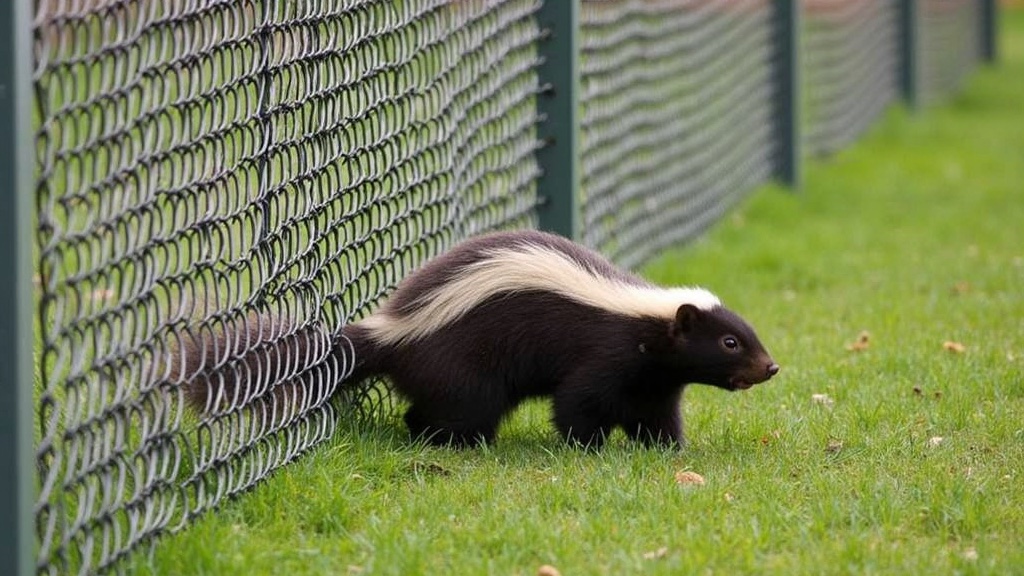
Trap placement is the single most important factor in trapping success. Skunks (Mephitis mephitis) are not random wanderers. They follow established travel routes called runways that follow fence lines, building foundations, dense vegetation edges, and drainage features. Place the trap directly on the runway where the skunk has been seen or where signs of activity are heaviest.
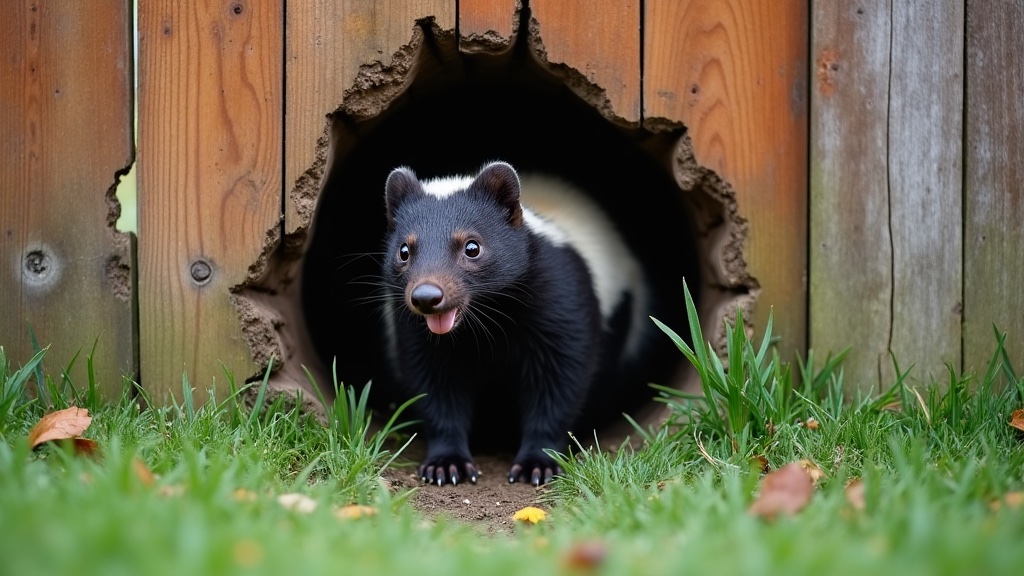
If you know where the skunk is denning, place the trap near the den entrance. Position the trap with the open end facing the approach direction the skunk uses when leaving the den. The trap should sit on level, stable ground so it does not rock or tip when the skunk steps on the treadle. Place the trap 2 to 3 feet from the den entrance, not directly blocking it, to avoid triggering caution.
If you do not know the den location, place traps along likely travel routes. Look for areas where you have seen skunk tracks, digging signs, or droppings. Set multiple traps spaced 50 to 100 feet apart to cover a wider area. Skunks (Mephitis mephitis) have a home range of 0.5 to 2 miles, so you will need enough coverage to intercept their movements.
Pre-baiting improves success rates significantly. Pre-baiting means placing bait near the trap location without setting the trap for 2 to 3 nights. The skunk learns that food appears at that spot and becomes comfortable visiting it. On the third or fourth night, set the trap with the bait placed behind the treadle plate. The skunk will enter without hesitation because it trusts the location.
Baiting Strategies That Work
Skunks (Mephitis mephitis) are primarily insectivorous but are opportunistic omnivores when insects are scarce. The most effective baits are high-protein, strong-smelling foods that skunks (Mephitis mephitis) can detect from a distance. Canned sardines, mackerel, or tuna packed in oil are excellent choices because the fish oil spreads through the air and creates a strong scent trail. Cat food and dog food are also effective, especially wet food varieties.
Peanut butter is a reliable backup bait that works well in warmer weather when fish baits may spoil quickly. Spread a generous tablespoon of peanut butter on a small piece of bread or cracker and place it at the back of the trap behind the treadle plate. Sticky sweet baits like marshmallows, jelly, or honey work but are less effective than protein-based options.
The bait must be placed behind the treadle plate, not on it. If the bait is on the plate, the skunk can eat it without stepping into the trap. If it is placed beyond the plate, the skunk must step fully onto the treadle to reach the bait, which triggers the door closure. Use a small piece of cardboard or a bait cup to hold the bait and prevent it from being pulled through the mesh from outside.
Trap Covering and Camouflage
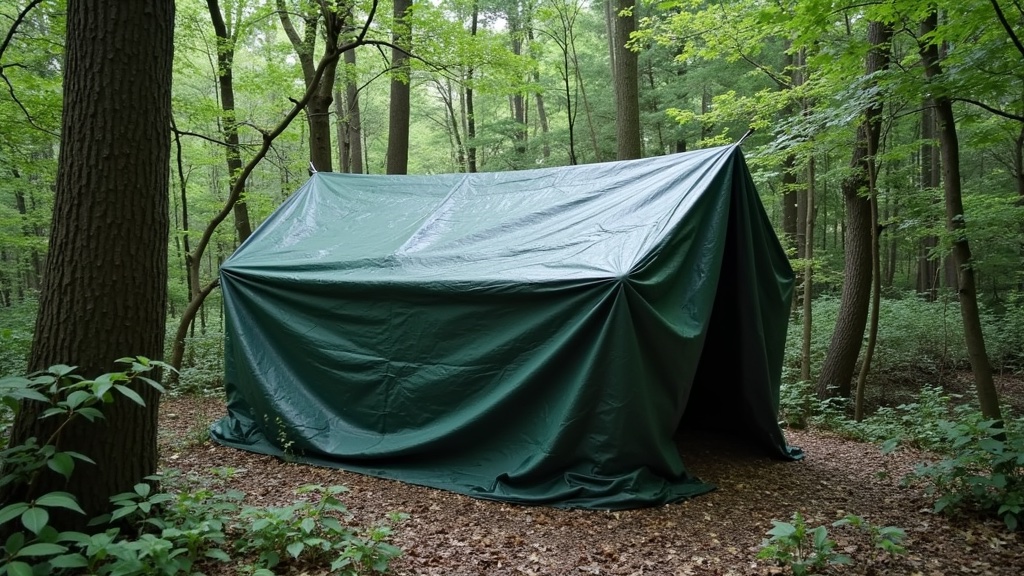
Covering the trap is the most important step for both trapping success and spray prevention. A skunk that sees an uncovered cage will be hesitant to enter because the wire mesh looks like an obstruction. A covered trap appears to be a dark, enclosed shelter, which is exactly what skunks (Mephitis mephitis) naturally seek. A covered skunk is also much calmer once trapped because it feels hidden from predators.
Use a heavy-duty canvas tarp, burlap sack, or dark bedsheet to cover the top, sides, and back of the trap. Leave only the front opening exposed. Secure the cover with zip ties or binder clips so it does not shift in the wind. Do not use plastic sheeting, which does not breathe and can cause the trapped skunk to overheat. The cover should extend past the back of the trap by at least 6 inches to create a dark end chamber.
Camouflage the trap with natural materials from the area. Lay a few branches, leaves, or dried grass over the top of the cover to help it blend into the surroundings. Do not place vegetation inside the trap. The skunk needs a clear path to the bait and any interior obstacles will trigger caution. The goal is to make the trap look like a natural part of the environment.
Safe Approach and Handling
Once a skunk is trapped, how you approach matters enormously. A calm, quiet approach keeps the skunk relaxed and reduces the chance of spraying. Walk slowly and speak in a low, calm voice. Do not make direct eye contact, which can be perceived as a threat. Approach from the front of the trap so the skunk can see you coming. A surprise approach from behind will startle the skunk and trigger a spray response.
If you plan to release the skunk, drape an additional cover over the remaining open front of the trap before moving it. The skunk will be calmer in complete darkness. Lift the trap by the handle at the top, never by the wire mesh sides. Carry the trap with your arms extended away from your body to keep your legs out of spray range. Move slowly and avoid sudden jerks or bumps.
For release, transport the skunk at least 5 to 10 miles from the capture site to a suitable habitat with water, cover, and natural food sources. Set the trap on level ground with the front opening facing away from you. Approach from the back of the trap, use a long stick or string to release the door latch, and step back immediately. The skunk will exit on its own once it feels safe. Do not try to shake or tip the skunk out of the trap.
Handling a Skunk That Has Sprays
Even with the best precautions, skunks (Mephitis mephitis) can and do spray during trapping. If you or your gear is sprayed, do not panic. The classic tomato juice remedy is a myth that does not neutralize the oils. The most effective solution is a mixture of 1 quart of 3 percent hydrogen peroxide, 1/4 cup of baking soda, and 1 teaspoon of liquid dish soap. Mix it fresh and use it immediately. Apply to affected skin or clothing, leave for 5 minutes, and rinse with water.
For clothing and gear, wash with the same peroxide mixture or use a commercial enzymatic skunk odor remover. Wash items separately and do not put them in a dryer until the odor is completely gone, as heat sets the oils into fabric. For trap decontamination, wash the trap with the peroxide mixture and a stiff brush, then rinse thoroughly and let it air dry in the sun.
Frequently Asked Questions
Can I trap a skunk without getting sprayed?
Yes, with proper technique. Covering the trap completely and approaching calmly and slowly are the two most effective spray prevention methods. A covered skunk that feels hidden is far less likely to spray than one exposed in an uncovered trap.
What is the best bait for skunks (Mephitis mephitis) in winter?
Strong-smelling protein baits like canned fish or wet cat food work best in cold weather because the scent disperses well in cold, still air. Peanut butter can become too hard to smell in freezing temperatures. Fish oil-based baits are most effective below 40 degrees.
How long can a skunk stay in a trap?
Skunks (Mephitis mephitis) should not remain in a trap for more than 12 to 24 hours. Check traps at dawn and at dusk during active trapping. Prolonged trapping causes dehydration, stress, and exposure to weather. In hot weather, check traps by mid-morning at the latest.
Do skunks (Mephitis mephitis) spray when they are killed or euthanized?
Yes. The scent glands are reflexively activated by fear and death. If you are trapping with the intention of euthanizing the skunk, this should be done by a licensed professional who has the equipment and training to handle the spray reaction safely.
Will trapping one skunk bring more to the area?
Trapping does not attract new skunks (Mephitis mephitis) to the area. However, if the underlying attractants (food, shelter, water) remain in place, other skunks (Mephitis mephitis) will eventually find the site. Always combine trapping with exclusion and attractant removal to prevent re-infestation.
Why Trust Us
WildAnimalsCentral has been a trusted source for wildlife trapping and removal guidance since 2015. Our trapping recommendations follow the standards set by the National Wildlife Control Operators Association (NWCOA) and the Association of Fish and Wildlife Agencies. We consult with licensed trappers and state wildlife biologists to ensure our methods are both effective and humane.
Every trapping guide on this site is reviewed annually and updated to reflect changes in state regulations, trap technology, and best practices in humane wildlife management. This guide was verified and updated in 2026.