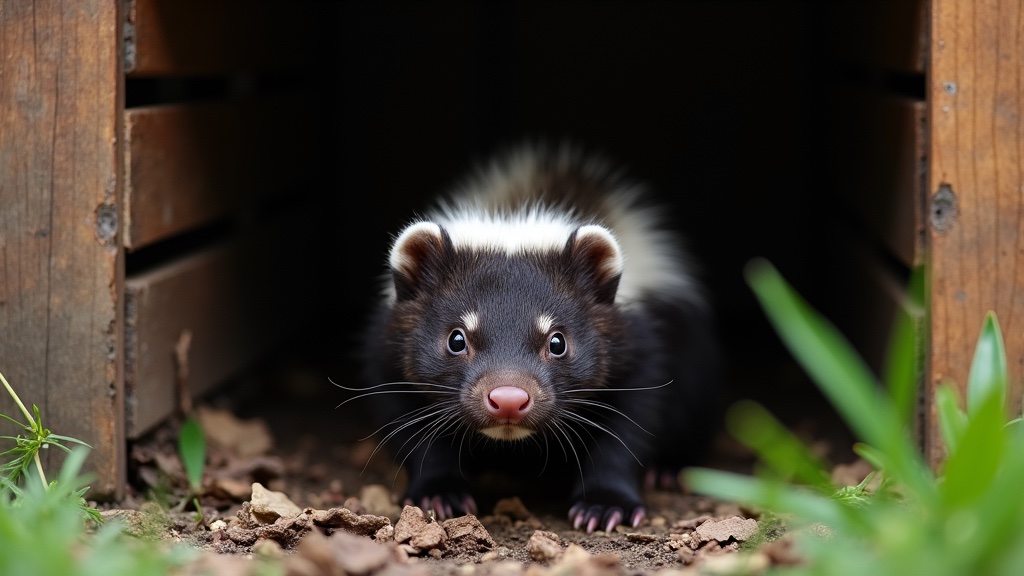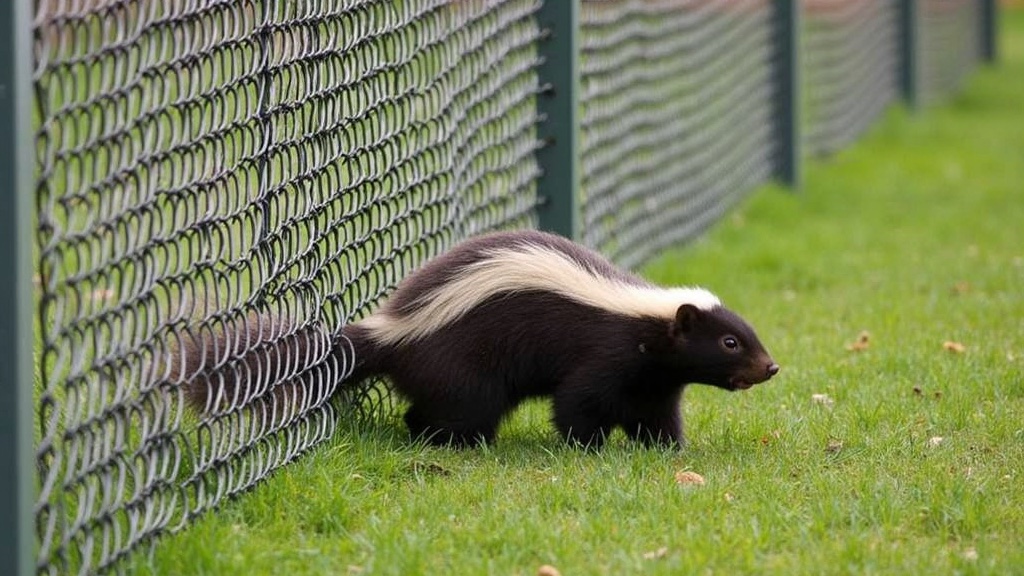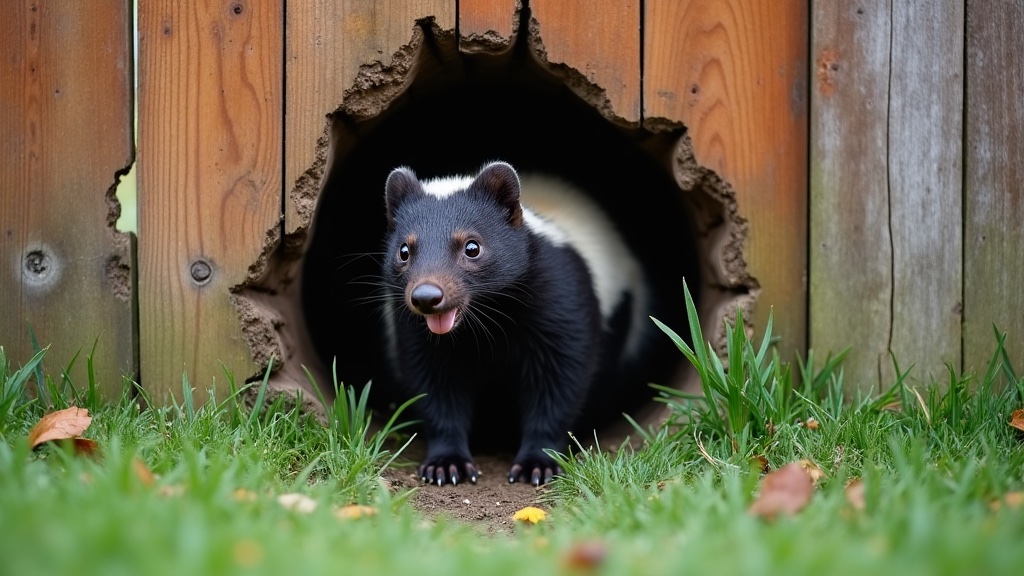
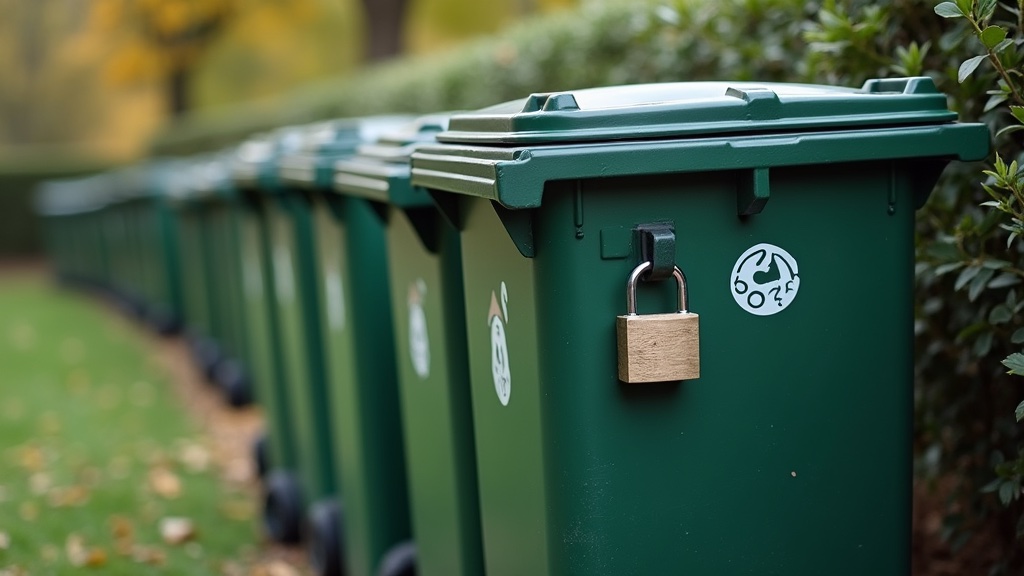
Skunks are opportunistic feeders that will raid garbage cans, compost bins, and pet food bowls whenever they find them accessible. A single unsecured garbage can on trash night can attract skunks from several blocks away and teach them to associate your property with an easy meal. Once that association is formed, the skunk will return night after night and may decide to stay. This guide covers the best bin types, locking mechanisms, storage strategies, and landscaping tips to make your garbage and compost truly skunk-proof.
Key Takeaways
- Lids must lock: Skunks can lift loose lids, push them off, or tip bins over. Only latching or locking lids are effective.
- Bin material matters: Thick, heavy-duty plastic or galvanized steel resists chewing and tipping. Thin residential bins are not adequate.
- Compost requires care: Open or tumbling composters are easily accessed. Enclosed bins with locking lids are the only secure option.
- Storage location: Keep bins in a garage, shed, or inside a fenced enclosure until pickup morning. Never store bins at the curb overnight.
- Habitats matter: Remove fallen fruit, bird feeder spills, and pet food to eliminate secondary attractants alongside securing bins.
Why Skunks Target Garbage and Compost
Striped skunks (Mephitis mephitis) are omnivores with a diet that shifts with seasonal availability. In urban and suburban environments, human-provided food sources can make up a significant portion of their diet, especially during dry summers when natural grubs and insects are harder to find. Garbage and compost offer high-calorie, easy-to-access meals with very little effort required.
Skunks locate food primarily through their sense of smell. Protein-rich food waste like meat scraps, eggshells, cheese, and pet food produce strong odors that skunks can detect from over 100 yards away. Once a skunk finds a reliable food source, it will return repeatedly and may establish a nearby den to minimize travel distance between shelter and food.
The problem compounds over time. A skunk that finds food in your garbage will bring others from its social group. If the source remains accessible for multiple nights, the skunks lose their natural wariness of the area and become bolder. This is why preventing the first successful raid is far easier than breaking an established feeding pattern.
Choosing the Right Garbage Bin
Standard residential garbage bins with flip-up lids are not sufficient for skunk control. Skunks can easily push these lids open with their snouts or climb onto the bin and use their body weight to force the lid open. The minimum requirement for skunk-proof garbage storage is a bin with a latching lid that engages automatically when closed.
Heavy-duty plastic bins with built-in latching handles are a good starting point. Look for bins made from high-density polyethylene (HDPE) with a thickness of at least 3/16 inch. The lid should have a positive latch that clicks into place, not a friction fit. Many municipal carts already have this design. If your bin has wheels, confirm that the latch engages when the bin is tilted as well as when it is upright.
Galvanized steel bins are the most durable option for high-skunk-activity areas. Steel resists chewing, scratching, and tipping better than any plastic bin. Look for a galvanized garbage can with a tight-fitting lid and a locking ring or clamp mechanism. The 20-gallon and 32-gallon sizes are manageable for most households while being too heavy for a skunk to tip over.
For bins without integrated locks, use a heavy-duty bungee cord with steel wire hooks. Hook one end to the handle on one side, stretch it over the lid, and hook the other end to the opposite handle. Use two bungee cords crossed over the lid for extra security. Replace bungee cords every 6 months as the rubber degrades in sunlight.
Locking Mechanisms and Hardware
The locking mechanism is the most important feature of any skunk-proof bin. Skunks are persistent and will test every edge of the lid to find a weak spot. A lid that feels tight when placed from above may still lift 1/4 inch at the front edge when pushed from below, which is enough for a skunk to get its nose under and pry it open.
There are several types of locking hardware to consider. Cam-action latches rotate and lock the lid to the body with a quarter-turn. These are common on commercial-grade bins and provide the most secure seal. Toggle latches pull the lid down tight against a rubber gasket. They work well on rectangular bins and totes. Padlock hasps are the most heavy-duty option but add time to opening and closing, which can reduce compliance on busy mornings.
For compost bins, the locking mechanism must also keep the lid sealed against flies and odors. A rubber gasket around the lid edge combined with a clamp-down latch gives the best results. The gasket prevents odors from escaping and reduces the olfactory signal that attracts skunks in the first place. Replace the gasket if it becomes cracked or compressed.
Skunk-Proof Compost Bins
Composting is one of the strongest skunk attractants in a typical yard, especially if the compost contains food scraps rather than just yard waste. Open compost piles are a buffet for skunks, who will dig through them nightly for vegetable scraps, eggshells, and fruit. An unenclosed pile will attract skunks from a wide area and keep them coming back.
The best skunk-proof compost bins are enclosed, tumbler-style units with locking lids. These bins sit on a frame above the ground and rotate on an axle for aeration. Because they are elevated, skunks cannot dig under or into them. The locking mechanism on a quality tumbler is usually a twist-lock or pin-lock that secures the access door. Keep the door fully engaged at all times except when adding material or harvesting compost.
Stationary compost bins require more attention. Look for models with a tight-fitting lid and a latch that holds the lid flush against the bin body. Avoid bins with a removable top that simply sits on the container. These are the easiest for skunks to dislodge. The walls of the bin should be at least 1/2 inch thick plastic or metal. Some heavy-duty tumbling composters use a 55-gallon drum design with metal locking rings that are virtually skunk-proof.
A worm composting bin (vermicomposting) is generally safe because it uses a sealed container with small air holes that skunks cannot access. However, the container should still be stored in a garage or shed during the night if possible. Worms and their bedding produce odors that mammals can detect even through small vent holes.
Storage Location and Scheduling Tips
Where you store your bins is just as important as the bins themselves. The safest location is inside a locked garage or shed. Even a lidded bin is not completely skunk-proof if it sits in an open yard where a motivated skunk can spend the whole night working on it. Garage-stored bins should be placed on a concrete floor with no gaps under the garage door large enough for a skunk to enter.
If you cannot store bins indoors, create a bin enclosure. Use 2×4 lumber and 1/2 inch hardware cloth to build a simple cage with a locked gate. The cage should have a roof to prevent climbing entry. Secure the cage frame to a concrete slab or buried posts so it cannot be tipped. Commercial bin enclosures are also available from many local hardware stores and online retailers.
Put bins out on collection morning rather than the night before. Even with locking lids, the odor inside the bin is strongest after several days of accumulation. Putting the bin out the night before gives skunks hours of darkness to attempt entry. If collection is early and you must put bins out the night before, double-check that all lid latches are fully engaged and that the bin is not near any vegetation that could provide cover.
Secondary Attractant Management
Skunks are not exclusively attracted to bins. Fallen fruit from trees, spilled birdseed from feeders, and pet food left outdoors are equally effective attractants. Remove fallen fruit from the ground daily during the fruiting season. Place bird feeders over a tray to catch spilled seed and clean the area weekly. Do not leave pet food bowls outside overnight, even in a screened porch.
Grub infestations in the lawn are another powerful attractant. Skunks dig cone-shaped holes in lawns to reach white grubs and beetle larvae. Treat your lawn with beneficial nematodes or milky spore powder to reduce the grub population naturally. This eliminates a major food source that draws skunks into your yard in the first place, reducing their motivation to test your bins.
Frequently Asked Questions
Will a bungee cord keep skunks out of my trash can?
A heavy-duty bungee cord with steel wire hooks is effective when used properly. Use two cords crossed in an X pattern for the best security. Replace bungee cords every 6 to 12 months because the rubber loses elasticity and becomes brittle in sunlight.
Can skunks chew through plastic garbage bins?
Skunks do not typically chew through plastic the way rats or squirrels do, but they can scratch and wear down thin plastic over time. Thick HDPE bins (3/16 inch or more) are resistant to skunk damage. Galvanized steel is completely chew-proof.
Is a compost tumbler really skunk-proof?
A properly designed compost tumbler with a locking door and elevated frame is one of the most secure storage options. The elevation prevents skunks from standing on the lid, and the locking mechanism prevents prying. Always verify the latch is fully engaged after each use.
How far from the house should I store garbage bins?
Store bins as far from the house as practical, ideally at least 100 feet from any entry points. If that is not possible, store them in a locked garage or enclosed cage. Bins near the foundation directly encourage skunks to investigate the area for den sites.
Do odor-proof garbage bags help?
Odor-proof bags reduce scent emissions but are not a substitute for a locking bin. Skunks can still detect odors through standard bags and will be attracted to the bin itself. Use odor-proof bags as an additional layer of protection within a locking bin.
Why Trust Us
WildAnimalsCentral evaluates wildlife control products and methods based on practical field testing and consultation with licensed pest control professionals. Our recommendations for bin types and locking mechanisms are informed by the Wildlife Control Equipment Standards published by the National Wildlife Control Operators Association (NWCOA) and the National Pest Management Association (NPMA).
We update this guide annually to reflect new product designs, changes in municipal waste management standards, and feedback from our network of wildlife control professionals. The information in this article was verified and updated in 2026.