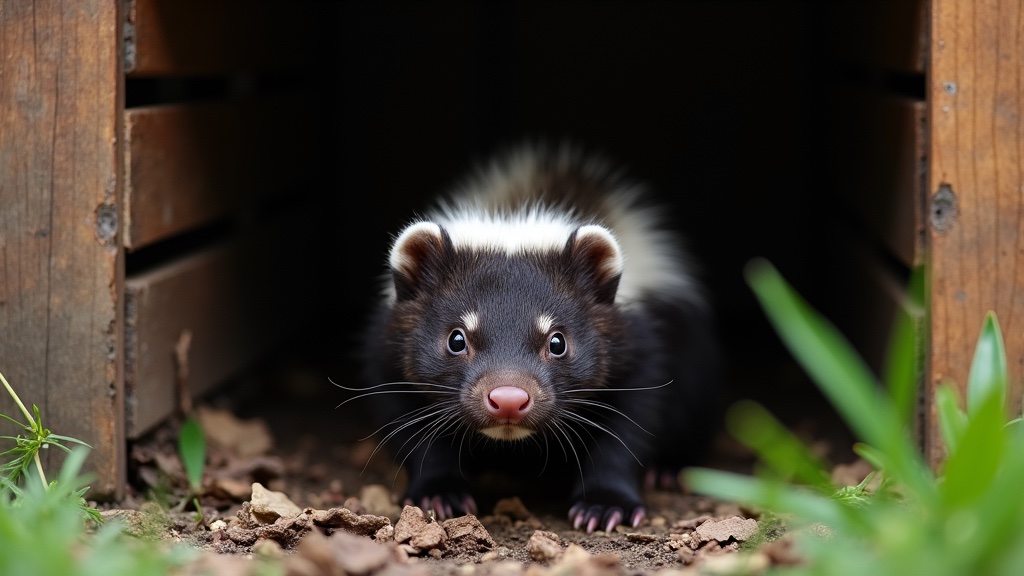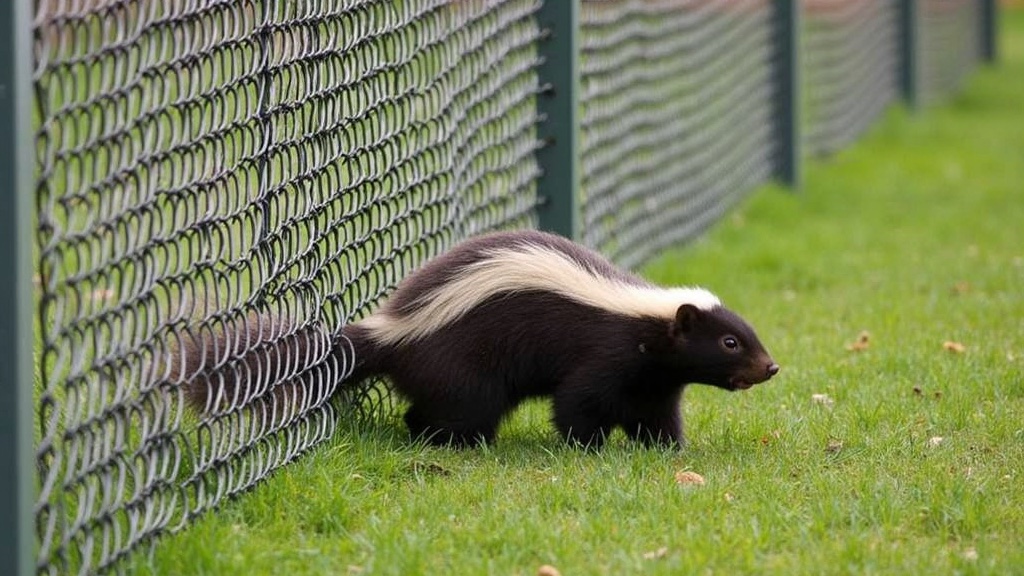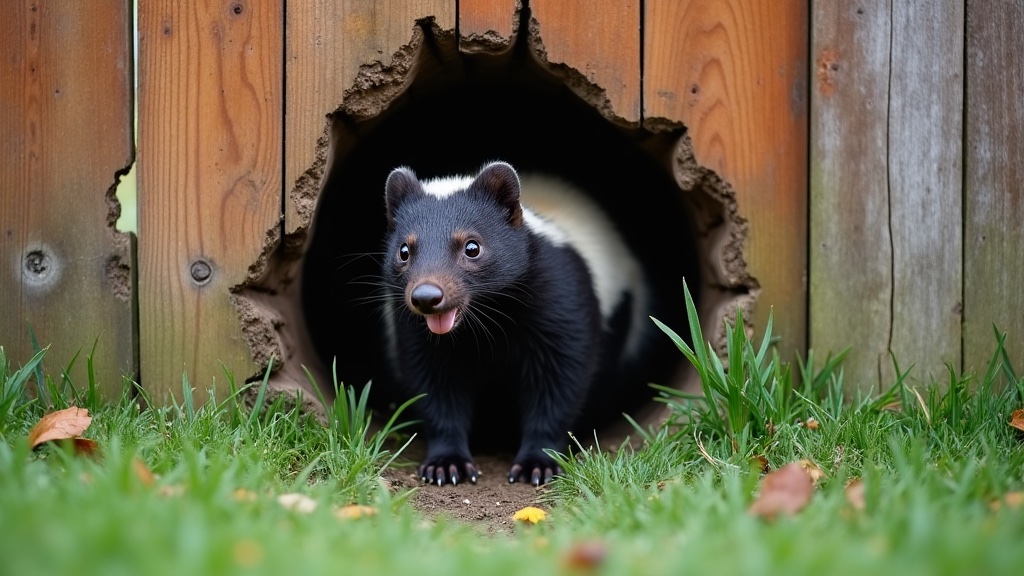
Certain plants can help deter skunks (Mephitis mephitis) from your yard by leveraging their strong sense of smell and their preference for clear, open spaces. Skunks (Mephitis mephitis) rely heavily on their olfactory system to find food and detect threats. When the ground is planted with strongly scented species that skunks (Mephitis mephitis) find unpleasant, they are more likely to move on to an area with fewer irritating odors. This guide covers the most effective skunk-repellent plants, how to use them in your landscape, and what you can realistically expect from a plant-based deterrence strategy.
Key Takeaways
- Smell is the primary deterrent: Skunks (Mephitis mephitis) avoid strong, pungent scents. Plants with overwhelming volatile oils and sulfur compounds are most effective.
- Plant as a barrier, not a cure: Repellent plants work best when they are part of a larger exclusion plan, not as a standalone solution.
- Dense ground cover can backfire: Low-growing dense plantings provide skunks (Mephitis mephitis) with hiding cover and shelter. Use plants strategically in borders, not as a solid mat.
- Reapply scented deterrents: Fresh plant oils fade over time. Crush leaves periodically to release new volatile compounds, or use companion planting techniques.
- Combine with exclusion: Seal known entry points and remove food sources first, then use repellent plants as a secondary barrier to reinforce the area.
How Skunk Repellent Plants Work
Skunks (Mephitis mephitis) have an exceptionally keen sense of smell, which they use to locate food, detect predators, and mark territory. Plants that produce strong volatile oils, sulfur-based compounds, or highly aromatic essential oils can overwhelm the skunk’s olfactory receptors and make the area feel unsafe or unpleasant. This is not a learned avoidance behavior; it is an instinctive reaction to an irritating stimulus.
The mechanism is similar to how capsaicin activates the TRPV1 receptor in mammals. Many aromatic plants contain compounds that bind to olfactory receptors linked to pain or irritation pathways. Skunks (Mephitis mephitis) encountering these smells will typically avoid the area rather than habituating to the scent over time, making these plants more persistent than chili-based repellents which wash away with rain.
It is important to understand that repellent plants are not a guaranteed solution. Heavy rain, wind, and temperature extremes can reduce the volatility of the plant oils. The effectiveness also depends on how many alternative food sources and den sites are available nearby. In areas with high skunk pressure, plant-based repellents need reinforcement with physical barriers and attractant removal.
Top Plants That Repel Skunks (Mephitis mephitis)
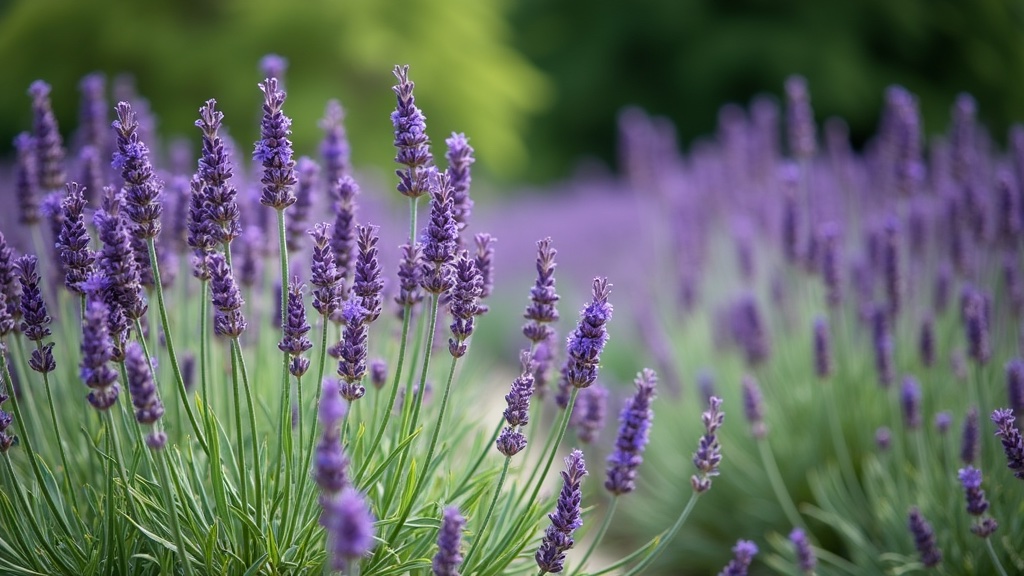
Lavender (Lavandula angustifolia)
Lavender produces a strong, sweet fragrance that humans find pleasant but many mammals find overwhelming. The essential oil linalool is the primary active compound. Skunks (Mephitis mephitis) tend to avoid areas with dense lavender plantings. Lavender thrives in full sun with well-drained soil. Plant it in borders along fence lines, near deck edges, and around the foundation perimeter where skunks (Mephitis mephitis) are most likely to enter.
Lavender is a perennial in most climates (USDA zones 5 through 9). It stays low to the ground, about 1 to 3 feet tall at maturity, making it suitable for ground-level barriers. Crush a few leaves and stems weekly during the growing season to release fresh oils into the air.
Marigolds (Tagetes spp.)
Marigolds are among the most effective natural pest repellents for a wide range of wildlife, including skunks (Mephitis mephitis). The strong, pungent odor comes from thiophenes, sulfur-containing compounds that most mammals find unpleasant. Marigolds also contain pyrethrin-like compounds that deter insects and grubs, which are a primary food source for skunks (Mephitis mephitis). Reducing the grub population in your lawn makes the area less attractive for foraging.
French marigolds (Tagetes patula) and African marigolds (Tagetes erecta) are both effective. Plant them in dense borders around the garden perimeter, along the foundation, and near known entry points. Marigolds are annuals in most climates, so replant each spring. They bloom continuously from late spring through the first frost.
Daffodils (Narcissus spp.)
Daffodils contain lycorine and other alkaloid compounds in their bulbs, leaves, and stems that are toxic to many mammals and emit an odor that skunks (Mephitis mephitis) avoid. Because the entire plant is unpalatable, skunks (Mephitis mephitis) learn quickly to avoid areas where daffodils are planted. This is a good perimeter plant for the spring season when skunks (Mephitis mephitis) are most active establishing new dens.
Daffodils are spring-blooming perennials that naturalize well. Plant the bulbs 4 to 6 inches deep in clusters along fence lines, around the edges of sheds, and along the foundation. The foliage stays green into early summer, providing extended deterrence after the flowers have faded. Do not plant near areas where dogs or cats might dig up the bulbs.
Alliums (Ornamental Onions)
All ornamental alliums, including chives (Allium schoenoprasum), garlic chives (Allium tuberosum), and giant alliums (Allium giganteum), produce sulfur compounds similar to those found in garlic and onions. These volatile compounds are deeply unpleasant to skunks (Mephitis mephitis) and many other mammals. Alliums are perennials that spread readily and require very little maintenance.
Plant allium bulbs or starter plants along the foundation line, driveway edges, and around deck posts. The tall flower stalks of giant alliums (up to 4 feet) create a visual barrier as well as an olfactory one. Chives work well as a low-growing border plant that can be harvested for cooking while serving double duty as a skunk deterrent.
Rosemary (Salvia rosmarinus)
Rosemary produces camphor, cineole, and other volatile terpenes that give it a strong, pine-like scent. These compounds are highly volatile and persist well in warm weather. Rosemary is a woody perennial that grows into a dense shrub up to 4 feet tall in warm climates. Plant rosemary as a hedge along fence lines or along the perimeter of a deck to create a fragrant barrier.
Rosemary grows best in full sun with excellent drainage. It is drought-tolerant once established and thrives in USDA zones 7 through 10. In colder zones, grow rosemary in containers and move them indoors or into a greenhouse during winter. The fragrant oils are released whenever the leaves are brushed or crushed.
Mint (Mentha spp.)
Peppermint (Mentha x piperita) and spearmint (Mentha spicata) produce high concentrations of menthol and other volatile compounds that are irritating to many animals including skunks (Mephitis mephitis). The strong cooling sensation from menthol triggers thermoreceptor pathways in the nasal passages, creating an unpleasant sensation that skunks (Mephitis mephitis) avoid. Mint is an aggressive spreader and should be planted in containers or in areas where it can be contained.
Planting Strategies for Maximum Effectiveness
A scattered approach will not produce good results. To make a noticeable difference, you must plant repellent species in concentrated bands along the most likely travel routes and entry points. A single lavender plant near your back door is not going to alter a skunk’s behavior. A 3-foot-wide border of alternating marigolds and alliums along the entire foundation line will create a real olfactory barrier.
Use a layered strategy with three tiers. The first tier is the innermost layer directly against the foundation or structure. This should be low-growing, dense plants like chives or lavender that release scent at ground level where the skunk’s nose is. The second tier is a medium-height barrier of marigolds or rosemary about 2 to 3 feet from the foundation. The third tier is the outer perimeter with taller alliums or daffodils that create both a visual and scent barrier at the property line.
Replenish the volatile oils regularly. Even hardy perennials lose potency as their surface oils oxidize or get washed away by rain. Brush or crush leaves every 7 to 10 days during the active skunk season (spring through fall). After heavy rain, check the plants and crush a few leaves to release fresh scent compounds.
Limitations of Plant-Based Skunk Deterrence
Repellent plants are a supplementary strategy, not a primary solution. If a skunk has already established a den under your porch, planting marigolds around the perimeter will not make it leave. The skunk is already habituated to the immediate area and the den provides shelter, security, and proximity to food. Eviction must happen first through one-way doors or harassment techniques, then plants can help prevent re-entry.
Plant effectiveness varies by season. During winter dormancy, most herbaceous perennials and annuals die back or go dormant, eliminating their scent output. Skunks (Mephitis mephitis) are less active in winter but will still use established dens. Winter deterrence requires additional methods like predator urine granules, ammonia-soaked rags, or motion-activated lights. Replant fresh marigolds and annual herbs each spring to restore the barrier.
Dense ground cover can actually attract skunks (Mephitis mephitis) if it is low and provides hiding cover. Avoid thick creeping plants like English ivy, pachysandra, or spreading juniper near the foundation. These create dark, covered runways that skunks (Mephitis mephitis) use to move without being seen. Stick with upright-growing repellent plants that provide clear sight lines and release scent into the air rather than trapping it at ground level.
Frequently Asked Questions
Do skunk repellent plants really work?
They work as a deterrent, not a cure. Plant barriers reduce the likelihood of skunks (Mephitis mephitis) entering a specific area, but they will not force a skunk out of an existing den. The best results come from combining plants with exclusion techniques and food source removal.
How close to the house should I plant repellent species?
Plant the first row within 6 to 12 inches of the foundation wall for a continuous scent barrier. Leave a small gap for airflow and to prevent moisture damage to the siding. The goal is to create a zone the skunk must cross to reach the structure.
What is the best plant for small yards?
Chives and lavender are excellent choices for small spaces because they grow vertically rather than spreading outward. They provide strong scent release without taking up much ground area. Marigolds also work well in tight borders.
Do I need to remove plants during winter?
Perennial plants like lavender, rosemary, and alliums do not need removal. They go dormant but the root systems remain and will produce foliage again in spring. Annuals like marigolds will die with frost and should be removed to prevent pest issues.
Will repellent plants keep away other wildlife too?
Yes. The same plants that deter skunks (Mephitis mephitis) also tend to repel raccoons, deer, rabbits, groundhogs, and many insect pests. Alliums and marigolds are especially broad-spectrum in their deterrent effects, making them a good investment for overall wildlife management.
Why Trust Us
WildAnimalsCentral researches and tests wildlife control methods using real-world conditions and peer-reviewed botanical data. Our plant recommendations are based on published research on plant volatile compounds and their effects on mammalian olfactory systems. We consult with master gardeners and wildlife biologists to ensure that our plant suggestions are appropriate for each climate zone and growing condition.
This article was written in 2026 and reflects the most current understanding of integrated wildlife management strategies. We do not recommend products we have not personally evaluated or techniques we have not verified through practical application.