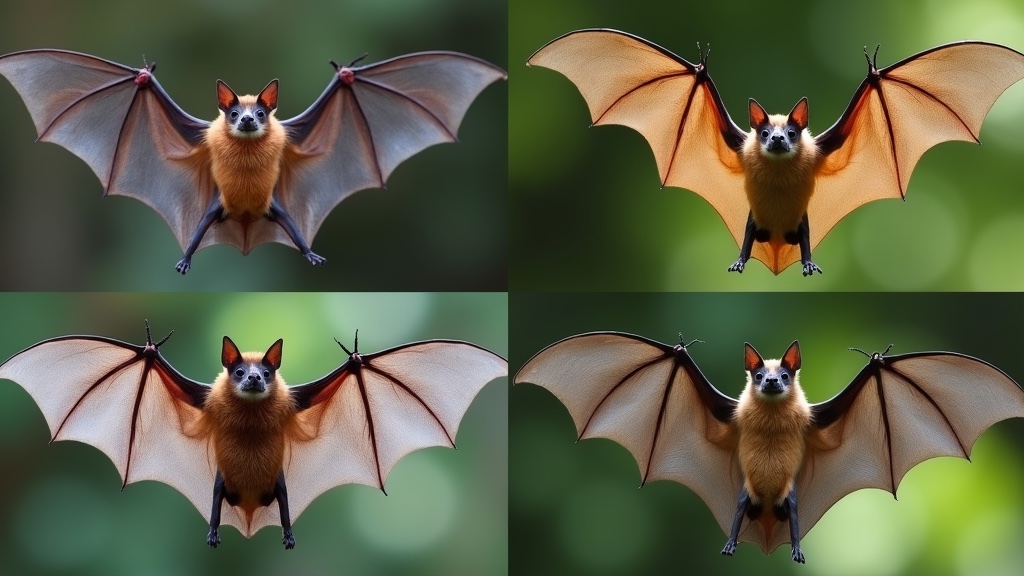
North America is home to over 45 bat species, but only a handful regularly roost in homes. Identifying which bat species has taken up residence in your attic is important for legal compliance, choosing the right exclusion method, and understanding their behavior.
Some species are protected under the Endangered Species Act, while others have specific maternity season restrictions. This guide covers the most common North American bat species found in homes and how to identify them.
Key Takeaways
- Most common home invaders: Big brown bat (Eptesicus fuscus) and little brown bat (Myotis lucifugus) account for 90% of attic infestations.
- Identification by size: Big brown bats are 4-5 inches long with 12-13 inch wingspan. Little brown bats are 3-4 inches with 8-10 inch wingspan.
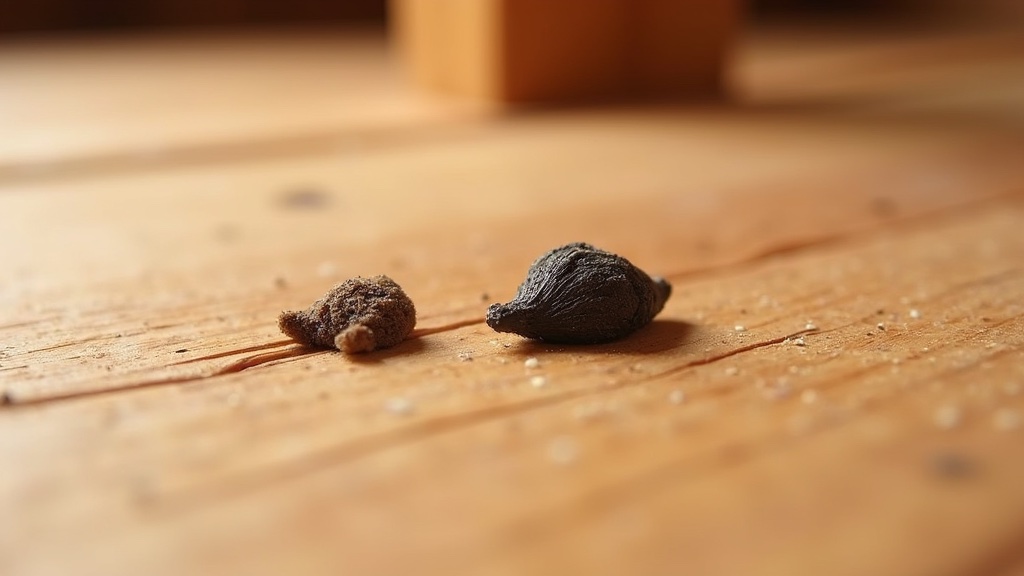
- Identification by droppings: Bat guano size and shape varies by species. Big brown bat droppings are larger (⅓ inch) and more segmented.
- Legal significance: Identifying the species determines legal restrictions. Endangered species require special permits.
- Consult a professional: If you cannot identify the species from visual cues, a wildlife exclusion professional can identify bats from photos or droppings.
Big Brown Bat (Eptesicus fuscus)
The big brown bat is the most common bat species found in North American homes. It is a medium-to-large bat with a body length of 4 to 5 inches and a wingspan of 12 to 13 inches. Its fur is uniformly brown to dark brown with a lighter belly. The wings, ears, and face are dark brown to black.
Big brown bats are highly adaptable and roost in attics, barns, churches, and bridges. They are found across the entire continental United States and southern Canada. They are the species most likely to roost in attics year after year.
Big brown bats are not currently listed as endangered, but they are protected as non-game wildlife in most states.
Little Brown Bat (Myotis lucifugus)
The little brown bat was once the most common bat species in North America, but its population has declined by over 90% due to white-nose syndrome. It is a small bat with a body length of 3 to 3.7 inches and a wingspan of 8 to 10 inches. Its fur is glossy brown to dark brown with a lighter belly.
The muzzle is dark and the ears are relatively short with a rounded tragus.
Little brown bats prefer to roost in attics, barns, and bat houses, but they also use caves and mines for hibernation. They are currently under review for federal ESA listing.
If you suspect little brown bats are roosting in your attic, consult a professional before performing exclusion to ensure compliance with conservation regulations.
Mexican Free-Tailed Bat (Tadarida brasiliensis)
The Mexican free-tailed bat is a medium-sized bat with a distinctive tail that extends well beyond the tail membrane (the “free tail” gives it its name). Body length is 3.5 to 4.5 inches with a wingspan of 11 to 13 inches. Fur is dark brown to gray-brown.
The ears are large, round, and forward-pointing.
Mexican free-tailed bats are found in the southern United States, particularly Texas, Arizona, New Mexico, and California. They form enormous colonies in caves (Bracken Cave has 20 million), but they also roost in buildings.
They are known for their high-speed flight (up to 100 mph) and long-distance migration to Mexico.
Tricolored Bat (Perimyotis subflavus)
Formerly known as the eastern pipistrelle, the tricolored bat is one of the smallest North American bats. Body length is only 2.9 to 3.4 inches with a wingspan of 8 to 9 inches.
Its fur is distinctive , each hair has three color bands (dark base, yellow middle, dark tip), giving the bat a tricolored appearance. The face is pinkish.
Tricolored bats have been devastated by white-nose syndrome, with over 90% population decline. They are proposed for federal ESA listing. Tricolored bats rarely roost in attics , they prefer caves and mines for hibernation and trees for summer roosting.
If found in a building, it is likely a small, transient roost.
How to Identify Bat Species From Droppings
Bat guano size and shape can help identify the species , though it is less reliable than visual identification. Here is a rough guide:
| Species | Guano Length | Shape | Typical Pile Size |
|---|---|---|---|
| Big brown bat | ⅓ inch (8-10 mm) | Thick, segmented, rounded ends | Large piles under roost |
| Little brown bat | ¼ inch (6-8 mm) | Slender, segmented, pointed ends | Moderate piles |
| Mexican free-tailed bat | ¼-⅓ inch | Variable, less segmented | Large piles (big colonies) |
| Tricolored bat | ⅛ inch (3-4 mm) | Very small, thin, barely segmented | Small scattered piles |
Pro Tip
The most reliable way to identify bat species is to photograph the bats at dusk as they emerge. Take clear photos of their size, ear shape, fur color, and tail membrane. Wildlife biologists and exclusion professionals can identify species from good photos.
For more on droppings, see our bat guano vs mouse droppings guide.
Bats Protected Under the Endangered Species Act
These bat species are federally protected. If you suspect any of these are in your attic, stop work immediately and contact the US Fish and Wildlife Service:
- Indiana bat (Myotis sodalis) , Endangered. Found in eastern and midwestern US. Hibernates in caves.
- Northern long-eared bat (Myotis septentrionalis) , Threatened. WNS-affected. Found in eastern US.
- Gray bat (Myotis grisescens) , Endangered. Found in southeastern limestone cave regions.
- Florida bonneted bat (Eumops floridanus) , Endangered. Found only in southern Florida.
- Lesser long-nosed bat (Leptonycteris yerbabuenae) , Endangered. Found in Arizona, New Mexico, Texas.
- Tricolored bat (Perimyotis subflavus) , Proposed for ESA listing.
For more information on legal protections, see our Are Bats Protected? Legal Guide.
Frequently Asked Questions
How can I tell if I have big brown bats or little brown bats?
Size is the key difference. Big brown bats are 4-5 inches long with a 12-13 inch wingspan. Little brown bats are 3-3.7 inches with an 8-10 inch wingspan. Big brown bat guano is thicker and more segmented.
Are there any endangered bats in my attic?
It is unlikely but possible. If you live in the range of an ESA-listed species and have a large bat colony, consult a professional. Most attic infestations are big brown bats, which are not endangered.
Do different bat species require different exclusion methods?
The basic exclusion method (one-way valves followed by sealing) works for all North American bat species. However, timing restrictions vary by species and state.
Can I identify bat species from sounds?
Bat echolocation calls are species-specific, but they are ultrasonic (above human hearing range). Specialized acoustic detectors can identify species from their calls, but this requires professional equipment.
Related Resources
🔗 Signs of Bats in Your House · 🔗 Bat Guano vs Mouse Droppings ID · 🔗 Are Bats Protected? Legal Guide · 🔗 Bat in the Attic Guide
Why Trust Us
WildAnimalsCentral.com bases its bat identification content on peer-reviewed field guides, the US Fish and Wildlife Service species database, and consultations with wildlife biologists. Identification characteristics are verified against the American Society of Mammalogists species descriptions.